Boys Mentorship takes campaign to Winnie Mandela Primary
The session focused on what learners can expect in high school, including challenges such as peer pressure, engaging in risky behaviour like substance abuse, gangsterism, and skipping classes.
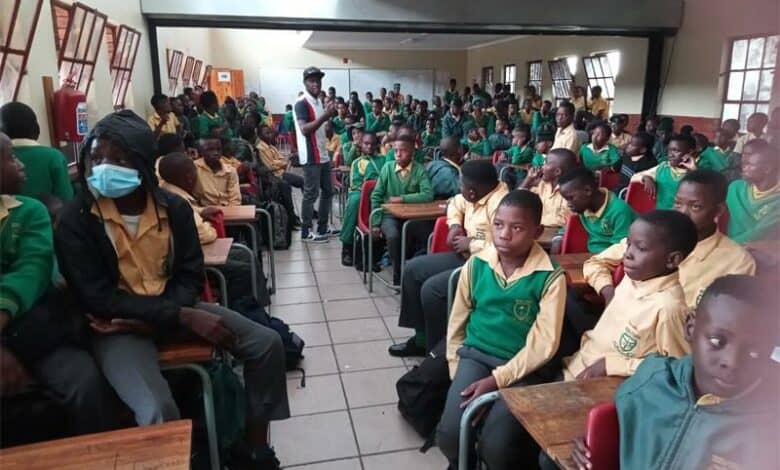
Njabulo Sibeko from Boys Mentorship recently visited Grade Seven learners at Winnie Mandela Primary School to help prepare them for the transition to high school.
His session focused on what to expect in high school, including challenges such as peer pressure, engaging in risky behaviour like substance abuse, gangsterism, and skipping classes.
He also touched on the consequences of poor choices, including the risks of ending up in prison.
ALSO READ: City disconnects schools due to R50 million debt by Gauteng Education
“The core of the session was to educate them about Grade Eight and high school,” Sibeko said.
He referenced a Zulu idiom, “Ligotshwa lisemanzi,” which means that a child should be guided while they are still young.
“We need to shape their character early so they grow up with the right values and do not repeat the mistakes that some of us made,” he said.
Sibeko emphasised that his approach is direct and honest.
“The way we communicate these lessons is by calling a spade a spade, leaving no stone unturned.
“Nothing is more powerful than the truth, and providing real-life examples makes our message more impactful.
“If we sugar-coat things, we lose credibility. I believe in delivering the message as it is, raw and undiluted,” he said.
ALSO READ: Kempton Park Primary School shines at interschools athletics
Boys Mentorship does not stop at a single session. Sibeko explained that they follow up with learners after their talks, a key part of their approach.
“As Boys Mentorship South Africa, we make it our custom to check in with the learners. We stay in touch with them and their parents, who help us monitor their mental well-being.
“We also encourage them to stay active in sports, reading, writing, or other hobbies to keep them engaged and away from negative influences,” he added.
One of the challenges Sibeko observed during his visit was the learners’ tendency to laugh when a peer made a mistake, rather than supporting one another.
“They haven’t yet grasped the importance of encouraging each other, respecting different opinions, and valuing others’ perspectives,” he said.
Despite this, Sibeko remains optimistic about the impact of Boys Mentorship.
“I strongly believe that after today’s session, we have a great chance of shaping these learners into outstanding men for the next generation. They are eager to make a difference.
“As an organisation, we are committed to offering more seminars, boys’ camps, school outreach programmes, men and boys’ conferences, boot camps, and hiking trips to support their mental health and develop them into responsible members of society.”