
Human fathers are a scientific riddle
Scientific riddle or not, fathers contributes to our survival, our protection and our care.
For most of us a father or a dad is someone with a kind face and strong, open arms.
So much of our history has seen fatherhood as the symbol of a wise benevolent provider and protector that we do not even realise how unusual it is for a male to play such a big role in raising a family.
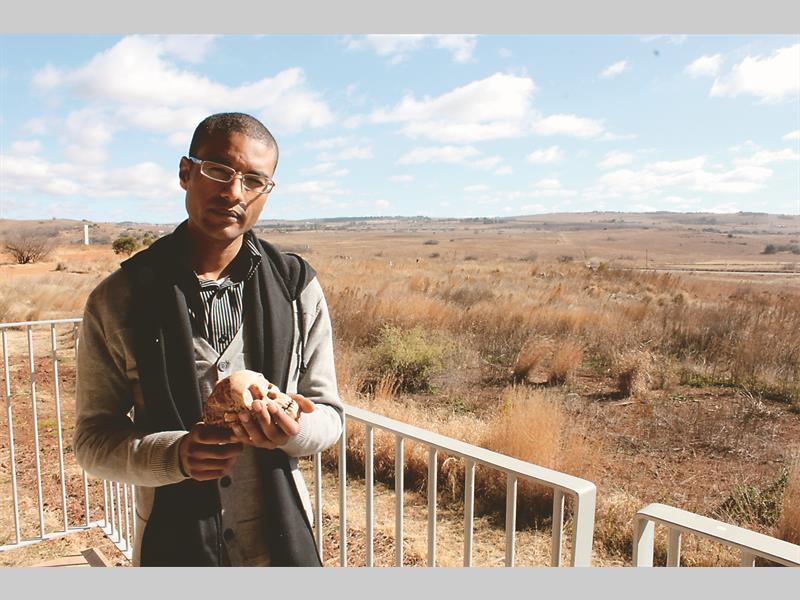
Studies show that humans are among only five per cent of mammalian species in which males invest in the well-being of their offspring. Brendon Billings, the Bone Detective at Maropeng – the official visitor site for the Cradle of Humankind World Heritage Site – agrees that although in certain animals we do see males playing a significant role in child rearing, it is a rare phenomenon when it comes to mammals.
In his book Family Relationships, David C Leary points out that human fathers are in fact a scientific riddle.
“Men’s parenting is highly unusual when we consider that males in at least 95 per cent of other mammalian species, including the two species most closely related to humans, that is, chimpanzees (Pan troglodytes) and bonobos (Pan paniscus) do not participate in parenting.”
Additional literature adds more surprises to the riddles around human fatherhood.
Anthropologists Kermyt Anderson and Peter Gray’s, book Fatherhood: Evolution and Human Paternal Behavior discussed the fact that human fatherhood actually alters a man’s biochemistry, rewires his brain and changes him emotionally and socially.
“There’s a slender but growing body of evidence about the ways in which fatherhood changes men biologically,” says Anderson.
However, it does beg the question as to just how and when the step was taken towards parenting in human males.
“In order to answer this question we first have to identify the need for males or fathers in the animal kingdom,” says Billings.
“Many theories have been postulated but I prefer to agree with Stephen Jay Gould, that males are around to provide variation – genetically, phenotypically and behaviourally. These variations allow a species to survive the complex diversity that the environment forces upon it and males therefore have a significant contribution to ensure the survival of the species.”
Billings stresses that we also need to understand the evolution of parental caregiving.
“Protection is seen as the fundamental behaviour of paternal caregiving but I believe it’s more complex than this,” he says and highlights a theory on the evolution of parental caregiving from the level of reptile to mammal, which was developed by David Bell.
Bell starts by defining stranger rejection behaviour; this is an animal’s ability to detect a stranger using olfaction (smell) which activates certain areas in the brain to respond by either killing or fleeing. As we move higher up the phylogenetic tree towards mammals things start to change in the neurochemistry of the brain. We therefore still have the stranger-rejection behaviour (primitive feature developed for protection), but we are wired also for the opposite behaviour, that is the bonding effect caused by the hormone oxytocin. This bond induces emotions and feelings of attachment and parental care.
Scientific riddle or not, fathers we can see – be they provider dads, stay-at-home dads, divorced dads, stepdads – all have contributed to our survival, our protection and our care.