
In 1994 the new democratic government actively promoted the policy of home ownership in the low-income housing market.
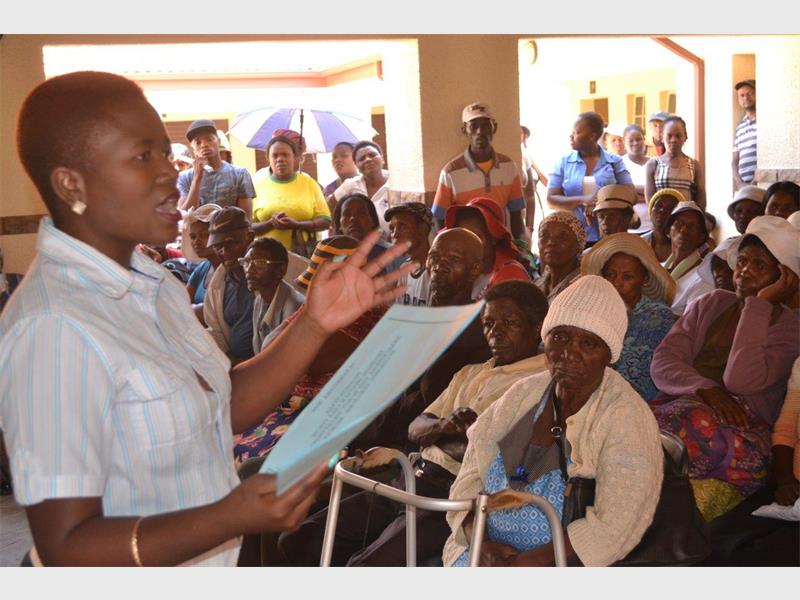
At the recent Beneficiary Education Workshop, organised by the Gauteng Department of Human Settlements and Mogale City Local Municipality, for the community of Ga-Mogale in Magaliesburg, Phumlani Sithole noted that the policy places an obligation on government to ensure that communities receive the necessary education through various mechanisms to impart knowledge and skills to all citizens.
“There is extensive evidence that housing consumers are not informed adequately of their rights, obligations and intentions of government in housing the nation, and relevant housing information is not readily accessible.”
From the municipal perspective, ownership also obliges the owner to pay property rates and service charges, thereby contributing to its ongoing sustainability.
Tiny Sebiloane, Mogale City Local Municipality’s customer awareness officer, said poor community members must register with the municipality as indigents.
“Applications must include certified copies of their identity document, municipal account, proof of income, an affidavit declaring lack of income and/or proof of registration as unemployed and bank statements (where applicable). Any other grants received by the applicant must be clearly indicated and confirmed, although these will not be considered as additional income,” she said.
At the workshop, some complained that they have been on the housing waiting list for a long time and have not received a house yet. Others raised concerns that their partners have lost their rights to acquire a free house after tying the knot.
An awareness campaign has been designed and is being implemented towards achieving objectives and comprehensive housing consumer education.
Related articles:
Blame shifts as sewage pollution continues
Magalies dries up – residents furious