
Listeriosis and your pets; the lowdown
Addressing pet parents' listeriosis concerns.
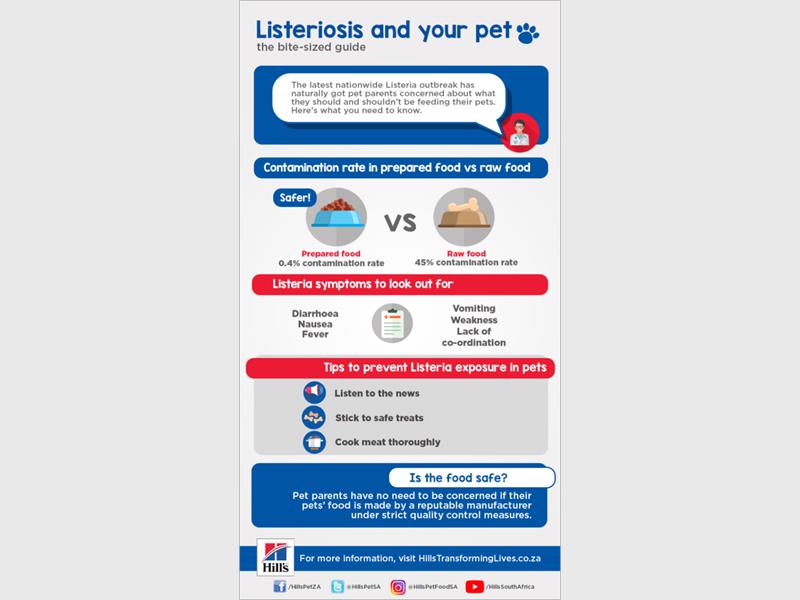
The nationwide listeriosis outbreak has naturally got pet parents concerned about what they should and shouldn’t be feeding their pets. Listeriosis is a serious but treatable disease caused by Listeria monocytogenes, which is widely distributed in nature and can be found in soil, water, and vegetation.
“Risks of infection in pets, while possible, is less likely. Pets with underlying disease conditions, weakened immune systems and those who are older are at an increased risk,” explained Dr Guy Fyvie, Nutritional Advisor at Hill’s Pet Nutrition, South Africa.
Discussing raw food diets vs prepared food choices is a bit like discussing politics or religion at a dinner party, but when it comes to listeriosis you need to know the facts. The American Veterinary Medical Association and the American Animal Hospital Association, as well as the FDA, have all come out with official positioning statements cautioning against raw food diets.
In one study, scientists evaluated 480 samples of dry and semi-moist food and found only two incidences of contamination. One was positive for Salmonella and the other for Listeria greyii. This equates to a 0,4 per cent contamination rate. On the other hand, of the 196 samples of raw dog and cat food, a total of 88 were found to be contaminated — 65 for Listeria, 15 for Salmonella, and eight for E.Coli – a 45% contamination rate.
Dr Fyvie said you can protect your pets from exposure to Listeria infections by following these tips:
Pay attention to the news. Any food that is unsafe for you is also unsafe for your pet. Make sure you discard contaminated products properly, you don’t want your pet finding the item later.
Stick to safe treats. Stick to nutritious Hill’s stews rather than giving your pet viennas, sausages or cold meats as a reward.
Cook meat thoroughly. If you feed your pet meat, make sure it’s been cooked, no matter what it is. Listeria is very heat sensitive, a core temperature of 70°C will kill the bacteria.
If you’re worried your pet may have come into contact with any Listeria contaminated products; then look out for the following symptoms:
Diarrhoea
Nausea
Fever
Vomiting
Weakness
Lack of co-ordination
As a pet parent, you may be wondering if your pet can pass the disease on to you. Dr Fyvie said this is highly unlikely.
“You have a greater chance of contracting listeriosis from pets eating raw diets.”
According to Dr Fyvie, pet parents have no need to be concerned if their pets’ food is made by a reputable manufacturer such as Hill’s Pet Nutrition, under strict quality control measures. “Hill’s ethical sourcing of raw ingredients from limited certified vendors and the processing and controls in place during manufacture, packaging and shipment means the chance of listeriosis is practically non-existent.”
Do you perhaps have more information pertaining to this story? Email us at krugersdorpnews@caxton.co.za or phone us on 011 955 1130.I
For free daily local news on the West Rand, also visit our sister websites:
Remember to visit our Facebook, Twitter and Instagram pages to let your voice be heard!