
There’s cold weather coming – emergency services warn against hypothermia
What can you do to prevent hypothermia?

The South African Weather service has warned that it will be a dreadfully cold week and in response to that ER24 has sent out a press release warning against the signs and symptoms of hypothermia.
Temperatures will reach a low of 3°C by Friday, 1 June.
Also Read: Just in: Unseasonal cold weather expected this week
See the weather as predicted by Weather SA below:
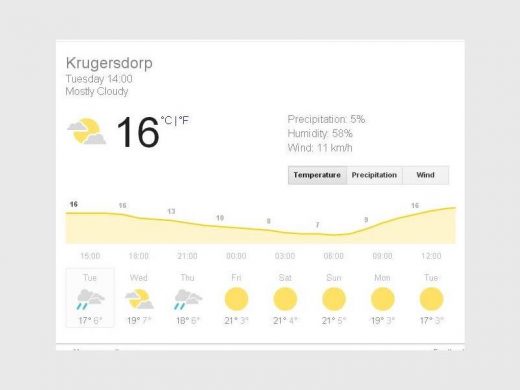
Image: Weather SA.
ER24 reports that hypothermia is a condition where the body loses heat faster than it can produce it. It is important to note that hypothermia is not just having a low body temperature or someone who is shivering. Heat loss in cold, wet weather increases the risk for hypothermia and injury. Heat loss can occur in warm temperatures through conduction. Swimming or sitting in cool or cold water can cause the body to lose heat very quickly and increase the risk for hypothermia. Medical emergency services classify hypothermia as a body temperature of less than 35°C. Normal body temp is in the region of about 37°C.
How does hypothermia occur?
Accidental hypothermia: This is the unintentional drop in body temperature to less than 35°C when the body’s usual responses to cold begin to fail. Examples of when this might occur include unexpected exposure or someone that is inadequately prepared, for example, the elderly or homeless, someone caught in a winter storm, or even an outdoor sports enthusiast.
Intentional hypothermia: Post-trauma or after a cardiac arrest, which is generally called therapeutic hypothermia.
There are many ways one can lose heat from the body, for example:
• convection – when you have wet clothing on or a fan to cool down;
• conduction – the transfer of body heat to other objects (for example sitting on a cold metal chair);
• evaporation – responsible for about 20 to 30 per cent of heat loss in temperate conditions, losing heat through the conversion of water to gas (evaporation of sweat);
Mild hypothermia is the initial phase. You might shiver, and/ or have a rapid heartbeat and breathing, and blood vessel constriction occurs.
Moderate hypothermia is where your body experiences a decreased heart rate, a changed level of consciousness, decreased respiratory rate, dilated pupils and decreased gag reflex.
During severe hypothermia there is usually no perceptible breathing, the person is comatose with non-reactive pupils, they don’t pass any urine, and they sometimes present with pulmonary oedema.
Treatment for hypothermia varies according to severity.
Here are some first aid guidelines for the treatment of hypothermia:
• When you’re helping a person with hypothermia, handle him or her gently.
• Move the person out of the cold to a warm, dry location, sheltering them from the wind.
• If the person is wearing wet clothing, remove it.
• Cover the person with dry blankets and don’t forget to cover their heads too. Ensure they lie on a blanket or warm surface. If you have a first aid kit and know how to use it, make use of warm compresses around the groin and chest area to provide warmth for the patient.
• Provide warm beverages if the person is alert and able to drink fluids.
• Monitor the patient’s breathing. A person with severe hypothermia may appear unconscious, with no apparent signs of a pulse or respiration. If the person’s breathing has stopped or seems dangerously low or shallow, begin CPR.
• Emergency Medical Service (EMS) paramedics use a rescue blanket as well as a standard blanket to warm patients up. The rescue blanket can prevent heat loss through convection or radiation. The standard blanket can prevent heat loss through conduction and convection. They may use passive or active rewarming techniques, depending on the severity of hypothermia. These methods may include blood rewarming, warm intravenous fluid use, airway rewarming and irrigation techniques.
Seniors, children and the homeless are at significant risk of developing hypothermia this winter. Try to remain indoors and keep yourself warm. If a patient shows symptoms of mild hypothermia, make sure he/ she stays inside and keeps warm, so that his/ her condition does not worsen. Prevention remains better than cure.
Medical attention must be sought immediately if someone appears to be suffering from hypothermia and is becoming lethargic and confused.
Here are some emergency numbers you can call in cases of hypothermia:
– Netcare 911: 082 911
– ER24: 084 124
– Netcare Krugersdorp Hospital: 011 951 0200
– Netcare Protea Day Clinic: 011 660 7224
– Medicross Krugersdorp: 011 953 1700
– Dr Yusuf Dadoo Hospital: 011 951 6000
– Leratong Hospital: 011 411 3500
Do you perhaps have more information pertaining to this story? Email us at krugersdorpnews@caxton.co.za (remember to include your contact details) or phone us on 011 955 1130.
For free daily local news on the West Rand, also visit our sister newspaper websites
Remember to visit our Facebook, Twitter and Instagram pages to let your voice be heard!