
A piece of history remembered at Lion Park
The first Greater Magaliesburg blue plaque was recently unveiled at the Lion & Safari Park to commemorate the battle of Kalkheuwel during the South African War.
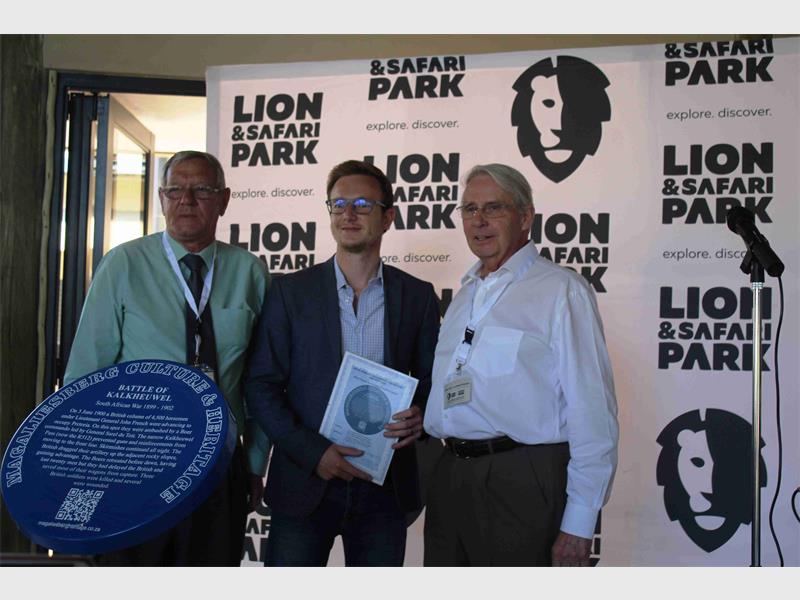
The first ever blue plaque in the Greater Magaliesburg was unveiled at the Lion & Safari Park recently.
A blue plaque is a permanent sign installed in a public place to commemorate a link between the specific location and a famous person, event or building that serves as a historical marker.
The Lion & Safari Park is situated where the historical battle of Kalkheuwel took place during the South African War.
The Magaliesburg Association for Culture and Heritage (MACH) will be placing these blue plaques at heritage sites throughout the Magaliesburg Biosphere.
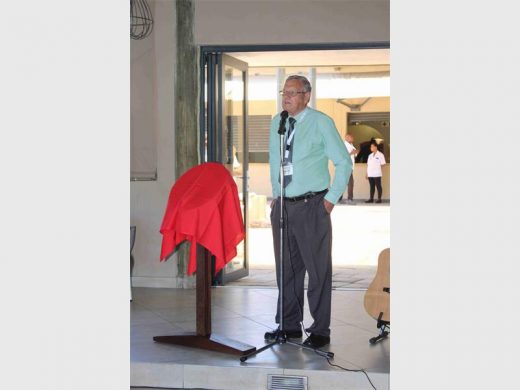
These plaques will serve as a way to identify, support and endorse important sites; to raise awareness of the heritage and culture in the area; to make information available to tourists, students and the public; to encourage research into the history of the region; to foster a sense of local pride, and to encourage the conservation of historical landmarks.
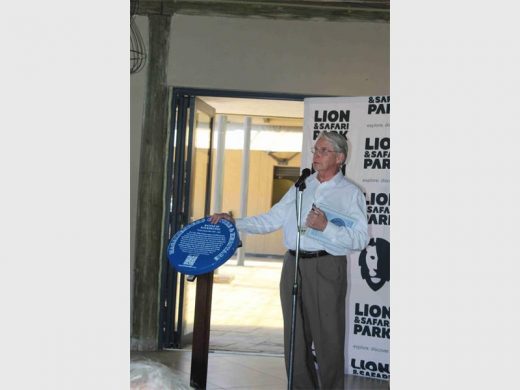
Vincent Carruthers, chairman of the Magaliesburg Biosphere, told the guests about the battle of Kalkheuwel and how it took place.
The South African War, or the Anglo-Boer War, broke out on 10 October 1899. The burghers of the Cradle-Magaliesburg area joined the Krugersdorp Commando and took part in the early Boer victories in Natal. Few of them suspected that the conflict would reach their own homes, but by June 1900, the British were closing in on the Transvaal capital, Pretoria and the guns of the battle of Kalkheuwel would have been audible throughout what is now the Cradle of Humankind.
While Lord Roberts led the main army along the Johannesburg-Pretoria road, General John French took a column of 4 500 horsemen to encircle the capital from the west. The route General French took is now the R512 road that winds through the Kalkheuwel pass to Broederstroom. In 1900 it was a narrow wagon track with impassable rocky slopes on either side. In the late afternoon of 3 June, the long column of mounted British soldiers entered the lengthening shadows of the pass. On the hillsides around the modern Lion & Safari Park, a commando under Sarel du Toit lay in ambush.
At 4pm, the Boers opened fire at almost point-blank range, killing the two leading horsemen. Pandemonium ensued. Men tried to retreat along the confined track, while others tried to push forward into the attack. In the confusion, the artillery could not bring their guns to bear, and for a while the entire column seemed immobilised. Eventually, order was restored, but throughout the night both sides remained pinned down by each other’s gunfire. Boer losses were severe – 20 men killed – while British losses were relatively light, in spite of the earlier chaos. At dawn, the Boers fell back, leaving General French to continue the advance towards Pretoria. But Du Toit’s purpose had been achieved. While he had held the British column at bay all night, a large convoy of supply wagons which he had been protecting had been able to escape to the safety of the Bushveld.
Do you perhaps have more information pertaining to this story? Email us at krugersdorpnews@caxton.co.za (remember to include your contact details) or phone us on 011 955 1130.
For free daily local news on the West Rand, also visit our sister newspaper websites
Remember to visit our Facebook, Twitter and Instagram pages to let your voice be heard!