
[THROWBACK] Looking back at six months of classic beauties
It has been a wonderful six months which saw 12 stunning classic and vintage car entries in the News' Fortnight Classic section.
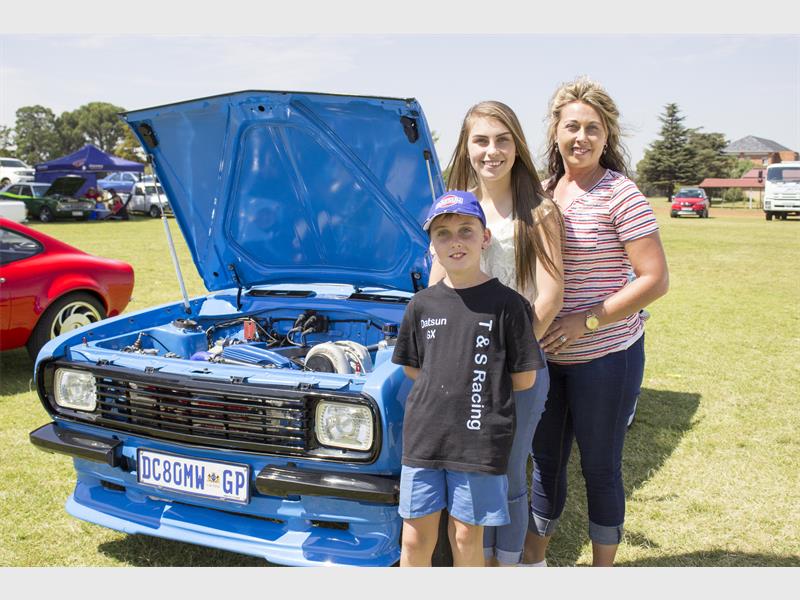
We’ve made it! We’ve reached the middle of 2019. This collection of all the featured classic cars to date provides a fun look back at where we’ve been as we get ready for the second half of this year.
Take a look back with us at all the remarkable classic cars that have featured in the newspaper over the past six months in the Fortnight Classics section.
Show off your classic beauty!
This article marks the first edition of the Classic Collections feature which appeared in the News on a bi-weekly basis.
We’re reaching out to the members of the Krugersdorp community to contact us at any time if they believe they have a piece of history that could appear in this segment.
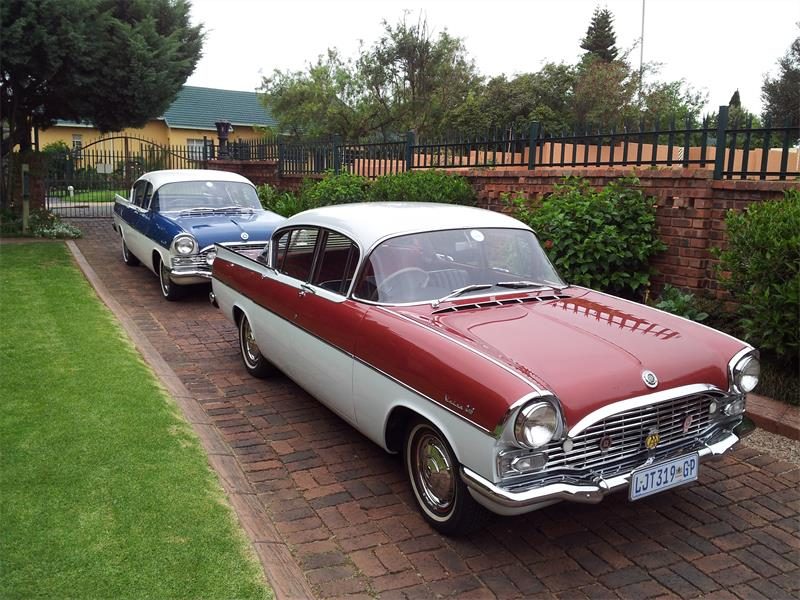
Kicking off this first round are two beautifully maintained Vauxhall Velox 2.6es, owned and regularly shown off by Krugersdorp’s Centenary Car Club’s very own Leon van Staden.
Leon followed in his father-in-law’s footsteps by joining the Centenary Club many years ago. Hennie de Villiers was one of the founding members of the club and, having only daughters, handed down his two Veloxes to Leon. When Leon’s son inherits the cars one day, he will be the fourth generation in the family to care for them. The Centenary Club hosts multiple yearly events where more than 80 cars are on show for the public to gawk at in wonderment.
As for the cars: In red is the Vauxhall Velox PA SX 1961, with a straight six-cylinder engine producing about 95 horsepower, which translates to about a 71 kilowatt output. This four-door saloon was assembled in England and Leon believes it and its brother in blue (1962) are two of only five of their kind in South Africa, and possibly on the entire continent. It’s believed the Veloxes may still be able to reach a speed of 200km/h, even with a kerb weight of about 1 140 kilograms.
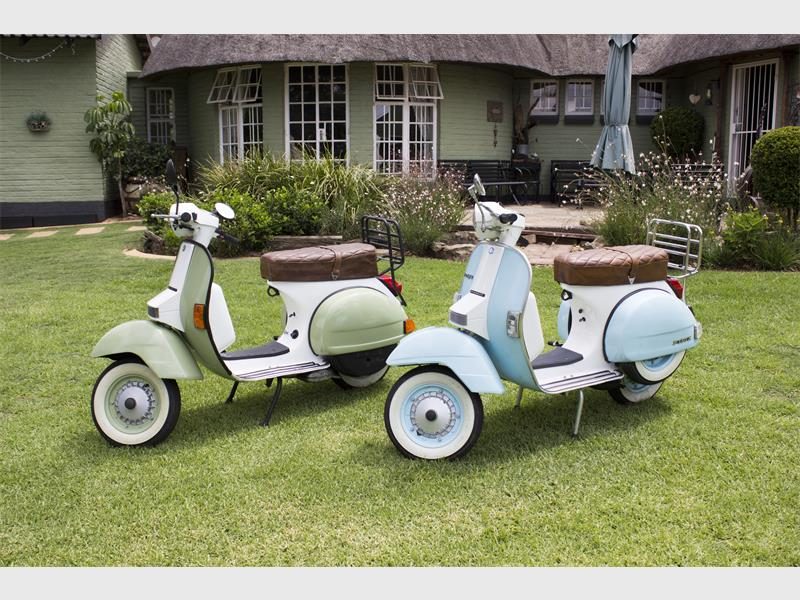
Two beauties dressed in blue and green
This fortnight’s classic beauties are two masterpieces from the late 80s and early 90s.
In green we have a 1987 Vespa Px200e.
This two-stroke scooter has an output of 11 horsepower and is capable of reaching speeds of up to 100 km/h.
The blue Px150e, which is a 1991 model, has close to 7,5 horsepower and can do up to 75 km/h.
When these Vespa classics came to Tony and Paul Pereira’s workshop last year, they were the worse for wear. The original parts had been worn thin, rusted up at certain points and the colour had lost its sheen.
The men at Moover’s Speedshop fixed up every worn-down bit they found, replaced some of the parts and added the glistening white, green and blue colour schemes. By the time they were done, these restored beauties were customised pieces of art.
The Vespas’ gear selectors are on the left-hand side of the handlebar and operate by twisting the bar back and forth to select gears. Both also come with standard full-size spare wheels and a convenient chubby hull.
“These classic-shape Vespas are highly sought after and their value appreciates every year,” Tony said.
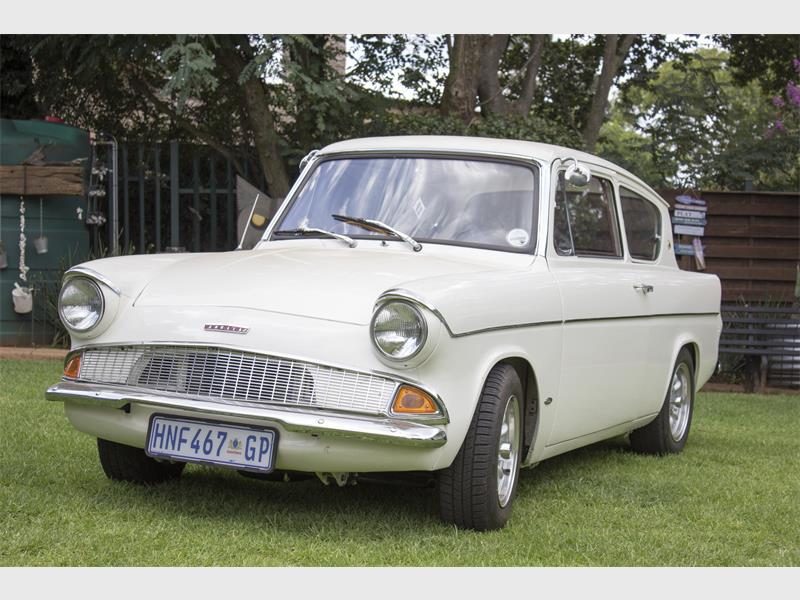
1960 Ford Anglia
From nothing more than a rusted shell of a car with serious body damage, this 1960 Ford Anglia was transformed into a beautiful custom-fitted racing machine, capable of a top speed of 170km/h with an output of 140 horsepower.
While racing another Anglia at the Historical Racing series at Zwartkops years ago, Tony Pereira started looking for one he could build up practically from scratch.
“Once the bodywork and paint were finished,” Tony explained, “we started with the fun part; fitting the car with all of our ‘trick’ off-the shelf racing parts. This included a limited slip differential with disk brake conversion in the rear, a race-built 4-speed ‘bullet’ gearbox with a short shift kit, a full racing front and rear suspension which is completely adjustable, and a big brake kit for the front wheels using large vented disks and four pot callipers.”
The motor was built from the ground up with h-beam connecting rods, lightweight oversize pistons, a forged crankshaft, 300° duration camshaft, a gas-flowed head with the largest valves they could fit, a beautiful Weber carburettor setup and a 4-2-1 exhaust system. Lastly, the interior was redone to a classic dark red leather look, and the final result was a fully re-built 800 kilogram track car on the inside, but a perfect condition classic car on the outside.
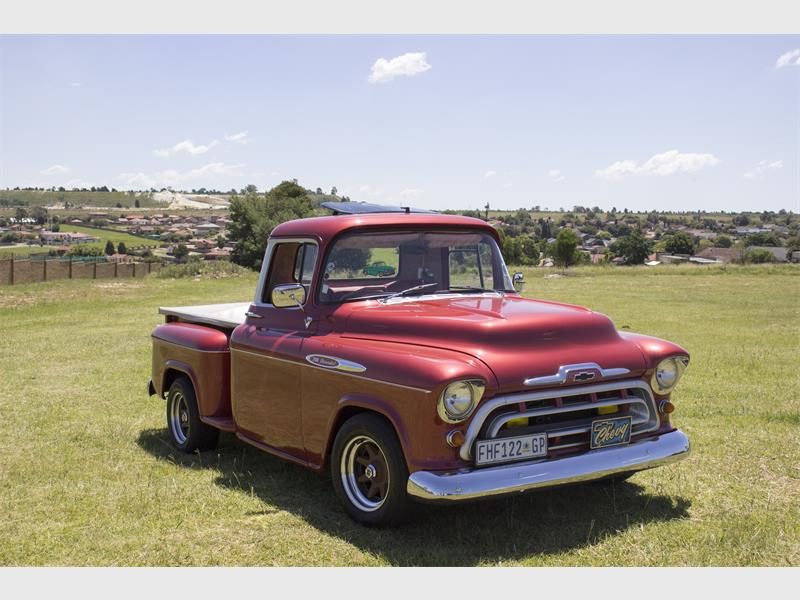
The perfect lady in red – Chevrolet 3100 Pickup
This stunning fire-truck red 1957 Advance-Design Chevrolet Stepside Pickup truck has a tare mass of 1 560 kilograms, and a maximum legal mass of 2 560 kilograms, meaning you can haul quite a lot with you en route to the next car show.
With a monster custom-fit 327 Chevrolet V8 engine replacing the original 3100 straight six, you’ll have no issues carrying that big load and still have some power to spare. Chris Hattingh Snr acquired the truck early in 1980 and nearly completely rebuilt it in his spare time.
The stunning red paint scheme was applied way back then and it has never required a respray or touch-up again. Chris Snr also added a Jaguar XJ6 front suspension kit, rear drum brakes and wood-look finishes inside and on the wheel drums.
Chris Jnr ‘inherited’ the truck from his still very much alive father a few years ago. Since then, he has taken the truck to numerous car shows, winning many awards and even taking it on long road trips down to the coast.
“We drove the Chevy on many North Coast beaches and even dragged out other cars that had become stuck in the sand,” Chris said. Back in 2001, they even took the truck on a 6 000 kilometre trip along the coast, towing a caravan behind them.
A classic at every turn
The most prestigious and valuable cars on the West Rand and surrounds, with shiny paint jobs and excellently maintained interiors, were neatly parked in row upon row on the green grass of the Hoërskool Florida sport field.
On Sunday, 10 March, the Centenary Car Club hosted their annual Any Wheels Day event where all car owners were welcome to show off their beauties, no matter their make. Others could simply attend and gawk at the spectacular pieces of machinery on show.
But, calling any of these specimens just another piece of machinery does each a massive injustice. The cars, bakkies, buggies and combis each took on a life of their own, competing one against the other for best personality of the day.
One of the oldest of the lot, by some margin, was a 1926 Chevrolet pickup owned by Peet Wessels. On the day, Peet and his wife Elize had, by far, the biggest collection of classic motors on show, with the newest model being a still impressive 1977 pickup. Of their 14 cars and pickups present, only one was not a Chevrolet. Peet said that he has, “19 Chevs and one Cobra. Only two are cars and the others are all pickups.”
Speaking lovingly about his collection he said, “I’ve had a fantasy about pickups since the start. The guys told me that I’m wasting my time and that cars are the thing. But, today everyone’s looking for pickups, so the value has gone up a lot.”
Leon van Staden of the Centenary Club noted that 412 cars were present on the day, which is quite an increase on last year’s 256 exhibitors. The club has been hosting this event since the early 90s, and this year saw the largest turnout to date.
During the day, some joke prizes were awarded to attendees with the most rust on their cars, the biggest oil leak and the shortest windscreen wiper blades.
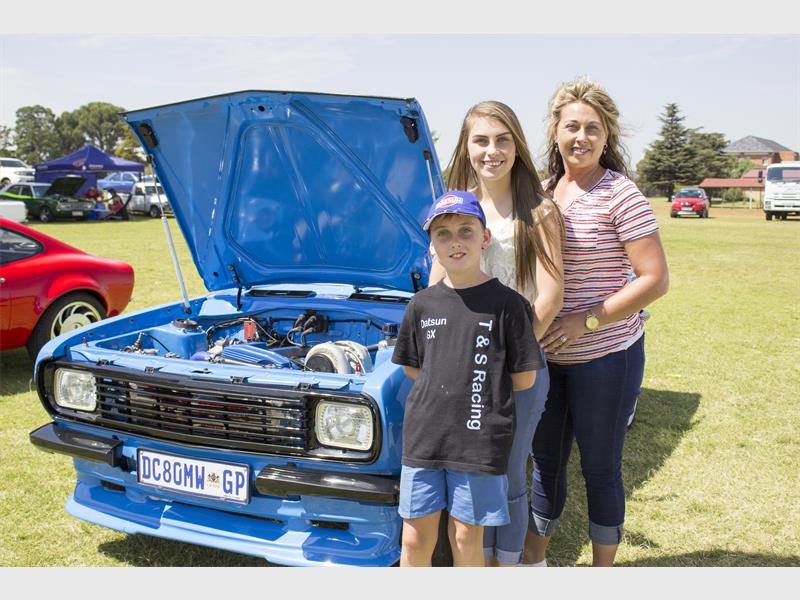
shows and racing days. Photos: CJ Heyman.
No stopping this one
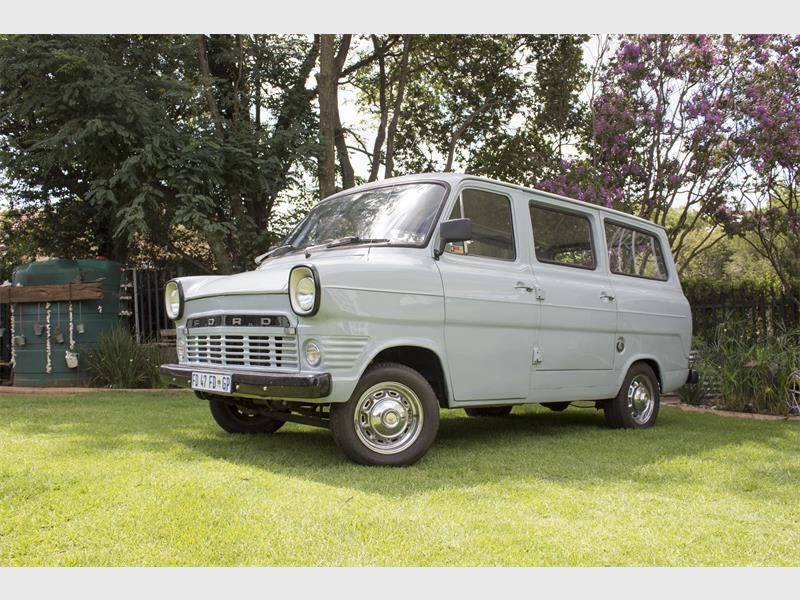
Rough, tough and made to be used for everything – from delivering a freshly baked cake to picking up the oily parts of that new motorcycle you’ve been spending your spare time on – the classic Ford Transit still runs just as well as it did 43 years ago when it was manufactured, and can still do it all.
Tony Pereira owns this ever-reliable mule and its younger brother, a late 2000s Ford Transit. But still, when it comes to transporting classic motorcycles for his restoration business, or going on a camping trip and sleeping right there in the van, Tony opts for the older of the two.
When he bought the Transit in 2016 it was the worse for wear. “It barely ran and had terrible rust throughout,” he said. After stripping off the old paint, he discovered that the Transit was covered with a thick layer of putty. Along with the paintwork, considerable body and structural work had to be done. But, three years later, it surely is a sight to see, bringing that vintage American-made muscle to the streets of South Africa. “Approximately 40 per cent of the body was replaced with handmade panels crafted by myself and my incredible wife, mother and father. For about six months, week after week, we all toiled on the bodywork of the Transit until she finally went for paint.”
The 1976 Ford Transit boasts a 3,1 litre V6 engine that has been upgraded significantly. They added a performance camshaft, electronic ignition distributor, ceramic-coated headers, modified suspension, modern gas-filled shocks and replaced the rear axle with that of a Chevrolet Impala. The interior has been largely customised with new paneling, front seats and a retro sound system.
What an eye-catcher – 1997 Vespa with sidecar
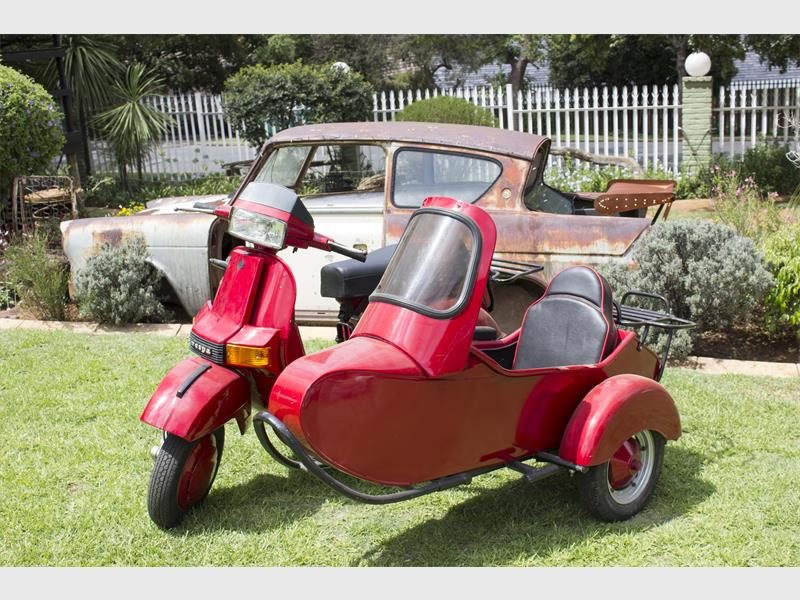
This candy red 1997 Vespa LML Select 2 scooter is quite the eye-catcher on the streets of Krugersdorp.
“What makes this sidecar combo special is that it was ordered this way from the factory and is registered as such on the National Traffic Information System,” said Tony Pereira, who bought the scooter a few years ago, planning to rebuild and repaint it as advertising for his classic motor restoration shop.
The Vespa has a slightly longer frame than usual, with a different headlight and gauge cluster.
The front nose cone also went through a small change, with new indicators and a wider grille. Some other versions of the sidecar have a much more rounded, oval-shaped nose cone, with this specific classic being a lot more squared off, giving it a very distinctive look.
The scooter has a 150cc single cylinder, two-stroke motor with an electric starter, and puts out about 7,5kW. It also uses the well-established four-speed manual gearbox with the selector on the left-hand side of the handlebar. The sidecar weighs approximately 50kg and uses a rubber coupling for suspension on the sidecar wheel. It even has a small storage facility behind the passenger seat that comes in very handy. The sidecar also has a folding leather roof for unfavourable weather. It will seat an occupant of approximately 1,8m tall, but the heavier the passenger, the greater the negative effect on the handling of the sidecar combo.
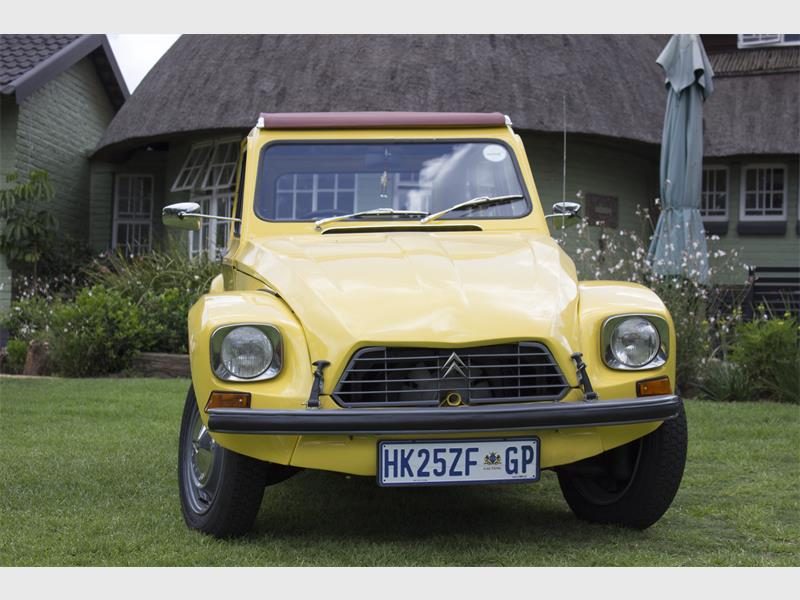
The lively little yellow Citroën Dyane
In the late 1960s, there were regular changes in the car industry as manufactures tested out all kinds of strange new ideas to figure out what the public really wanted.
As a result, some very interestingly shaped cars debuted on the world stage. One of these, standing out among its competitors, was this 1970 Citroën Dyane.
Tony Pereira bought the Dyane about two years ago to add to his growing collection of classics. “It was in a pretty sorry state when we got it. It was painted an awful yellow and brown two-tone colour, and we immediately set about repainting it in a more pleasing shade of yellow,” he noted.
During the Dyane’s time in production, there were many variants of the car. This specific model was the larger capacity 600cc version, with a two-cylinder engine, air-cooled boxer motor and a 4-speed dog-leg manual gearbox. The engine/ gearbox has a traditional longitudinal layout, but drives the front wheels instead of the rear.
The Dyane is a joy to drive, even on rougher roads, with its incredibly soft suspension, which works differently from that of most other cars, using large ‘swing arms’ off which the wheels pivot. The left swing arms are connected, and the same with the right, but there is no link between the two sides.
Inside, the Dyane comfortably seats four adults, and comes standard with a folding vinyl rooftop. The gear lever protrudes out of the dashboard rather than the floor of the car and even the door handles are hidden in a little slot in the door panel.
Tony said, “Most people who drive in the Dyane immediately take a shine to all the oddball nuances it has. It’s a quirky car and has a comical and charming personality.”
The Dyane can easily reach a speed of 120kph due to its light-weight body. It’s capable of putting out 6 000rpm and has a maximum power output of about 35hp, making this a fun little car to drive around in.
Childhood memories captured in this cobalt blue Ford Cortina
For many, the Ford Cortina was a hallmark of their childhood days.
You may still remember your parents picking you up from school on a Friday afternoon, running to that beautiful shining piece of motoring history (although you might not have realised its significance back then) and setting off for a weekend of camping or water park fun. Maybe you even remember owning one yourself.
The year 1982 saw the very last Ford Cortina ever in production, and soon more modern cars filled the roads. But, the Cortina was never forgotten. Today, many collectors hold this specimen in high regard, and a few restored beauties can be seen in the streets of Krugersdorp off and on.
When David Binder was 16, his family bought a 1974 Ford Cortina. Through the years they worked on many cars, but the brownish Ford always stuck around. “We considered scrapping it a few times, but for some reason we always just kept it around,” David said. For a few years, the car was worse for wear, with an outer shell that had more rust than paint on it. Something had to be done.
Twenty-eight years later, the Cortina stands in new-found glory. A bright new blue paint job, and a few other major body fixes, cover all the parts that seriously needed some tender loving care. Changes to the engine included high compression pistons, over-sized valves and the porting and polishing of the intake manifolds. The flywheel weight was reduced, the entire motor was balanced, the carburetor was upgraded and high performance camshafts were installed. As a finishing touch, chrome work, costing about R15 000, was added to the engine.

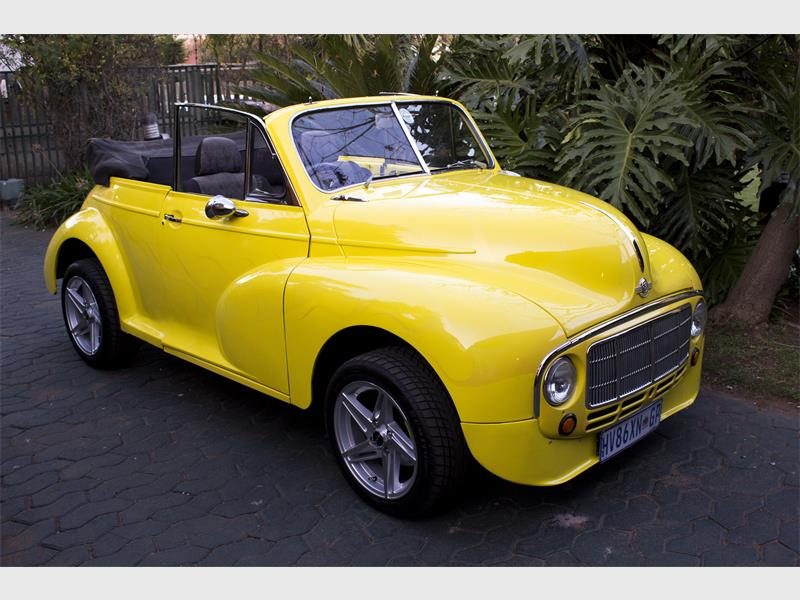
The always smiling Minor in yellow
The year was 1948 and the motoring industry in England was booming. Nearly every household had a car in its driveway, with international names especially enjoying great praise.
Enter Morris Motors Limited. Although Morris had a huge reputation in the country, and the name was gaining some fame overseas, the Morris Minor was a game-changer when it debuted at the Earls Court Motor Show in London. Its popularity quickly grew and it became the first British car to sell over a million units.
This brilliant yellow Morris Minor that currently sits in the front yard of Chris Erasmus’ family home didn’t always look as flawless as it does now, though. On the contrary – it was quite a sad sight to see when it was found rusting in the backyard of a house that was sold to a friend of Chris’ brother-in-law. Over a period of four years, the Morris was completely restored, with meticulous attention being paid to detail.
Every single part or piece of equipment that was bought and used was documented precisely, with the date and cost, in a file. The Morris went on a bit of a journey from there, eventually finding its way into the hands of Chris’ brother-in-law, who vowed to give it to Chris’ daughter, Jenna-Vee Erasmus, one day. He kept his promise, and about a year ago the family made their way down to Durban to bring the Morris Minor up to the West Rand.
Jenna-Vee hasn’t had the opportunity to drive the old car just yet. She’ll need to wait several years to get her learner’s licence. At the age of 14, she can only look at the Morris shining in the driveway.
This classic was nearly completely redone, with basically only the body remaining stock. A Toyota Twincam engine, Cressida gearbox and Honda Civic 160i brakes with a Ford Escort diff have replaced the original mechanics. The interior was also completely redone. Today, the engine puts out about 127Nm of torque, with 97kW of power going out to the wheels.
This beauty is used regularly for events, weddings and school functions, and can be hired from Chris by contacting them at oldmorris1948@gmail.com or calling 072 244 9415.
The little moped that could
Cycling of all kinds has seen a revival in recent years, and motorcycles, at the upper end of the two- wheeled spectrum, are still a viable and sought-after means of transportation that make rush hour traffic a breeze. Somewhere in the middle, however, you’ll find the moped.
This half bicycle, half motorcycle has something of both worlds. But, it’s not used to whiz through traffic in modern times, and it doesn’t offer much in the way of a sporty activity.
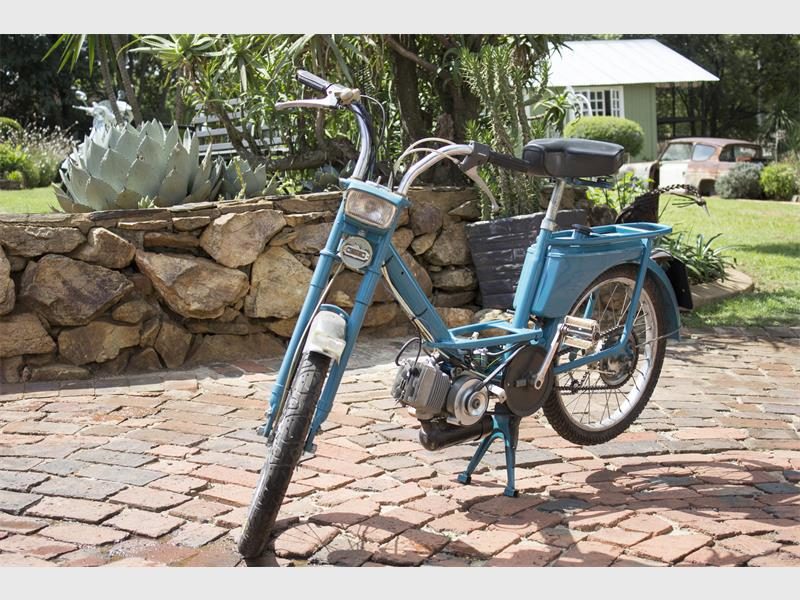
The 1974 Peugeot MT102, though, is highly sought-after in the collector’s world. It’s a snapshot of yesteryear, when our roads weren’t as congested, and a moped could feasibly be used for someone’s commute to class or work.
With a 50cc, two-stroke motor with a minuscule 2bhp, this little Peugeot crossbreed is capable of speeds of up to 50 kilometres an hour, possibly a little more than you expected this little bicycle-that-could would do.
Now, that’s not fast by today’s standards, but it was something more than just a novel idea in the 1970s and 80s. Today the MT102 sits in Tony Pereira’s Moover’s custom workshop as a restored masterpiece. He picked the moped up in a reasonable condition, but he replaced the clutch and the stator in the electric motor and did a few other smaller repairs. It also currently has a 12mm carburetor and only has a single speed drive.
To get it going, you have to actually pedal until you reach a speed of about 10 kilometres per hour, at which time the clutch disengages and essentially run-starts the motor. From here you can simply open the throttle and be on your merry way.
“There’s a slew of aftermarket parts for these little bikes in Europe that can see them reach top speeds in excess of 110 kilometres per hour. They are a bit of a cult item in Europe, where this was seen as the easiest and cheapest solution to the transport problems many people faced in the past,” Tony noted.
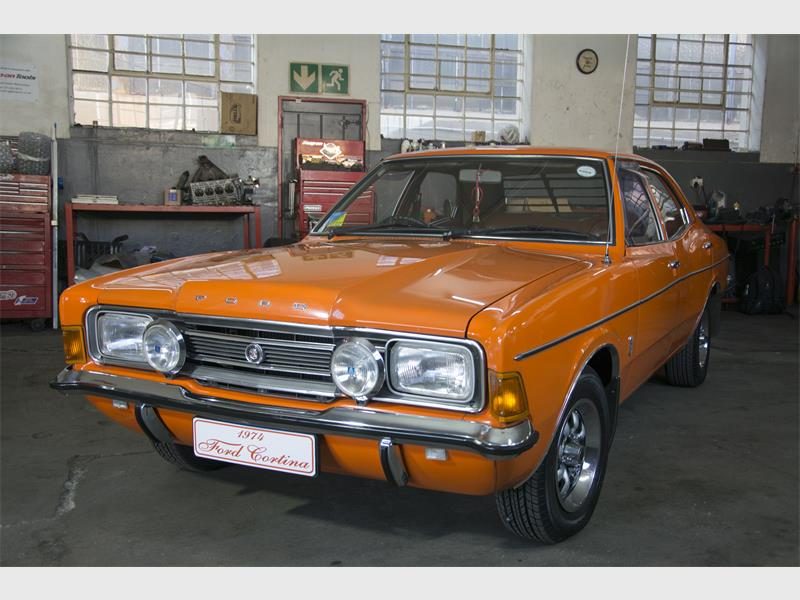
Fierce in orange – 1974 Ford Cortina MK3
The Ford Cortina is still an integral pillar of the history of the motoring industry the world over. Although it hasn’t been in production for nearly 37 years, nearly all adults can say they have some memory connected to this robust piece of motoring genius.
Regular readers of the News may recall that a cobalt blue Ford Cortina featured a little more than a month ago to considerable applause. Its long-time owner, David Binder, sorely wanted another Cortina to stand alongside the one he had grown up with.
In 2016 he found the perfect model and bought it for just R75 000. Soon he had offers for up to R120 000 to sell it again, but never let it go. Today, a 1974 Ford Cortina MK3 3,0 litre V6 XLE in this near-pristine condition may fetch a sum considerably larger than this.
David is the fourth owner of the Crayola orange Cortina, with all of the previous owners having worked for Ford. This might explain why the car is in such an excellent condition and so stunning to the eye. As David would say: “You don’t own a Cortina, you love a Cortina.” This must be especially true for one as beautiful and fierce as this.
The Cortina has a meagre 83 000 kilometres on the clock and still has the original paint job with which it left the factory floor 45 years ago. Today, the V6 powerhouse engine still puts out about 117kW, and it will give you quite the exhilarating ride if you put your foot down.
Have a classic beauty that’s your pride and joy? If you believe you do, whether it’s a car, sewing machine or even a typewriter, give journalist Jaco Human a call on 011 955 1130.