
[THROWBACK] Looking back at the last six months of Fortnight Classics
At the end of this year we take a look back at the last six months and 12 Fortnight Classic articles that appeared in the Krugersdorp News newspaper.
It’s been a full year of classic cars and motorcycles gracing the News’ pages every second week.
The community has been great throughout the run of this segment, calling in to tell about their classic beauties. Alas, the time has come for this segment to end of gracefully with the last Fortnight Classic appearing in the newspaper during the 20 December edition.
Here now is a look back at the last six months of Fortnight Classics.
The perfect metro classic
The Austin Motor Company has for many years been a proud English car manufacturer without equal.
The post-World War II era saw a time of great prosperity and innovation in the motoring world, and Austin was right there, leading the charge. Soon, other countries were looking to the engineering and design prowess of Austin, hoping to duplicate their success across the world. America, with its bustling automotive industry, was one such country.
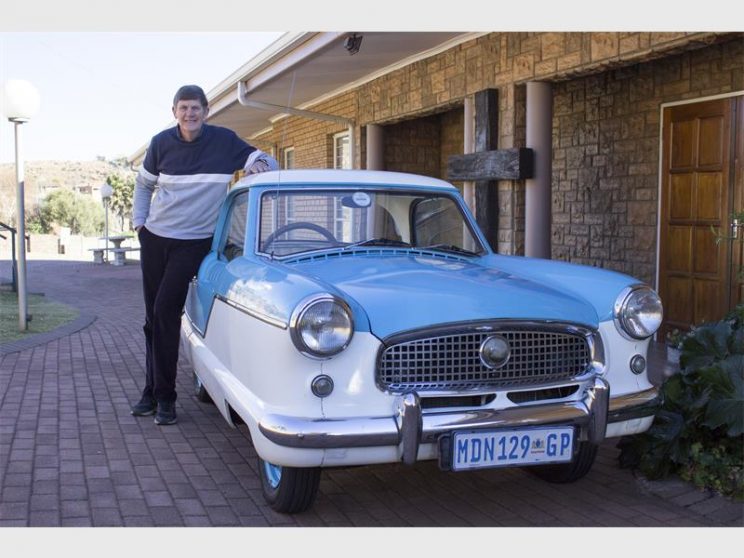
The Austin Metropolitan was designed by William Flajole for Nash Motors in America, but the car would be built in England. It was sold as the Nash Metropolitan in America and the Austin Metropolitan in England.
In 1959, this stunning little Metropolitan model was born on a factory floor in Birmingham. It looked slightly different back then, though. Primarily, the smooth rounded body sported a shiny red and white paint scheme.
Pastor Gerrit Mes from the AFM Church in Noordheuwel has the immense pleasure of ogling this exquisite masterpiece as he leaves for work every day. His father, who had owned the classic for some decades, had resprayed the Metropolitan a few years ago, matching the original blue and white paint job that it would have come out with in 1959. Only the leather of the seats, and the usual little things that wear out over time, such as tyres and plugs, have been replaced.
“People love to look at it. I once stopped at a shop next to a young man with a new sports car. When I came out people were gathered around the Metropolitan instead of the sports car. The poor man got in his car and quickly drove away.
This really is an eye-catcher,” Pastor Mes said. The Austin Metropolitan still holds its original 1 500cc motor, which seems oddly small and simplistic in relation to modern cars.
It only has three forward gears and one reverse gear, but that doesn’t mean it’s simple to drive if you’re used to a modern shifting lever.
With its gigantic steering wheel, handbrake protruding from the floor by the driver’s side door and a steering wheel mounted gear lever, it’s quite the trick to drive it effortlessly.
“I shouldn’t say this, but it’s an old army word: in its day, it was very ‘windgat’!” Pastor Mes said jokingly.
He said further that the car “… still has a valve radio which takes 30 seconds to warm up, and you only get a few FM stations”.
Saved from a rusty end – 1976 VW 1600S Beetle
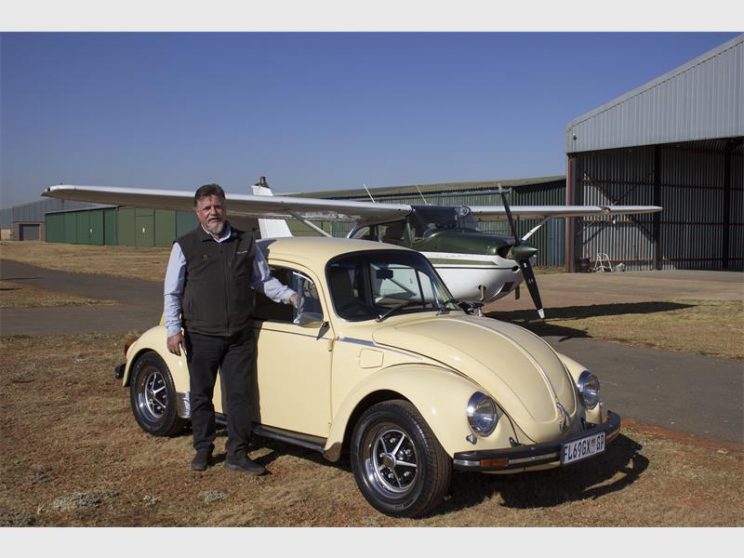
It’s a sad sight to see a classic beauty rusting away its final days somewhere in a dark corner of a dirty garage. When Pieter de Villiers came across such a sight, his heart nearly broke. Most of the little Beetle was lost to the ages, and the doors were beyond repair.
After some skillful negotiation with the owner, Pieter took home the beaten up Beetle for R38 000. It was then that the real work began.
After months of hard work and a near complete overhaul, the 1976 VW 1600S was in better condition than the day it rolled off the factory floor. Today its value is closer to R150 000.
Both doors were replaced, an electronic ignition was installed, the wheel bearings, clutch cable and accelerator cable were replaced, and a few more minor service related faults were fixed. The entire interior received a serious overhaul, with crisp new leather seats, and wood and rubber finishes on the steering wheel, dashboard and door fixtures. Brand new pedals and floor mats finished off that shiny new look. As for the engine itself, except for the aforementioned replacements, the Beetle runs on its stock motor. Forty-three years later, Pieter still gets to 120km/ph with ease, with barely a rattle ever heard as it darts down the road.
“When I stop next to people at traffic lights, they’re always all smiles. The Beetle makes people happy. I was still busy repairing everything when I decided, on a whim, to enter it into a car competition in Tarlton. I couldn’t believe it when they told me it had won first prize among all the other impressive cars,” Pieter said.
The king of the perfect road trip
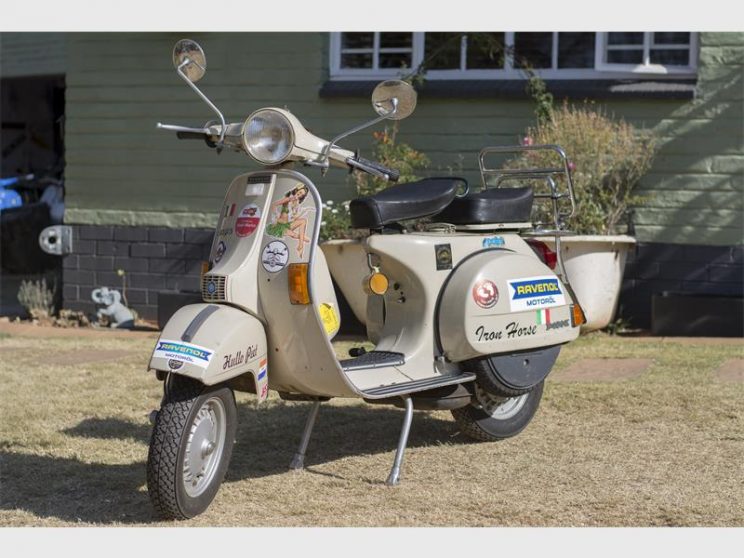
After 35 years, this classic collector’s dream is still in nearly the same condition it was in when it rolled off the factory floor. Save for the character-defining roadtrip themed stickers, the 1984 Vespa P150x is all stock parts and still in mint condition.
And this isn’t some showroom bragging piece that never touches the road. No, this little Vespa has nearly 18 000 kilometres behind it. Tony Pereira from Moover’s Speed Shop had the classic Vespa lined up between the many other Vespas in his garage as he worked on it, as he regularly does, for Matt Larkins. Matt bought the Vespa from an older man about eight years ago, when the then owner, aged 82, felt he had become too old to continue riding it.
Back then its odometer stood at just over 11 000 kilomtres. How Matt racked up the additional 7 000 kilometres in nearly eight years is the fun part.
The Chicken Runners is less a club and more a group of about 48 friends. Between them they own 82 classic Vespas, and they like nothing more than to get them out on the road and put some distance behind them.
Every weekend, they set off to a new location. Heading down to the Vaal River, up to Hartbeespoort Dam, all the way to Lichtenburg, and whatever location they have in mind, they pack only what they need, and go.
Once a year they even take on longer road trips, usually down to the coast. “They pack only what they can, and if it doesn’t fit on the Vespa, it stays behind,” said Tony as he set up the Vespa’s stand.
“We do a 10-day trip every year for charity. It’s just the men, and we make an entire adventure out of it,” Matt noted.
The champagne toast of the motoring world
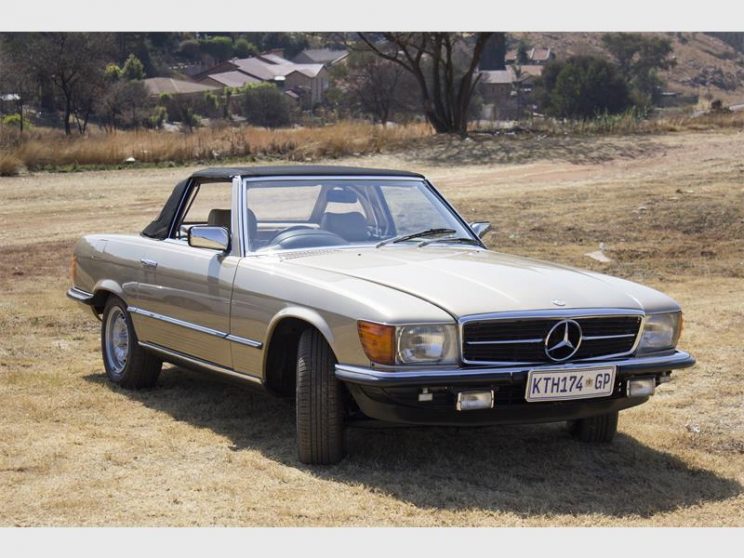
By the 80s, Mercedes-Benz was king. The motoring industry stood in awe, with every new model being released to the world with great acclaim. This was a period of serious competition as every motoring company in the world dreamed of taking Mercedes-Benz’ seat on the throne. But, the motoring giant wasn’t backing down.
To solidify their prominence, Mercedes released a slew of high performance racing grade cars for the everyday road user. In 1981 this beautiful champagne-gold Mercedes-Benz 280 SL was brought to life. It’s easy to imagine that, at the very moment the sun touched its glittering body for the fi rst time, those lucky few around it fell silent in admiration.
Nearly 28 years later, this piece of engineering magnificence found a new and loving home with Pieter de Villiers, who was already stoking his love for classic cars.
“I owned an MGC, which was a highly sought-after collectible back then, when I came across the Mercedes.
It was in a rough condition and needed a lot of work. I asked the seller if he’d be up for a trade, and he knew the value of the MG.
He also had to throw in new tyres and R20 000 to equal out the trade.” Somewhat shockingly, 10 years later, the Mercedes still has the same Michelin tyres with enough tread left to go quite a bit further.
The body, engine and most of the rest of the car are still fully stock parts. Pieter had to repaint and replace a few smaller components, though. “The big things I had to replace were the cylinder heads and I did all new chrome on the body,” he explained.
The 280 SL boasts with an impressive 200kph top speed, putting out 185 horsepower at 5 800 rotations per minute. The original four-speed manual gearbox still shifts as smoothly as on Day 1, and even with 231 000 kilometres on the speedometer, it makes for the perfect ride down to the coast, as Pieter likes to do every now and again.
Strong enough to do the job
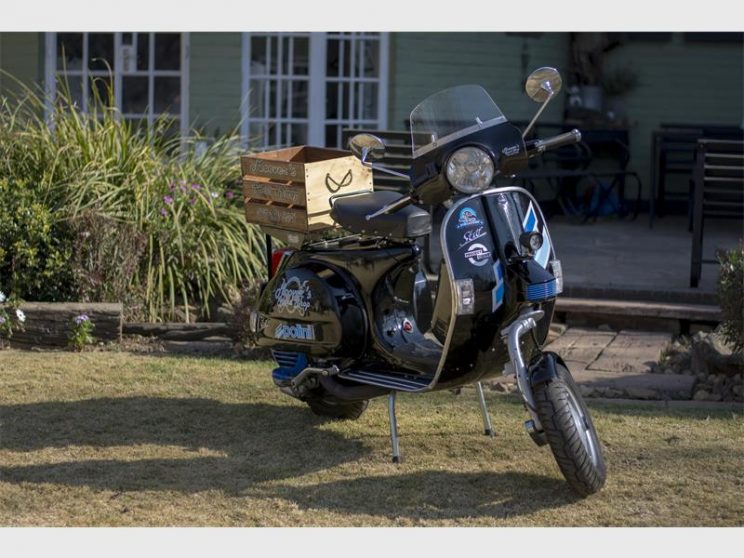
The value of classic Vespas has skyrocketed in recent years, as they’ve become quite the collector’s item for motoring enthusiasts.
What’s surprising about Vespa owners, is that instead of placing their prized collectors’ pieces on a pedestal and keeping them there, they are regularly set to work.
For Tony Pereira at the Moover’s Speed Shop, his black and blue Vespa LML Star 150, as stunning and stylish as it may be, is used to transport motor parts, batteries, oil and the like to and from suppliers.
When Tony acquired the two-stroke LML, it was a bare-bones piece of machinery consisting of only stock parts.
His favourite kind of work began … he completely refurbished and repainted the Vespa in a few months. “The first thing I did was to put the box on the back to drive to various suppliers. The box can accommodate about 25 kilograms and doubles as a carry container for one of our little dogs,” Tony said. He explained that the box has a breathable lid which the dog can also see through, and she apparently loves it.
“I quickly got bored with the measly 8bhp that the little motor produced and built it into a 187cc stroked motor, pushing out almost 18bhp.” After the upgrade, the Vespa turned into a fun ride which could easily zip through and even outrun traffi c on the main roads, with a top speed of 100kph. This too wasn’t enough after a while and Tony replaced the motor with a 200cc unit and added a Polini 210cc cylinder, boosting the top speed to 130kph.
He also added a 26mm downdraft carburettor, a stronger clutch and longer gearing. The exterior also underwent major improvements.
A windscreen, a slimline front fender, spotlight, headlight and a spring saddle were added, along with a brand-new paint job. “She still returns about 30km/l and brings a smile to my face every time I ride her,” said Tony.
A bike for baking
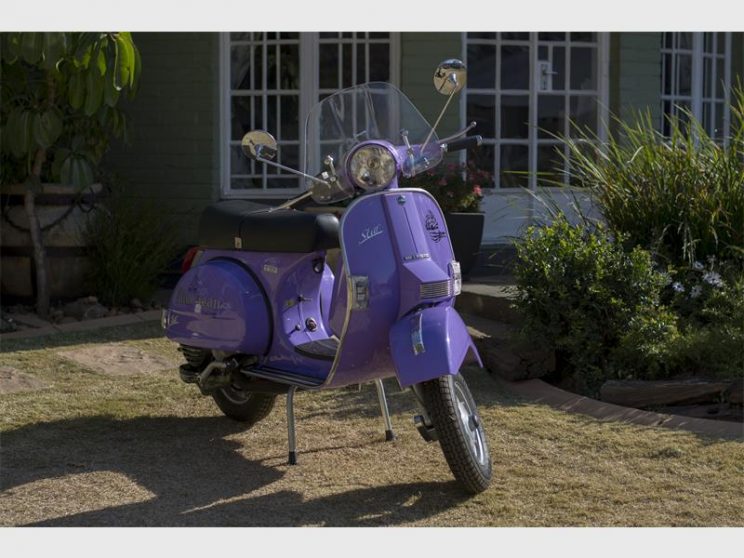
Noordheuwel — Blue-Jean Baking is a business run by Chelsea Pereira, who makes the most beautiful cakes.
To match her funky style and grace in the kitchen, as well as her passion for her work, her husband Tony decided she needed a classic Vespa. The result was this modish purple Vespa LML 150 with her business logo on the side.
This particular Vespa is a later model than most of the classics in their garage, but it still has that classic Vespa grace. It stands out well with its shocking purple paint job though. The scooter has disc brakes upfront, an electric starter, an automatic two-stroke oil mixer system and all the little odds and ends to make it an easy ride to live with every day.
“It didn’t take long for a few logos and decals to find their way onto the bike, which is now used as my runaround to and from the shops for small baking supplies, and running the odd errand,” Chelsea said.
They soon found that it was necessary to add a windshield and it will soon be getting an upgraded exhaust for more power. The manual four-speed gearbox produces a top speed of 100kph, which is more than enough for Chelsea in the city.
Its acceleration to this speed is also pretty quick. “So far, Chelsea, has been using it sparingly as she has only had her learner’s licence, but since she passed her full bike licence test recently, you will see much more of her and her little bike in and around Krugersdorp, being used as a stylish workhorse,” Tony said.
Stunning in black – 1975 Valiant Regal
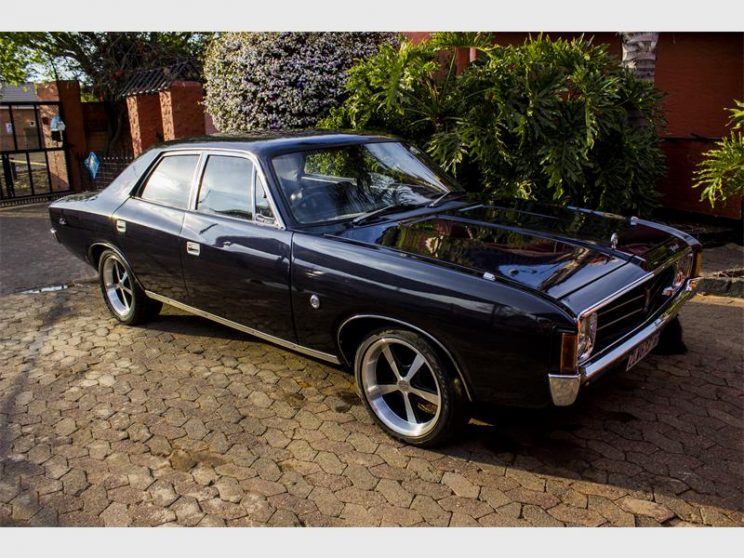
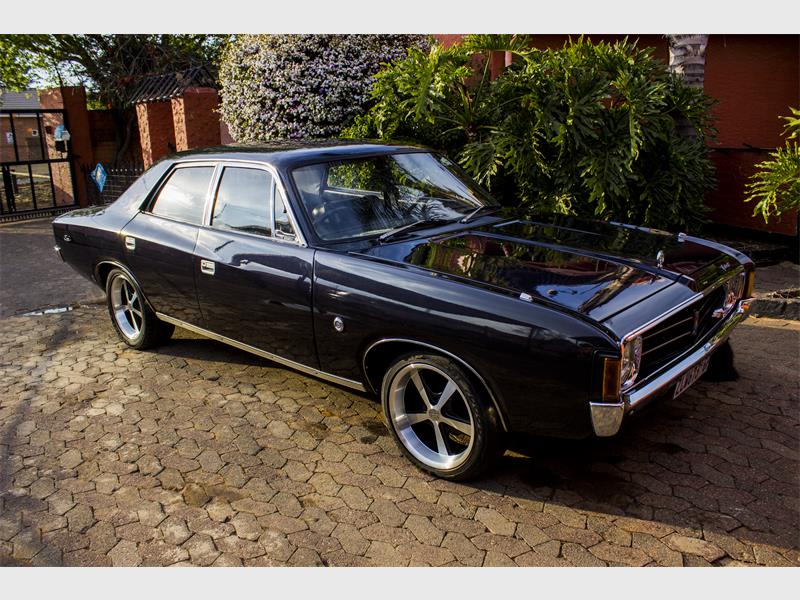
Like a shadow slipping seamlessly over the road in broad daylight, the pitch-black 1975 Valiant Regal has no like on the West Rand.
Johann van der Merwe, between feelings of deep sadness and complete joy, first found the Regal at a dealership in Pretoria, looking as though it would never have a good day again.
“It was in a bad state and had this ugly yellow-orange paint job. It was covered in dents and rust you could stick your finger through.”
Johann took the Regal home and completely stripped the engine, cleaned out all the parts, replaced those worn out from years of wear and tear and put it all back together. This resulted in a still stock Slant-6 225 engine with all of its horses still running at a full gallop.
The interior and a new paint job were next. The inside was torn to pieces and needed to be nearly completely replaced. The wheel-rims weren’t stock either, and didn’t fi t the car at all, as Johann explained, and also needed to go. The timing system was converted to an electronic system, but the three-speed gearbox was left intact. Today, the engine puts out about 170bhp, 125kW and 297Nm of torque.
Grass green and still going – 1979 Piaggio Apé
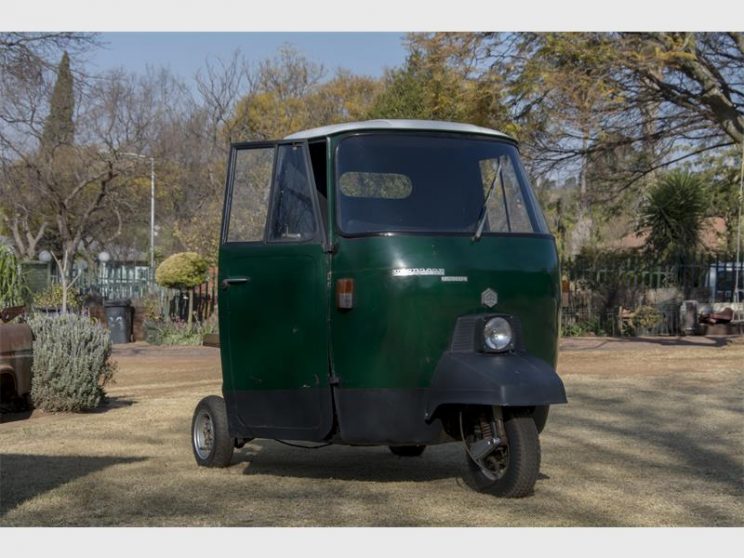
Many will remember a time during the late 80s and 90s when, every now and again, this odd-looking half-motorcycle, half-car came driving down the street. It was a perfect lightweight, light on petrol and easily manoeuvrable little vehicle which was great for small business deliveries and even short distance taxi services.
Tony Pereira bought this oddball piece of automotive history only about six months ago when he happened upon it in Pretoria. The grass green 1979 Piaggio Apé was designated as an AE3T P401 model, and is the eighth generation of the Apé series.
It has a 175cc, two-stroke, single cylinder engine with a four-speed manual gearbox. It also has an external reverse gearbox which shifts the output from the gearbox into reverse, which translates to the Apé having four gears going forward and four gears going backward.
“Much like a Vespa, all the controls are operated via cables, with the exception being the hydraulically operated rear brakes. The steering is operated via a handlebar setup, with the gears twisting on the left-hand side, the same as the Vespas of the era,” Tony explained.
The Apé can only reach a meagre 60kph, but can carry a load of up to 450kg. “Our plan with this one in particular is to restore her over time, completely rebuild the motor and develop a performance-orientated Apé that retains the 175cc motor,” Tony concluded.
A classic car for a classic guy – 1975 Datsun 120Y
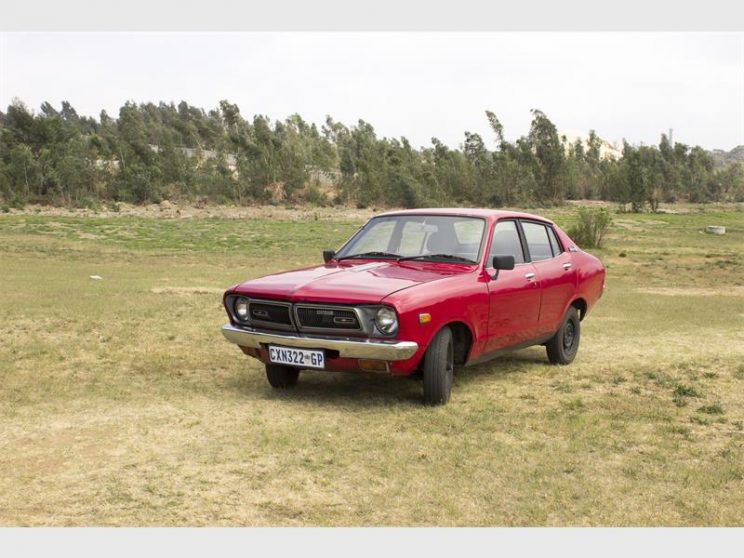
In the 1970s, the quasi-American styled Datsun 120Y took the streets by storm, and became an instant favourite with Americans and Europeans alike.
It wasn’t long before a few definitive models made their way to South Africa. Jarryd Westerdale’s rich-red 1976 Datsun 120Y is a beast on the road that always turns heads. Unlike many classic car owners, he doesn’t leave his Datsun in a stuffy garage under a tarp for most of its twilight years; it gets him to work and back, and around town whenever he needs it. Jarryd is a journalist, and the Datsun gets him to his stories every day with flair.
“It belonged to my partner’s father, so it’s a bit of a family heirloom,” Jarryd explained. The 120Y used to be a light pastel colour, but got its stunning red paint job only a few years ago. “I have not changed anything on it, other than the standard necessary maintenance. I prefer to keep the older cars as close to original as possible.”
The Datsun has a 1 200cc engine with a straight four cylinder. “It does zero to 60 in about an hour,” Jarryd laughed. In the end, it’s a simple, economical, reliable runaround car that gets him from A to B without fail.
The canary Caravelle shining in the sun
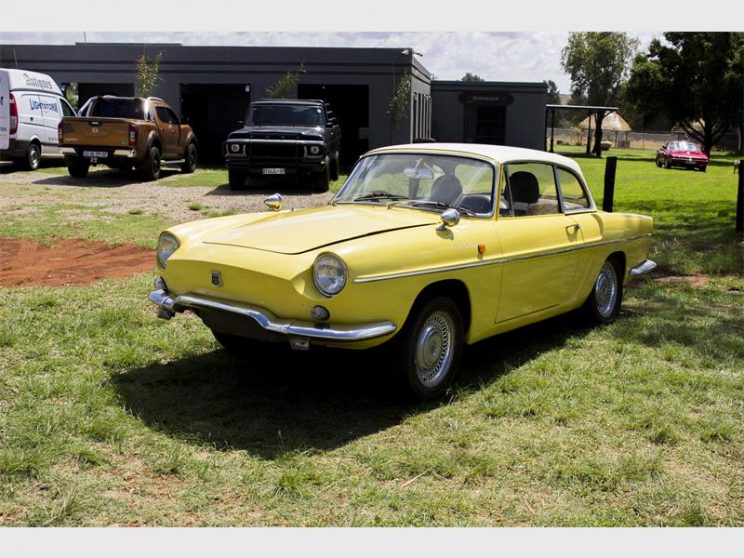
The 1963 Renault Caravelle might be one of the oldest cars you’ll ever see on the roads of Krugersdorp. You certainly won’t miss it with its daisy paint-job glistening in the sun. The rear-engine, rear-wheel
drive, two-door little automobile has a detachable hard roof to make sunny days just all that more enjoyable.
At the time of its inception, Renault was looking for the perfect small car to compete with the behemoths of the day such as Volkswagen. The Caravelle was born and was an instant hit in both America and throughout Europe.
Jerry Lombard and his daughter Lee-Anne from the Antiques Shop on the R563 came across this beautifully maintained Renault at an auction just a few months ago and quickly bid on it to add to their collection. The motor was replaced at some point with a four-cylinder, four-stroke engine with dual carburettors. It has a claimed output of about 37 horsepower, which doesn’t make it all that quick, but you’ll drive it for its classic style and for the looks you’ll get in town in the end.
The triumph of the road – 1981 TR7 Coupé
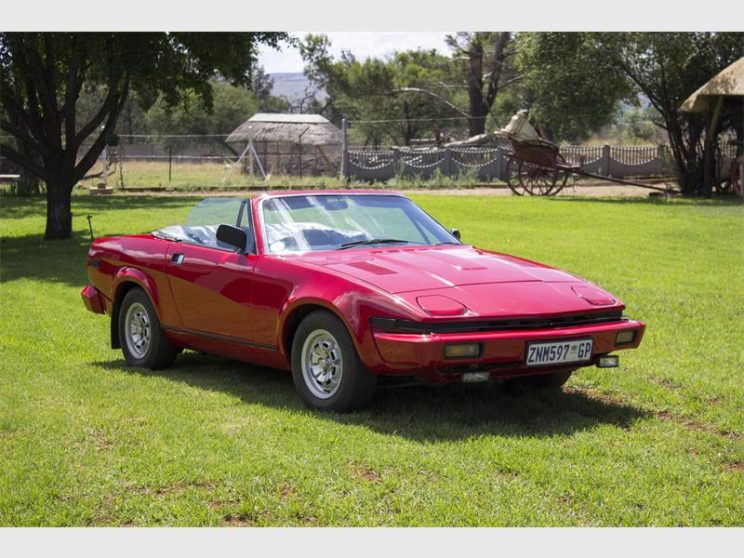
Honingklip — The penultimate model of all Triumph cars, the 1981 Triumph TR7 is a stunner to look at today, although it had a hard life when it just rolled off the assembly line.
By 1984 the company was gone, but it left behind a few pieces of automation history.
This glowing red TR7 convertible was one of the very last of this model manufactured in 1981, and today it looks like it rolled off the production floor just a couple of weeks ago. Jerry Lombard from the Antique Shop in Honingklip bought the Triumph in Pretoria a few months ago. The bumper was black and they did a respray to match the original red of the car.
The two-litre, four-cylinder engine has an output of about 105bhp (78kW). The four-speed gearbox drives the rear wheels and has independent suspension which uses coil springs.
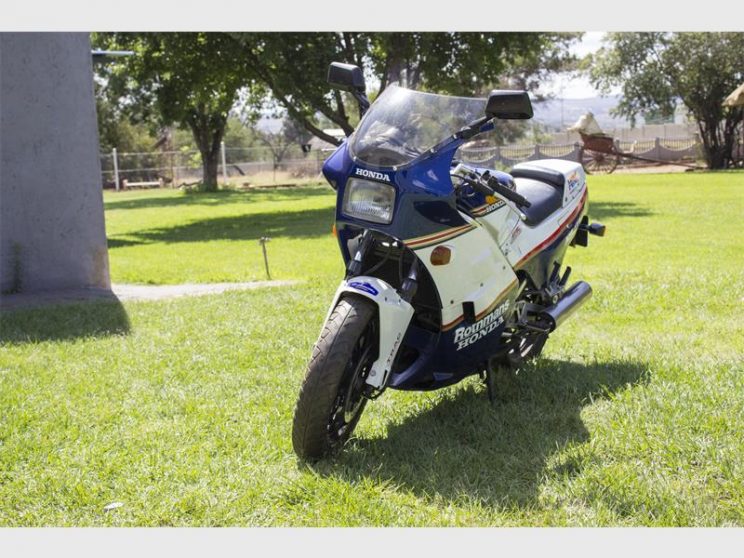
Ready for the raceway — 1985 Honda NS400R
It’s been a year-long journey, and the fans of our Fortnight Classic articles have stuck with us all this time, waiting patiently to see a beautifully crafted classic car bi-weekly. After 25 articles, the time has come to bring this chapter to a close. Although there are still many classic beauties in the West Rand to write about, so many cars had already appeared that it’s become tough to publish one every fortnight. This said, a classic car or car show will appear every now-and-again in the News in 2020 … we’re just scaling back a bit. And so, on with the last fortnight classic of the year.
In 1980, a legend made his mark on the MotoGP world. Freddie Spencer gave Honda it’s first super-bike victory. Later, the Honda NS500 was developed, and Freddie went on to rack up the wins. The 1985 Honda NS400R was then produced to provide the public with a street-legal version of the bike and a taste at that immense speed.
Jerry Lombard from the Antique Shop on the R563 found this monster of the road a few months ago to add to his growing collection of classics.
The V3, two-stroke, liquid cooled engine has an output of about 72 bhp at 9 500 rpm. All-in-all, the NS400R weighs in at 163 kilograms with a seat height of about 80cm.
To read the first six months’ fortnight classics, click here: