
Feeding time for newly hatched cormorant chicks
A budding photographer came across newly hatched cormorant chicks while driving past Monument Dam and decided to chronicle their development.
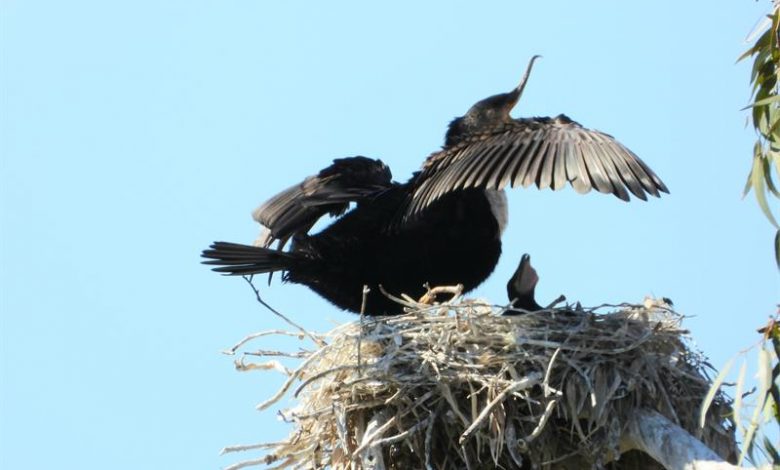
Jimmy Keet, amateur photographer with a love for wildlife and a knack for catching mammals and insects in their element, recently came across quite a sight right here in Krugersdorp. He felt he needed to document the experience with his camera.
One day while driving on Paardekraal Drive, something caught his attention. Then Jimmy noticed a nest in a tree on the small centre island of Monument Dam. A cormorant bird (also known as a ‘duiker’) was sitting on the edge of its nest.
From 7 April onward, Jimmy kept a close eye on the nest. “I checked nearly every day to see if there were any developments, with the hope of seeing the little ones.” But, as it turned out, there were eggs in the nest, and the cormorant chicks were yet to hatch.
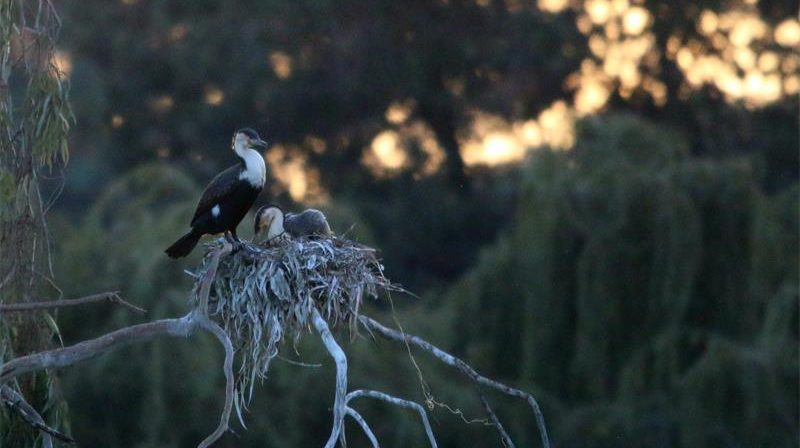
Jimmy kept watch for the next month but, unfortunately, missed the hatching while in hospital. Once he recuperated and was discharged, he checked in on the birds on Sunday, 16 May and finally saw exactly what he was looking for – two chicks sticking their little heads over the nest’s edge.
“On Tuesday I noticed three little ones in the nest. One of the parents had just returned to the nest with food for the chicks, so the other parent made room for it to feed them. Their little heads went straight into the parent’s mouth and down the throat to take the food from the crop,” Jimmy said.
“Taking into account the time and the size of the chicks, I’d guess the eggs were laid in the first or second week of March because they take about 32 days to hatch. The chicks will stay in the nest for about two months.”
The white-breasted cormorant belongs to the genus Phalacrocorax, species Phalacrocorax lucidusis and is a common bird in South Africa. It is closely related to the Great Cormorants species, but can be clearly distinguished from the latter by the prominent white feathers on its breast and neck.
Jimmy said there are currently about ten of them in the same tree at the Monument Dam. “They’re regular residents at the dam. I’ve seen larger swarms at Hartbeespoort Dam. I still visit them every day to photograph their development.”