
Grid to solar: ‘I save R900 p/m’
A local resident explains what it takes to get off of the electricity grid to a large extent and move to solar.
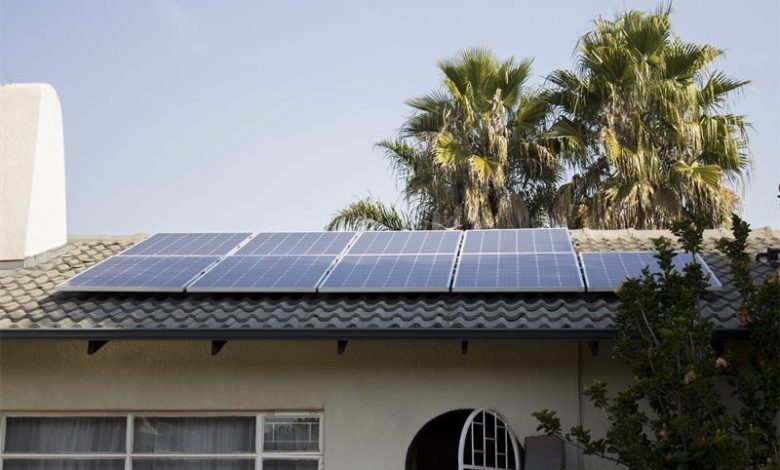
Going ‘off the ‘grid’ or becoming more self-sufficient and less reliant on state-owned and municipal infrastructures sounds like a great idea, but what does that actually entail? Is it attainable for the average homeowner?
Local resident Claus Dittmer asked himself this question four years ago and decided to jump into the deep end to research solar technologies for domestic use. Claus is a homeowner who has gone through the process of converting to renewable energy sources, and he knows what to look out for.
“Before you consider installing solar panels, get a solar geyser. You really can’t do solar without it. A geyser uses high voltage electricity and the amount of wattage usually drains your solar panels very quickly. Most inverters can’t run it, or you’ll have to get a very high-end inverter.”
He explained that there are a few types of solar geysers, but he opted for converting his existing one to solar.
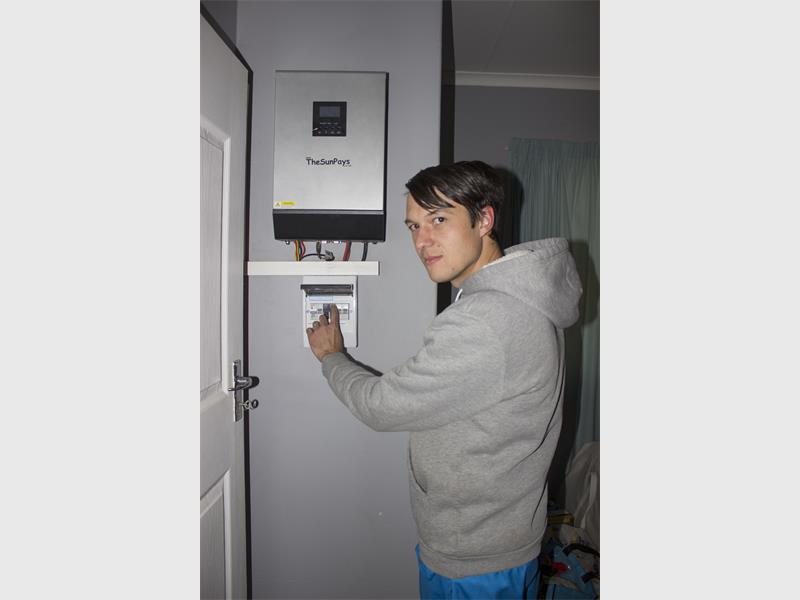
“The tube system, which I have, basically consists of long tubes with anti-freeze in. Mine is a 20-tube system with copper ends on the pipes. The water runs through those copper pipes to heat the rest of the geyser. You literally let that pipe sit in the sun for only a couple of minutes before it becomes really hot. In the summer that’s enough, but during the winter I sometimes have to turn on my geyser, which is still connected to the grid with a timer. This allows me to switch between the two sources of electricity as needed. You can install just a solar geyser or convert your geyser to one, which makes is a lot cheaper.”
A professional plumber who specialises in solar geysers installed the system for Claus.
“About two years ago, I installed solar panels as well. I’d say the inverter is the big thing to consider, but choose carefully. You have to determine how much electricity you’ll be using at a time, and what uses the most electricity at any point. A 4kW inverter, for example, can only put out that much at a time, and a geyser’s element is usually 3kW to 4kW. So, if you turn that on it’ll drain your entire 4kW inverter.
“At this stage, we run everything on the solar panels (excluding the geyser). I’m not completely off the grid, because when it rains, for example, I still use grid electricity.
“I have nine solar panels of 305w each, and I have the monocrystalline and not the polycrystalline panels. Monocrystalline panels break a bit more easily but are more effective and look better in general. Polycrystalline panels are stronger but don’t look that good and are less effective. With my monocrystalline panels I still get out enough wattage when it’s cloudy.”
All in all, converting to solar cost Claus just over R90 000, which may be too stiff a price for most households. He took the money out of their home loan and now pays back more each month to pay for the solar system.
“Our electricity bill was about R1 300 a month for two adults and a child. Now we upload only R350 pre-paid electricity every month.”
Without considering rate increases, if someone saved R900 on electricity per month, it would probably take more than eight years to cover that roughly R90 000 initial investment.
The benefit in the short term would be that your home is much less reliant on municipal or Eskom electricity, although it does not come cheap. In the long term, the savings can be considerable for at least a few decades. But, unforeseen circumstances can occur at any moment, and the costs of repairing damage to the system should be taken into account.