Is a runny nose a symptom of Covid-19?
Affinity Health explains why a runny nose may be a sign of Covid-19.

As a leading medical insurance provider of affordable healthcare to South Africans, Affinity Health explains why a runny nose may be a sign Covid-19.
Covid-19 and runny noses
Covid-19 is a complex virus that affects different people in different ways. The disease often causes three ‘classic’ symptoms – cough, fever, and loss of smell. Research has also confirmed that there are more than 20 symptoms of the virus. Furthermore, in some cases, a runny nose may be one of them.
Initially, it was thought that a runny nose was not a symptom of Covid-19. However, recent evidence released by the Centers for Disease Control and Prevention suggests that having a runny nose can mean more. A runny nose could be a symptom that results from the delta variant of SARS-CoV-2 (also known as the B.1.617.2 lineage) in both children and adults.
The National Institute for Communicable Diseases (NICD), a National Health Laboratory Service division, has been performing genomic surveillance for SARS-CoV-2 and can confirm that the Delta variant is becoming more dominant in Gauteng, South Africa. For this reason, anyone with a runny nose should consider getting a Covid-19 test.
However, it is also important to remember that a case of the sniffles is common during the winter months and can occur for many reasons, such as allergies, a cold, the flu, or sinusitis.
Does a runny nose mean you have Covid-19?
The likelihood of Covid-19 causing your runny nose depends on the disease’s prevalence at the time. A runny nose is more likely to be caused by a coronavirus infection when Covid-19 rates are high. When Covid-19 levels are low, it’s more likely to be a symptom of something else.
That means the only true way to know if your stuffy nose is a sign of Covid-19 is to get tested. Also, the decision to get tested boils down to your symptoms, circumstances, and your doctor’s opinion.
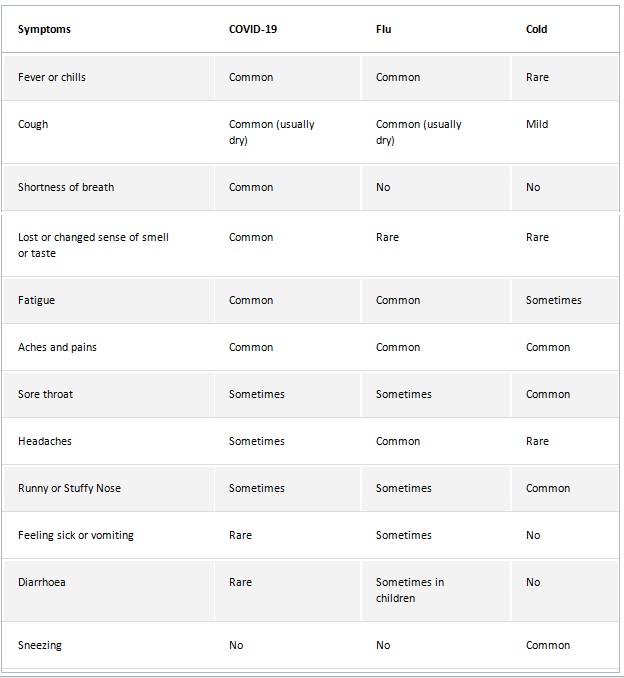
It can be difficult to tell the difference between other symptoms that typically occur during the cold season and Covid-19 symptoms. However, in most cases, Covid-19 is more likely to produce more aggressive symptoms. These could be shortness of breath or breathing difficulties, loss of taste or smell, and dry cough,” said CEO of Affinity Health Murray Hewlett.
“The time between exposure to the virus and the start of symptoms also differs. Covid-19 symptoms generally appear two to 14 days after exposure to SARS-CoV-2. Symptoms of a common cold, on the other hand, usually appear one to three days after exposure to a cold-causing virus.”
Hewlett continued to say that even if someone is fully vaccinated, they should still watch for symptoms of Covid-19, and if symptoms appear, a person should get a test and self-isolate.
Read more: How Covid-19 Has Changed Our Country’s Approach to Health