
March at Kagiso Court calls for action on GBVF
Did you know roughly 15 women are killed in South Africa each day? This alarming statistic prompted Mogale City residents to take to the streets at the Kagiso Magistrate’s Court to demand justice and action against gender-based violence.
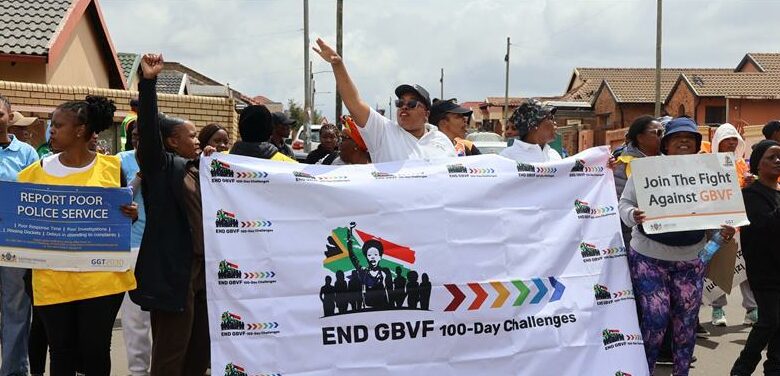
Community members joined forces to raise awareness about Gender-Based Violence and Femicide (GBVF) during an awareness campaign held at the Kagiso Magistrate’s Court.
The event followed alarming national statistics revealing the persistently high number of GBVF cases across South Africa.
According to Mogale City Local Municipality’s (MCLM) senior communication practitioner, Tendani Shavani, the campaign was led by MCLM’s Social Development Department in partnership with the Gauteng Department of Co-operative Governance and Traditional Affairs, the Department of Community Safety, the Government Communication and Information System (GCIS) and the Kagiso Stakeholder Forum.
Held under the theme ‘Equality for All’, the march aimed to raise awareness about GBVF in Mogale City and included the handing over of a memorandum to the court, Shavani said.
Key stakeholders who took part included the South African Police Service (SAPS), West Rand Health District: Mental Health, Gauteng Crime Prevention Wardens, West Rand Health District: EMS, the Department of Community Safety, Westview Clinic and the Teddy Bear Clinic.
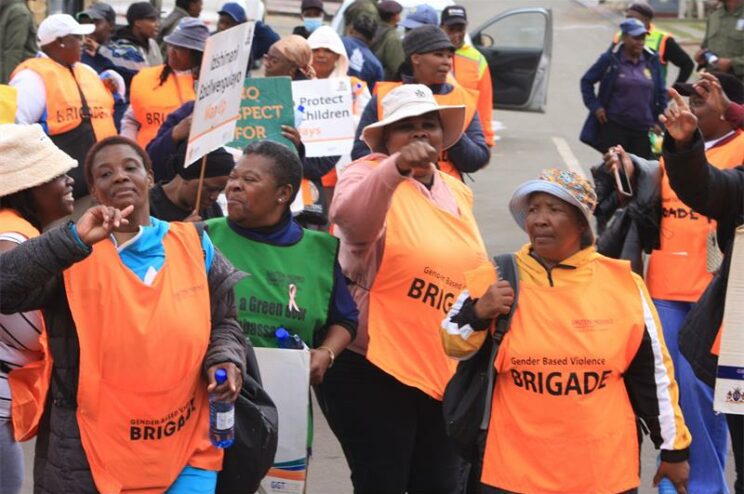
As part of the programme, participants also highlighted the 100-Day GBVF Challenge, an initiative that brings together communities and stakeholders over a 100-day period to find localised solutions to combat gender-based violence.
The challenge focuses on issues such as reducing court backlogs and increasing reporting rates, while promoting collaboration among municipal, court and community teams to fast-track solutions. The goal is to accelerate the national GBVF strategy and build safer, more inclusive communities.
Local NGO Girls Grow Group founder, Nthabiseng Nalani, said the initiative with MCLM is vital as it amplifies the voices of women and children and encourages accountability from law enforcement.
#WomenShutdown highlights femicide crisis and the economic impact on women
Women For Change (WFC) reports that South Africa’s femicide rate is six times higher than the global average, with roughly 15 women killed each day. The organisation cites systemic inequality, inadequate government response, and entrenched patriarchal attitudes as key factors driving the crisis.
To address the issue, WFC has launched the expanding #WomenShutdown campaign, which has seen supporters turn social media platforms and public landmarks purple, a colour representing justice, dignity and remembrance.
On November 21, women and members of the LGBTQI+ community are being urged to take part in the #WomenShutdown by stepping away from work and refraining from spending money to demonstrate their economic influence.
At noon, participants are encouraged to wear black and observe a 15-minute silent lie-down in remembrance of the women who lose their lives to violence every day in South Africa.
The WFC added that men are welcome to participate as allies by supporting the action, avoiding spending, and helping to amplify the movement’s call for change.