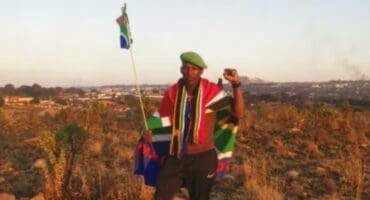

South Africans are spectators in the game they’re supposed to be playing. They have abdicated their responsibility and are hoping that a Messiah will come from somewhere and save them from the challenges they are facing. But there is no Messiah coming; they have to face their challenges head-on.
Politicians are doing as they please, corruption is rampant and unemployment high. The SABC has been captured by the state, and the state captured by certain individuals. Yet South Africans are doing nothing to fight against that.
It’s only a handful of people and non-profit organisations that are raising their voices against the above-mentioned evils. But these individuals and organisations can only do so much. Without the support of the majority, they are unlikely to get the desired results, as is the case now.
Those few who are fighting against these ills and injustices meted out against the poor and less powerful are labelled and called names. More often than not, they are called the agents of the west or liberals, without providing any proof. This is a clever ploy to tarnish their image and it seems to be working.
One can draw similarities between South Africans and Zimbabweans. For a very long time, Zimbabweans stood by and watch whilst Robert Gabriel Mugabe took their country down. Mugabe treated – and still does – Zimbabwe as his personal fiefdom. This has had dire consequences. That country’s economy is dwindling, unemployment is high and investors are not coming by.
It’s only now that the Zimbabweans have woken up from their slumber and are confronting the Mugabe regime, which is using the police to terrorise that nation, head on. Will the Zimbabweans stick out until to the end? They seem to be prepared to die for their liberation from the despot who has been in power for more than thirty years.
The rising [number of] community protests that we are witnessing in our country every day are mostly associated with party politics. So they are not genuine protests that seek to resolve issues affecting the masses at local level. This was said to be the case in Tshwane and other parts of the country.
These challenges confronting the nation won’t go away until the masses say ‘Thus far and no further’, like they did with apartheid. They will remain with us until people on the ground see the need to raise their voices and fight against the practices that are bringing our country down. Otherwise, the status quo will remain.