TZANEEN: Smashing designs centre of discussion
There is great talent in Limpopo the only thing lacking is proper and consistent support to unlock the immense potential that the creative sector has
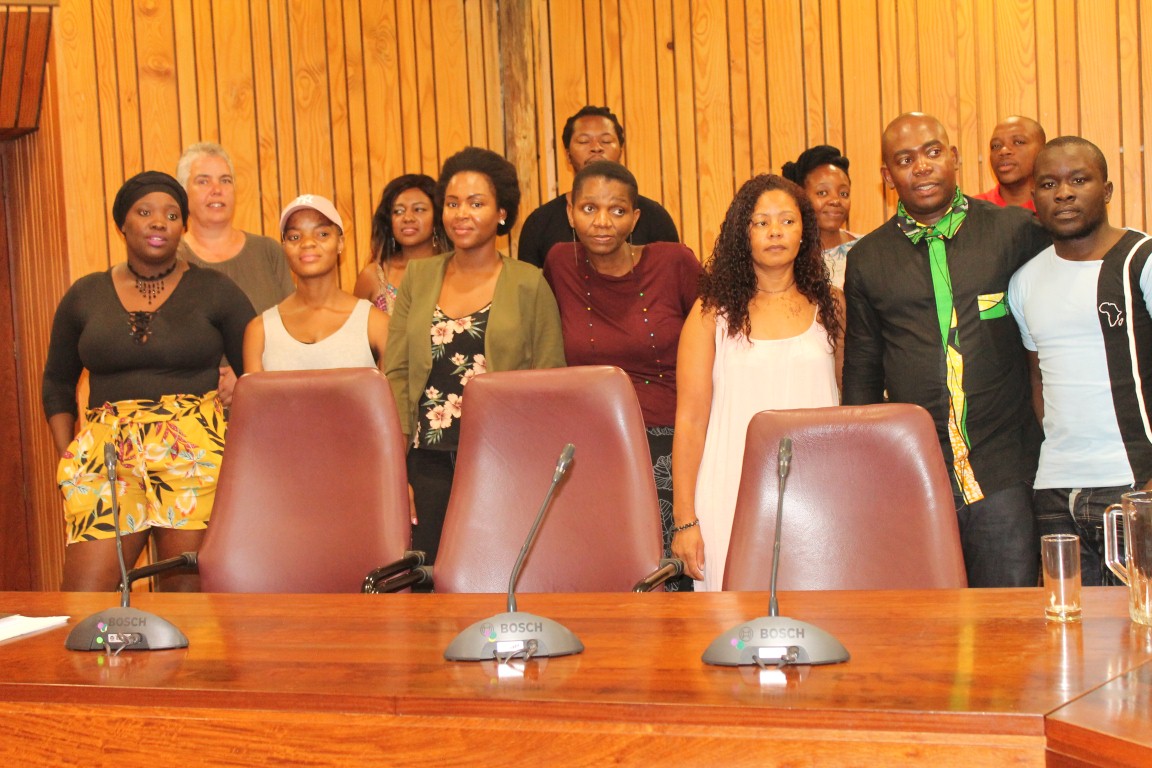
Mash Design Projects launched its first design dialogue on Friday, in Tzaneen.
The launch was aimed at identifying and addressing the challenges that are faced by local designers in the province, while offering possible solutions to try and overcome these challenges.
The launch was headed by the head of Mash Design Projects, Masilo Mafa, with fashion business consultant, Jerri Maia, as the presenter and facilitator of the dialogue.
The launch was a gathering of designers ranging from accessory makers, clothes designers and a mix of both.
“Mash Design Project aims to fill the gaps that exist within the design sector in terms of development support.
The project offers workshops that focus on quality of the products, business skills and mentoring,” exclaimed Mafa.
There were designers that attended the launch in ranges of their own clothing. One such designer being O.J, who makes custom made jeans and shirts for people.
This being something that Maia kept emphasising to the designers, as a way of trying to show them that people don’t just buy a product, but that they buy the story behind it.
Also read: It’s all about fashion, darling
“You need to have a USP, a Unique Selling Point, because in all honesty, everything has been done, therefore you need to change your implement of an already existing design,” said Maia.
He continued to lead the conversation by encouraging the designers to not rely on designing alone as a way to make money.
“We need to face reality, and the reality is that there is no money in the fashion industry.
Unfortunately, this isn’t just a problem we face locally, but internationally too,” he further exclaimed.
As such, he gave examples of how big, thriving clothing brands from the USA have other products such as fragrances, watches and handbags under their original brands in order to help them grow. Before opening the floor up for the designers to engage in conversation, Maia mentioned that the key to ensuring that they thrive in what hey do, lies in building relationships amongst themselves and collaborations.
Nyeleti Theo Maluleke, an accessory maker of 10 years, spoke of how she started making accessories because it was something she was passionate about and that she enjoyed the pure creativity that comes with it.
The challenges she spoke of facing were those of making accessories and distributing them only to get feedback like “oh, but my grandmother can do this” and also how she finds it hard to distinguish between being a retailer or being a wholesaler in terms of the distribution, selling point and cost of her accessories.
A few solutions offered to her during the dialogue were that of branching out, learning new skills and incorporating her accessories in clothing; in terms of sale, she was advised to always negotiate according to her worth and also look into good packing methods as a way to boost her sales; and lastly, a solution that all the designers could relate to, was that costs and pricing must be inclusive of all the things that go into making their products.
One of the other prevailing challenges that arose from the dialogue was that of having a need to improve and promote local brands in the design industry, where local designers find themselves constantly attending a multitude of events as a way to bring their product to the people.
With much debate held on this issue, the way forward, as advised by Jerri Maia, was that the designers needed to prevent attending unnecessary functions knowing that they are quite ‘there’ yet, but that they should rather focus on things like trade shows, where people actually have an opportunity to buy their products.
“Africa does not need a Vogue, Africa needs a customer.
So, we have to find ways in which we can engage with different types of stakeholders in order to ensure that the market and the people understand the value of local products,” said Maia.
The last issue that was tackled at the dialogue was that of skills-training, which was then linked to relationships and collaborations.
The designers were advised to go out into the local schools around them and arrange to teach learners to make accessories and their own twist on clothing.
As such, the designers were told that they could even charge a small fee for such trainings in order to make ‘a little something’ out of it.
The launch ended off with the ‘Madam Speaker’, Tsakani Tee, suggesting that local designers work with local entertainment artists in order to help promote their brands.
“We want to create platforms that facilitate access to market for emerging designers in the form of pop-up markets.
All these interventions are geared towards bringing about development, growth and sustainability within the sector.
The dialogue we had was a great start. It brought to light a lot of pressing issues that designers deal with and that will assist us in tailoring solutions and interventions.
There is great talent in Limpopo the only thing lacking is proper and consistent support to unlock the immense potential that the creative sector has,” concluded Mafa.