Koru Camp hosts first San tracking experience
San master trackers share ancient bushcraft knowledge at Koru Camp, offering hands-on training and cultural experiences.
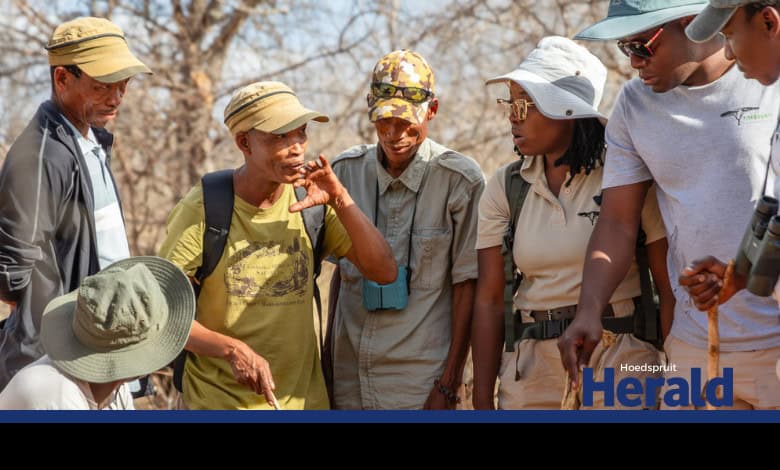
HOEDSPRUIT – The first in a series of San master tracker camps hosted at Koru Camp gave participants a rare opportunity to learn from some of the world’s most skilled trackers and revealed just how much is hidden in the African bush.
Over several days, a group of educators, guides and staff from the Timbavati Foundation joined San master trackers §Oma Daqm and /Uce N§amce, accompanied by translator Steve Kunta, for a hands-on tracking experience.
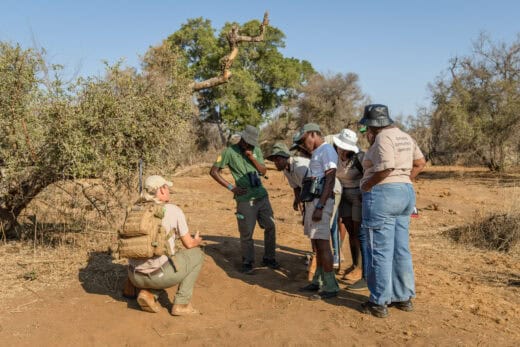
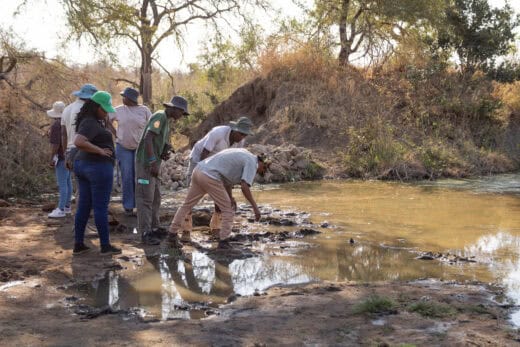
The camp began with an early morning walk, which quickly set the tone for what was to come. Within minutes, the trackers stopped to study faint lines in the sand. While some guessed at porcupine quill marks, the San revealed the truth: whisker marks from a hippo sniffing the ground. A nearby track confirmed the animal’s presence.
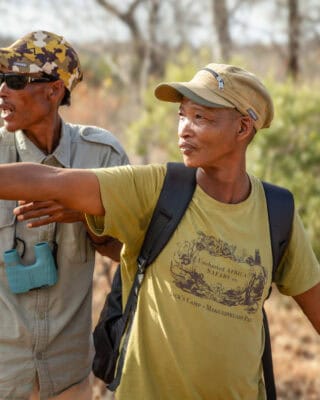
Later, a wide drag mark across the road led the group to a leopard kill site. By studying the disturbed soil and shade patterns beneath a tree, the trackers confidently explained that the event had happened around midday.
Following subtle signs that most participants would have overlooked, a bent blade of grass, a speck of blood, a fleck of hair, the group eventually discovered the remains of a freshly killed impala more than 100 metres into the bush.
“Watching the San work was extraordinary,” said Emily Whiting of Koru Camp. “They do not just see tracks; they read the land like a storybook. For many of us, it was humbling to realise how much detail we miss in the wilderness.”
The camp combined practical tracking sessions with cultural exchanges. Participants learned the basics of fire-making and bow crafting in San masterclasses, while also practising new tracking skills through in-camp activities. Encounters with elephants, hippos and even fresh lion spoor on foot brought home both the excitement and the responsibility of being in wild spaces.
For the Timbavati Foundation team, the experience went beyond training. It offered a deeper appreciation of indigenous knowledge systems and their role in conservation education.
“This wasn’t just about wildlife,” added Whiting. “It was about recognising the value of traditional skills and ensuring they are passed on to future generations.”
Lead trails guide Meg Smith, who donated her time to the camp, worked alongside the San in interpreting signs and guiding participants through the bush. She was supported by backup trail guide James Smit.
With five San master tracker camps scheduled at Koru, organisers say this is only the beginning. Each camp will provide further opportunities for guides, educators and local community members to engage directly with the San and learn from their generations-old expertise.
As Whiting noted, the aim is to bridge knowledge systems: “By bringing together the San and modern conservation practitioners, we can deepen our collective understanding of the natural world. The wilderness has many more secrets to reveal, and the San are uniquely placed to show us how to see them.”