Hoedspruit handler becomes SA’s first DH5 tracker
K9 handler Jordyn Watts becomes the first woman, under new regulations, in SA to earn DH5-tracker status, aiming to protect wildlife through anti-poaching work.
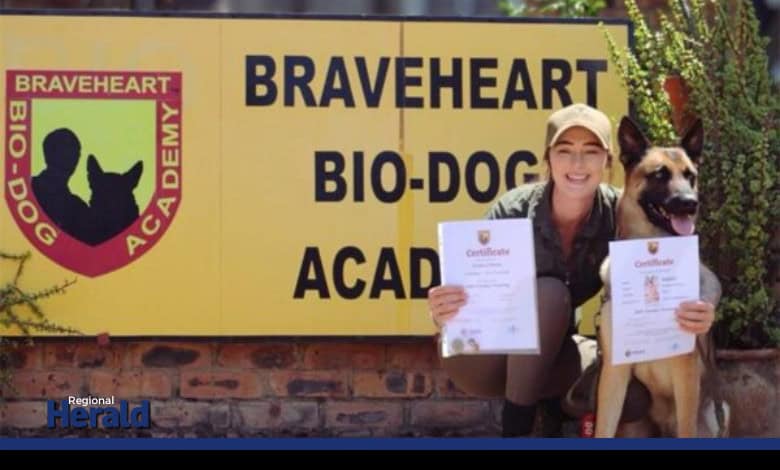
LIMPOPO – Pursuing the DH5–tracker qualification was never just about a title. For Hoedspruit K9 handler Jordyn Watts, it was about purpose, a test of instinct, compassion, and courage.
“Tracking connects me to the land and to the wildlife we protect,” she said. “It’s about proving that strength isn’t only physical, it comes from trust and understanding.”
Early bond with animals inspires career
Watts has worked with professional K9s for three years, but her bond with dogs began much earlier. Growing up around animals, she started training her own Rottweilers at seven years old.
“That early start taught me patience and respect,” she said. “I learned to communicate through body language instead of force.”
That skill now gives her an edge in the field. “Reading my dog’s subtle cues and trusting that connection makes all the difference when we’re tracking.”

Seven-day test of skill and endurance
Reaching the top-level DH5 qualification required relentless commitment. Over seven days, Watts and her dog, Babel, affectionately known as Baby-Dogg, spent 168 hours under assessment. They were tested on tracking, apprehension, obedience, and bite work, while evaluators monitored every move.
“Even though Babel and I were already competent trackers, we had to refine our communication,” she said. “It’s constant teamwork.”
Each dog handler level, from DH1 through DH5, demands weeks of practical training and theory exams. “Tracking is something you never stop learning,” she said.
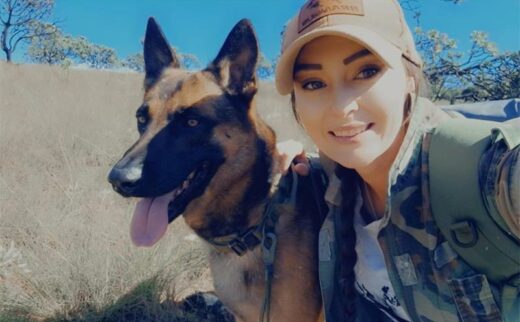
Breaking barriers in a male-dominated field
Breaking into a male-dominated field was not easy. “People said I was too soft with my dogs,” she said. “But I’ve learned that gentleness can bring out a dog’s best work. It builds trust. Training Babel took three years.”
Her personal life added another layer of challenge. “I became a single mother while building this career,” she said. “Balancing motherhood, training, and fieldwork took every bit of strength I had.”
A historic milestone for SA tracking
Their final assessment tested everything: off-leash obedience, distance commands, apprehension, and tracking, from fresh trails to an 18-hour-old track. They passed every test without a single failure. Watts also completed written exams covering dog behaviour and environmental factors.
“I didn’t go there to make history,” she said. “I just wanted to prove that my dog and I could do it.” But when the results came in, she learned she was the first woman, and the only person in the country, to hold a DH5-tracker qualification under the new regulations.
“It was surreal,” she said. “Awe, disbelief, pride, and gratitude for my dog, who had my back the whole way.”

Dreaming of an anti-poaching future
Watts now hopes to join an anti-poaching unit, using her skills to protect endangered species. She is also training her two other dogs, Juluka and Griffin, to reach the same level. Her long-term goal is to become a section ranger, leading a mixed anti-poaching unit of K9s, horses, and handlers.
“My dream is to protect the wildlife that still holds the heartbeat of this country,” she said. “I want my daughter to grow up in a world where nature still thrives.”