Community action limits Hoedspruit flood damage
Community networks and volunteers were crucial in Hoedspruit's flood response, aiding rescues and repairing key bridges.
HOEDSPRUIT – Hoedspruit’s response to the extensive floods has highlighted the strength of community engagement with residents, volunteers, and local authorities working together to limit damage and restore access after days of heavy rainfall.
While the full extent of the damage is still being assessed, Hoedspruit emerged as an example of how early mobilisation and coordinated community action can reduce the impact of natural disasters.
Volunteers coordinate rescues and clear roads
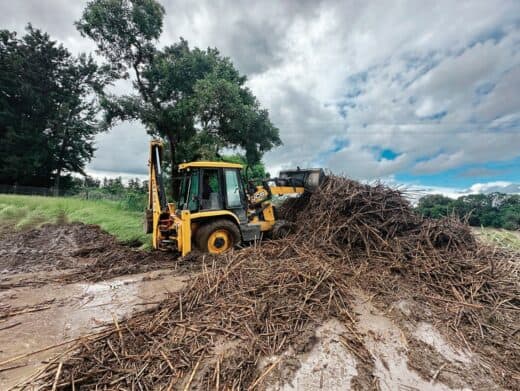
Volunteer networks such as Hoedspruit Farm Watch played a central role in the response. Drawing on lessons from previous floods in 2000 and 2012, volunteers monitored river levels and cleared drainage points days before the heaviest rains arrived. Communication through shared radio channels and WhatsApp groups allowed real-time updates on dangerous crossings, road closures, and emergency needs.
As floodwaters rose, volunteers assisted stranded motorists, monitored low-lying bridges, and helped evacuate residents and tourists from high-risk areas. At the height of the emergency, scores of volunteers worked through the night in challenging conditions to ensure that critical routes and communities were monitored.
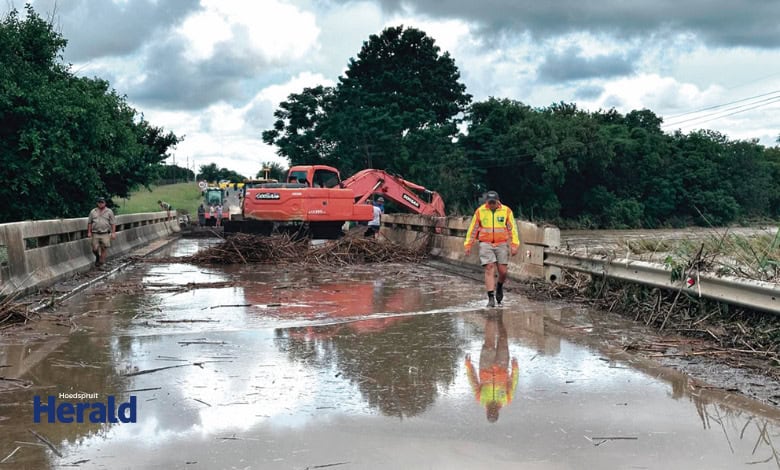
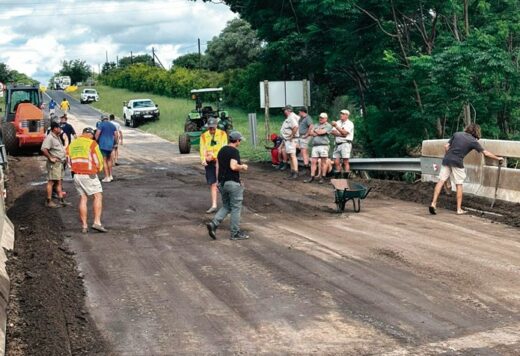
One of the most significant challenges was the overtopping of the Zandspruit Bridge on the R527, a key access route for Hoedspruit’s tourism and agricultural sectors. Once water levels dropped, Farm Watch teams used their own equipment and money to carry out temporary repairs.
Authorities and businesses adapt quickly
Local government officials were on site during reconstruction efforts, engaging directly with volunteers and technical teams to assess damage and plan longer-term repairs. Maruleng Local Municipality acknowledged the importance of community cooperation in reopening roads and restoring economic activity.
Businesses and essential services also adapted quickly. Veterinary services, lodges, and shops adjusted operations as roads were cut off, while residents said clear communication helped prevent panic and misinformation during the crisis.
In neighbouring reserves, including parts of the Sabi Sand Nature Reserve, disaster plans were activated early, with equipment and staff placed on standby. While some infrastructure was damaged, rapid repairs allowed operations to continue, reinforcing confidence in the region’s ability to manage extreme weather events.
Inside the Kruger National Park, safety remained the priority. No loss of life was reported, and staff and visitors were evacuated from affected areas as a precaution. Southern sections of the park were scheduled to reopen to day visitors as conditions improved, while northern areas remained closed due to damaged roads and bridges.
The lasting value of local networks
Residents said the floods demonstrated the value of strong local networks and shared responsibility. The coordinated response, they said, focused less on individual recognition and more on protecting lives, livelihoods, and the future of a town heavily reliant on tourism and agriculture.
“This is a critical bridge into Hoedspruit. It’s one of only three roads that come into town. It had to be cleaned and temporarily repaired to ensure it stays open. Relief work and essential goods need this bridge to reach Hoedspruit, the airport, and many guest houses and reserves,” said a Farm and Town Watch spokesperson.
He described some of the rescue operations. “A caravan was stuck on Klaserie Dam Island with a Ford tractor. We had to pull it out, along with two vehicles, using two 4x4s with winches. Another two vehicles, a Corsa bakkie and a Volkswagen Kombi, had to be towed through deep water because their air intakes were too low.”
As recovery continues, Hoedspruit’s experience has underscored how community engagement, local knowledge, and cooperation between volunteers and authorities can play a decisive role when extreme weather strikes.