Flood-hit Mbaula families to get temporary homes
The government will provide temporary housing to 39 families in Mbaula village displaced by floods, while assessing long-term relocation.
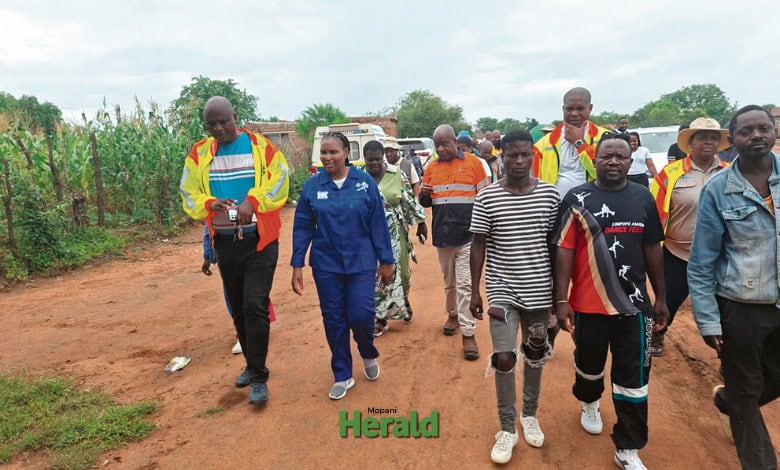
LIMPOPO – The government will provide relief to families displaced by recent floods in Mbaula village, outside Giyani, following heavy rains that caused widespread destruction across several areas.
Human Settlements Minister Thembi Simelane announced that 39 affected families will begin receiving temporary residential structures, commonly known as “TR units”, from Monday.
The families are currently being accommodated at a local church after their homes were destroyed by the floods.
Speaking during a visit to the flood-affected area on Friday, Simelane said the immediate priority was to restore dignity and safety to the displaced families while longer-term solutions are being explored.
“I think the best way we can try to help in this situation is to rebuild,” said Simelane. She noted that some families were already trying to salvage what little remained of their belongings in an effort to start over.
The minister confirmed that the local chief had identified and allocated a portion of land where the displaced families could be resettled.
She said government officials would first assess the suitability of the land before any permanent construction could begin.
“Let us assess the land that has been given and start rebuilding their lives as fast as possible,” she said. “It is a very sad sight to see how people have lost everything they had in the floods. I am glad, though, that many people survived because it could have been worse.”
Simelane also raised concerns about the long-term safety of residents remaining in the area, indicating that a detailed study would be needed to determine the level of flood risk.
“That is something we can look into after we have dealt with the emergency,” she said, explaining that if the area is low-lying, residents could remain vulnerable to flooding in the coming years.
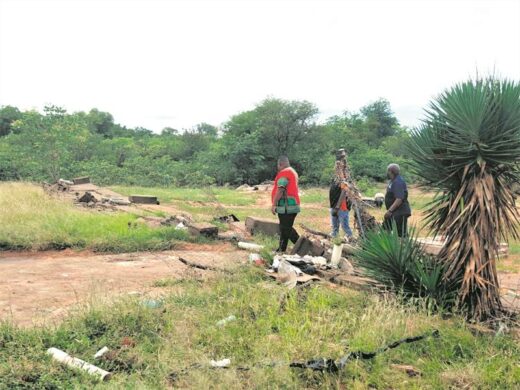
She added that the government was particularly concerned by weather forecasts predicting possible heavy rains between February and March, which could once again threaten communities in low-lying areas.
“These assessments are necessary because we do not have early anticipation of when a similar situation might occur again,” she said. Her concerns were echoed by Cooperative Governance, Human Settlements and Traditional Affairs (CoGHSTA) MEC Basikopo Makamu, who warned that rebuilding in the same area could place lives at risk.
“One thing I can say is that even if we build houses for them here, because it is a place they love very much, we would be risking their lives,” Makamu said. “The same floods could happen again, maybe ten or twenty years later.”
Makamu said the scale of destruction was evident during visits to affected households, including the home of the local chief. “I also had the opportunity to go to the house of the chief, and it was very painful,” he said.
“Everything you can think of inside a house, whether teaspoons, a stove and many other items, was swept away, leaving the house completely empty,” he said, adding that the rollout of temporary structures would provide immediate relief, while long-term plans focus on safer human settlements and reducing the risk of future flood-related disasters.