Lioness that crossed borders gives birth to cubs in Kruger
After surviving conflict with people and an extraordinary journey across international borders, the lioness has reached a remarkable new chapter.
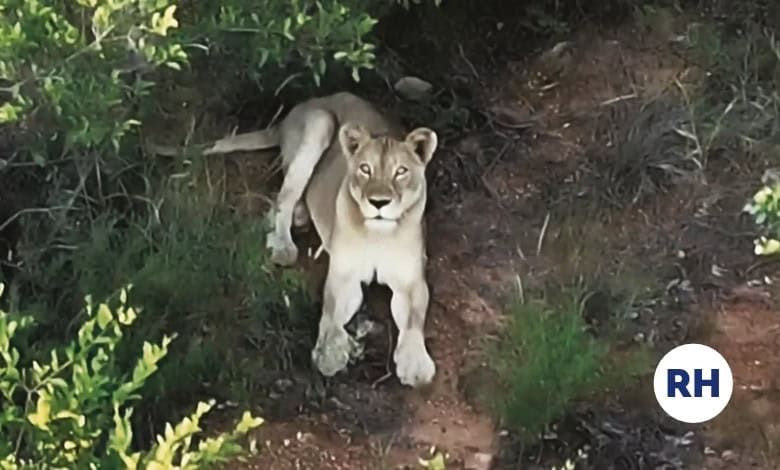
LIMPOPO – A lioness that travelled across international borders, survived human-wildlife conflict and faced an uncertain future has given birth to a new litter of cubs in the Kruger National Park (KNP), marking a remarkable conservation success story.
A remarkable journey
The lioness’s journey began at Mthimkhulu Game Reserve, where she was captured after coming into conflict with surrounding communities and killing donkeys. Lions that prey on livestock are often regarded as problem animals and face several threats, including poisoning, snaring and euthanasia.
To protect both the lioness and local communities, the Endangered Wildlife Trust (EWT), together with Ledet, Sanparks, Mthimkhulu Game Reserve, Letaba Ranch and Wildscapes Veterinary Services, arranged for her and her pride to be relocated to the northern KNP.
However, after a few months in the park, the lioness began an unexpected journey of her own. She crossed the Limpopo River into Zimbabwe, where she spent several months roaming through the Sengwe Corridor.
Her movements eventually took her south towards Musina, before she crossed the flooded Limpopo River back into South Africa and made her way to Maremani Game Reserve.
Her presence raised concerns among local communities about the risks of having a large predator living close to people. After consultations between Sanparks and Ledet, they decided to return her to the KNP.
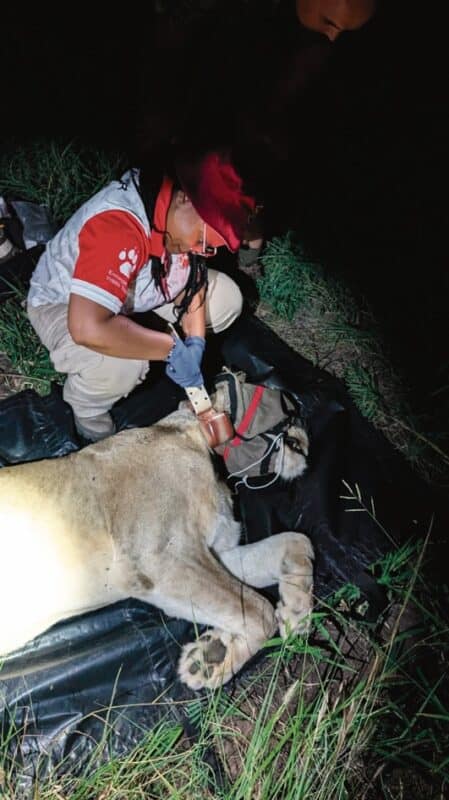
Through the combined efforts of veterinarians, landowners, government authorities and conservation teams, the EWT successfully darted the lioness and safely brought her back into the park.
YOU MIGHT ALSO LIKE: Take a photo, track a cheetah in Greater Kruger
A new beginning
Now, the lioness’s story has taken a positive turn, with an EWT field officer confirming that she has given birth to a new litter of cubs. The development suggests that she has settled into her new home, established a territory, and is once again raising the next generation.
Eleanor Momberg of the EWT said the lioness’s journey highlighted the value of tracking technology and collaboration in carnivore conservation.
“Without the GPS collar, following her journey across reserve boundaries and an international border would have been incredibly difficult. It allowed us to monitor her movements and coordinate interventions to give her another chance,” she said.
The journey also underscored the challenges of human-wildlife conflict and the need for cooperation across geographical and political boundaries to promote coexistence.
A conservation success
As apex predators, lions play a vital role in healthy ecosystems, while the birth of the cubs offers hope for the species and the establishment of a new breeding population.
The EWT thanked its donors, the Lion Recovery Fund and Kevin Richardson Foundation, as well as its conservation partners, including Sanparks, Ledet, Gonarezhou National Park, Maremani Game Reserve, Mthimkhulu Game Reserve and Wildscapes Veterinary Services.