
VIDEO: Canadian tourist sets powder keg off with letter
A 25-strong group of archaeologists from both Tuks and Unisa, descended on Botshabelo this week for excavations to determine how life was lived and how affluent a life, after Alexander Merensky founded the missionary station in 1865.
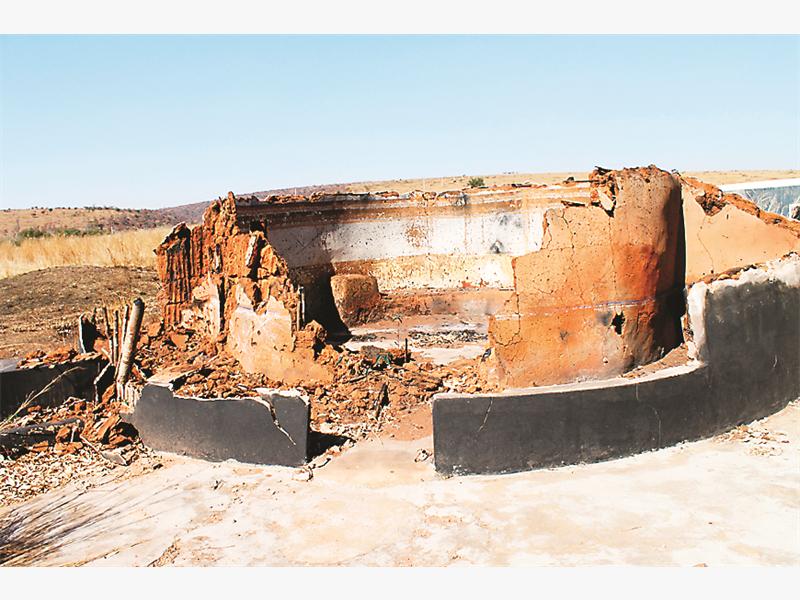
And while they are digging and scraping in the dirt to record the history of the Place of Refuge, heritage organisations are fighting an uphill battle to get government to stop further degradation of the historical village at the hands of claimants, one of whom are the former Mpumalanga premier and present deputy minister of justice, the Thabang Makwetla.
Last week, Mpumalanga’s provincial heritage authority received a scathing letter from a Canadian tourist who was so disgusted by what he encountered at Botshabelo, he could not help but criticize government of embodying the African stereotype of breaking everything that works.

Mr Roland Beck wrote in his complaint to the Heritage Foundation, that the theft and vandalism for the historical artifacts, and collapse of structures like the church and fort, “strikes at the heart of the history of modern-day South Africa”.
Mr Beck holds a history degree from Queen’s University in Canada and lived in the country for nine years, during which he visited Botshabelo in the early 1990s.
“On my return, I was shocked at the state Botshabelo is in, it is literally falling apart and is in a state of horrible disrepair,” Mr Beck bemoaned the ill fate that has befallen Botshabelo in the land restitution bid.
He warned government, “when the minerals are gone one day, South Africa will rely more and more on tourism for ongoing opportunities for social development.

If key elements like the Merensky house and its contents, no longer exist because of vandalism and neglect, South Africa will have lost a key resource”.
The letter was immediately forwarded to the SA Heritage Resources Agency (SAHRA) and also widely distributed to media editors and political parties in the province, like the DA who has been very vocal on the protection of Botshabelo.
A meeting has been scheduled for Friday between the Heritage Foundation and SAHRA, to map out a strategy to have both government and the Botshabelo Community Development Trust commit to the protection and restoration of the globally recognized heritage site.
During a visit to Botshabelo on Wednesday the Observer found all museum artifacts removed from the Parsonage.
All doors had been forced open months ago allowing for the systematic theft of historical valuables, mostly on loan to Botshabelo from fellow museums.

Mr Beck called for the immediate removal of artifacts in his letter but is unclear whether the heritage Foundation had intervened since senior manager of conservation, Ms Cecilia Kruger, was unavailable for comment at the time of going to press.
Dr Natalie Swanepoel, the head of archaeological excavations at Botshabelo says that previous digs, unearthed a treasure trove of artifacts like porcelain, which suggests that at the time of persecution of Christians by Sekhukune, residents of Botshabelo all resided in close proximity, linked by stone walls, directly below Fort Merensky for safety.
See Video here:
Botshabelo later became an autonomous town, functioning independently of Middelburg, and even providing town with building materials, wagons and leather products manufactured there.
Democratic Alliance leader, Mr Anthony Benadie weighed in on the fraccas, accusing government of turning a blind eye to the sustainability of restituted agricultural and tourism ventures, a sentiment which was echoed by minister Makwetla during a one-on-one interview.
During the interview, minister Makwetla alluded to the trust’s inability to transparently manage finances, like the Lotto’s missing millions, the disappearance of which is being investigated by police.
Apart from Makwetla himself having obtained his early education at Botshabelo, the DA’s James Masango also grew up there alongside world renowned artists, Gerard Sekoto.