
Study to determine existence of war graves
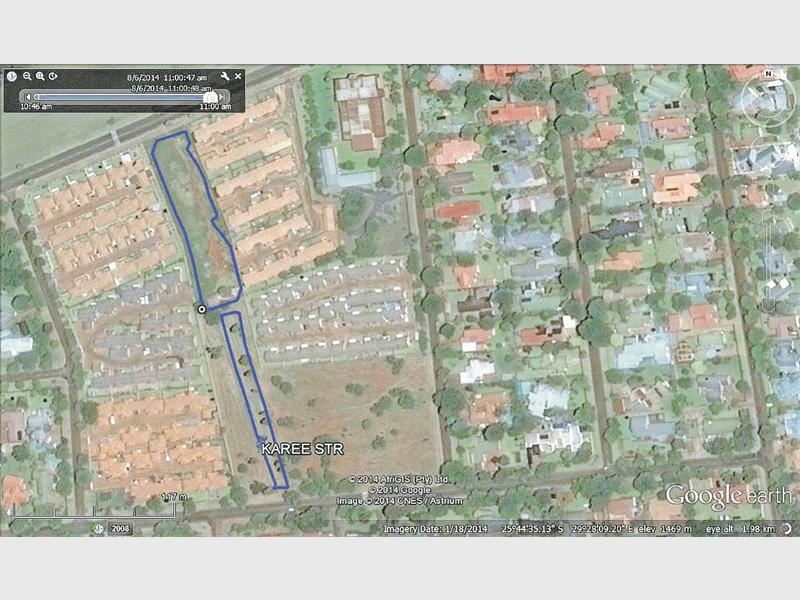
PGS Heritage and Grave Relocation Consultants will be conducting a limited ground penetrating radar survey of the Anglo Boer War concentration camp cemetery in Karee Street next Tuesday, to determine whether there might be more graves than those documented by the Brits.
Ms Corine de Jonge, 150 year centenary celebration organiser, told the Middelburg Observer that she had pressed for the ground penetrating radar survey for two years, in an effort to prove that there are many more graves, including those of black war casualties.
If her suspicions are correct, the survey will officially mark the first known black concentration camp burial site in South Africa.
Middelburg is also the only town where three concentration camp burial sites can be found.
De Jonge’s two year long struggle to get the survey commissioned and funded, has finally yielded results, now that BSc Honours student, Mr Okuhle Sapo wants to research the site, for his dissertation for his Master’s Degree.
The survey will be headed by Dr Coen Nienaber, who says that the extent of the cemetery beyond the graves currently marked on the surface, is unknown.
Historical sources indicate graves in excess of 1200, and preliminary surface inspection findings show signs of graves outside the fenced area, which has been closed down to prevent further development on what may very well be a large extension to the marked cemetery.
The aim of the proposed study is to establish whether there is clear evidence of more graves situated on the 4000m² undeveloped site.
The survey can only indicate the presence or absence of anomalies that might be consistent with graves. The survey will however not be able to identify the exact number or specific locations of graves.
Dr Nienaber recommends extensive documentary and archival research of the site and geo-physical prospecting of all total open areas.
In case of the presence of graves, Dr Nienaber recommends large scale ground truthing and archaeological test excavations to verify the geo-physical results.
After that, excavations to determine the demographic profile of the buried individuals, should take place.
This can be done without removing the remains from the graves, but will entail excavating the graves and exposing the remains.
The quoted estimate for the survey in August 2014, stood at R63 000.
Funding for the research has however been availed by Mr Sapo’s tertiary institution.
“We will finally be able to lay suspicions to rest that the bordering residential developments flanking the cemetery, may have been built on existing graves,” Ms De Jonge says.