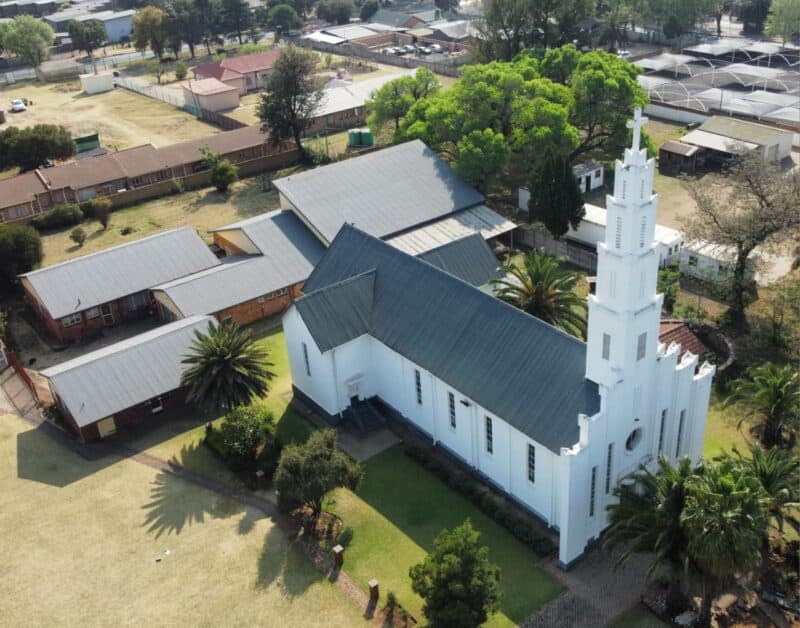
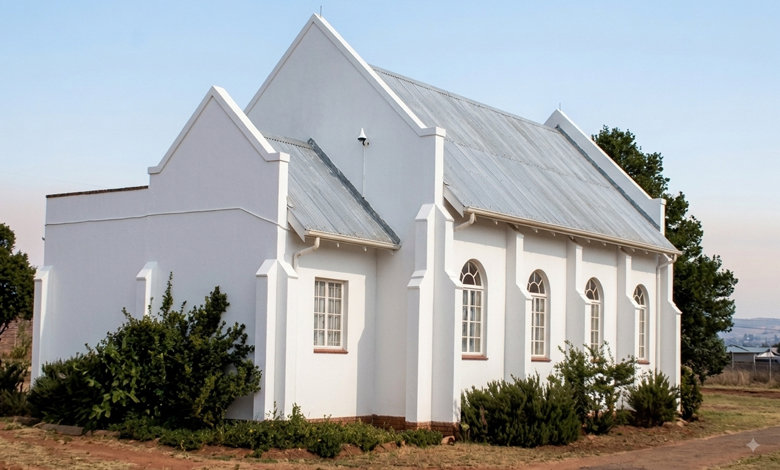
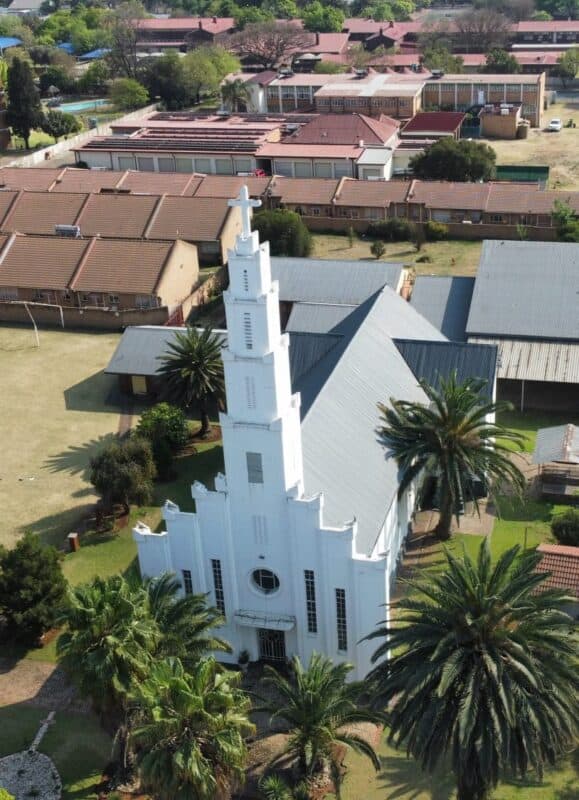
The impressive St Joseph’s Catholic Church in Middelburg has an interesting history, interlinked with two wars. The first formal drive to establish a Catholic congregation occurred during the Anglo-Boer War, while the current church was built during the Second World War.
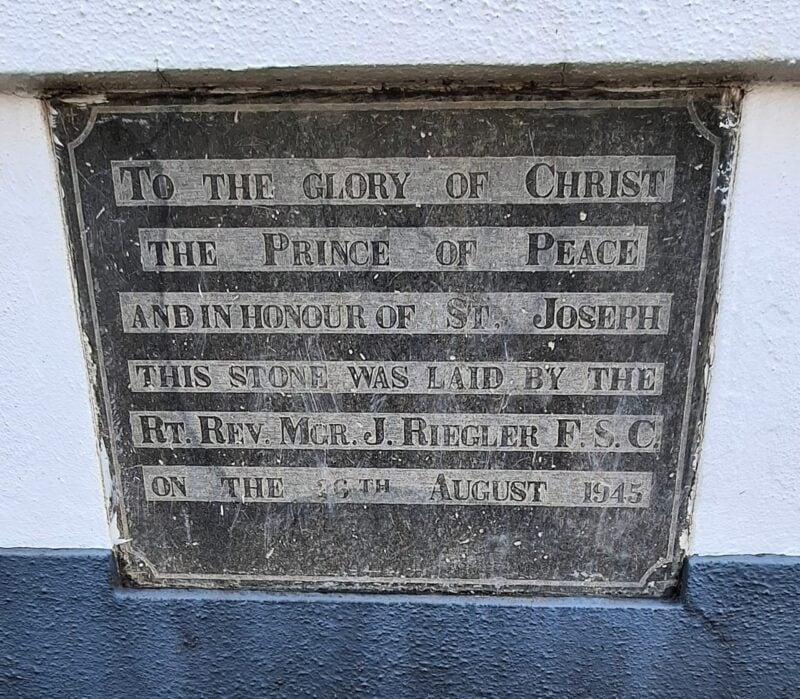
On August 26, 1945, 81 years ago this week, the cornerstone of this building was laid.
Catholic Church after the Anglo-Boer War
No records could be found of any Catholic activities in Middelburg before the Anglo-Boer War (1899–1902). The Imperial Forces were accompanied by several priests who served as chaplains. After the war, an Imperial Garrison of around 30 000 soldiers was based in Middelburg’s Cantonments area, the present-day Clubville and Gholfsig areas southwest of town.
Some of these soldiers and their families were possibly Catholic, as a Roman Catholic chaplain served at the base. The Cantonments, however, had no church buildings.
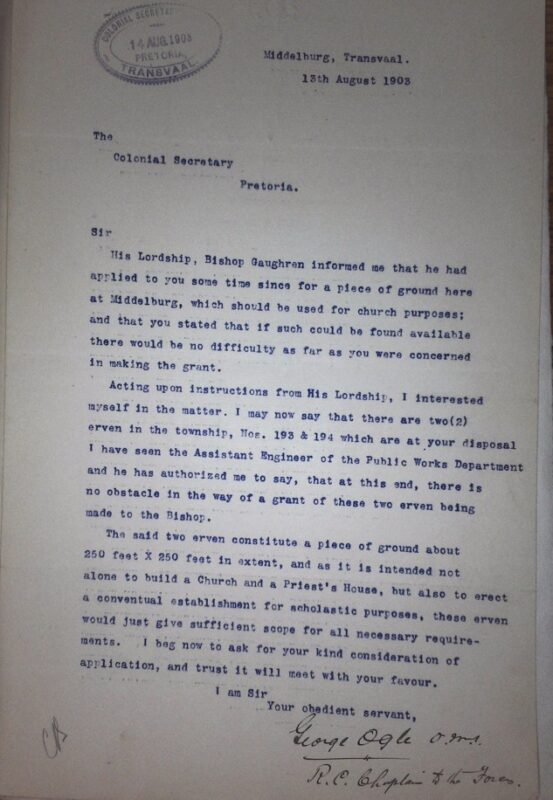
The presence of this Roman Catholic chaplain at the Imperial Garrison initiated efforts to establish a church. In August 1903, the Roman Catholic chaplain in Middelburg, Rev. George Ogle, requested that the Colonial Authorities transfer plots 193 and, later, 194 to the Catholic Church for ecclesiastical purposes. He indicated that the plots would be used for a church and a residence for the priest. On August 12, 1903, Bishop M. Gaughren, Roman Catholic Bishop of Johannesburg, wrote to the Colonial Authorities with the same request. These two plots were situated in Bhimy Damane Street, just east of the present Nederduitsch Hervormde Church.
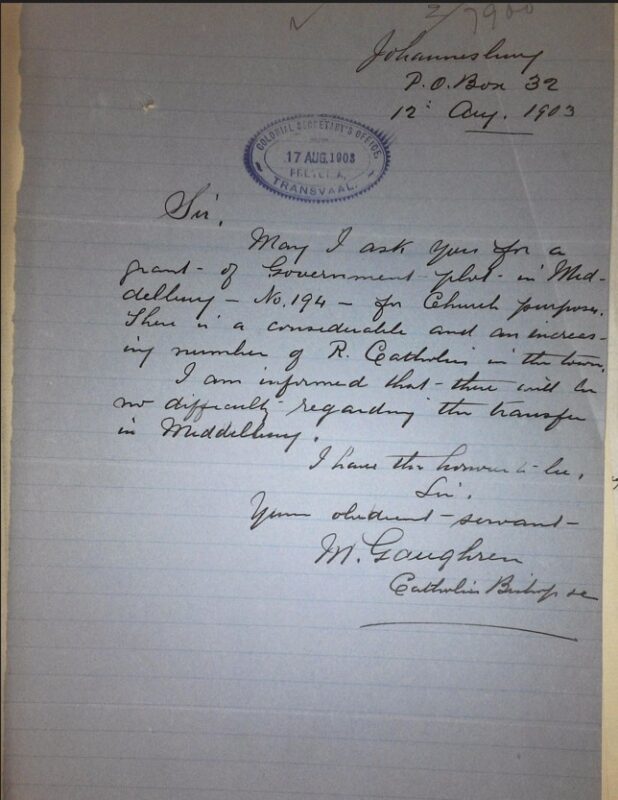
On August 29, 1903, the Health Committee of Middelburg, the predecessor of the City Council, stated that it did not oppose the allocation of the plots. Additionally, the Education Authorities confirmed that the plots were not needed for educational facilities. After much correspondence between the different Colonial Authorities, the request was altered so that the two plots would be made available to the church at a nominal rent and would therefore not become church property. The Royal Engineers indicated that the local priest had no objection to this arrangement.
Whether the plots were actually used is uncertain. However, it is mentioned that a small church building connected ‘to the English Soldiers’ burned down in 1918.
The Imperial Garrison left Middelburg in 1908, in the run-up to the First World War. This led to economic stagnation in the town and a drastic decrease in the number of residents and, consequently, members of the various churches.
Period 1918 to 1931
After the original church burned down, there is no clarity about the Catholic Church in Middelburg. The period until after the First World War was a very stagnant one for Middelburg, and it is possible that the Catholic Church made use of a hall for what was probably a very small congregation.
Period 1931 to ±1935
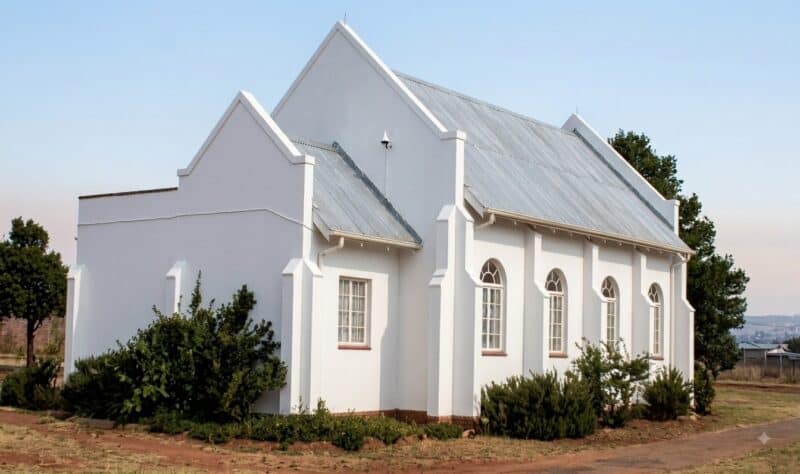
The Catholic Church acquired Erf 870, south of the railway line. In 1931, Rev. Klassert built a new St Joseph’s Church building just south of the railway line, on the way to Kruger Dam. The small church supported the Catholic community until a new property was acquired in Cowen Ntuli Street.
This church was subsequently sold to the Old Apostolic congregation of Middelburg, which continued to use it until the late 1960s. After a new church was constructed for this congregation, the original building was repurposed as a hall. It was later demolished.
Period 1935 to 1945
In 1935, an extensive strip of land was purchased that stretched from Cowen Ntuli Street all the way to Long Street. Whether the land was purchased or acquired from the City Council remains uncertain.
The church then erected a simple rectangular church building bordering Cowen Ntuli Street. This church served the Catholic congregation until 1946.
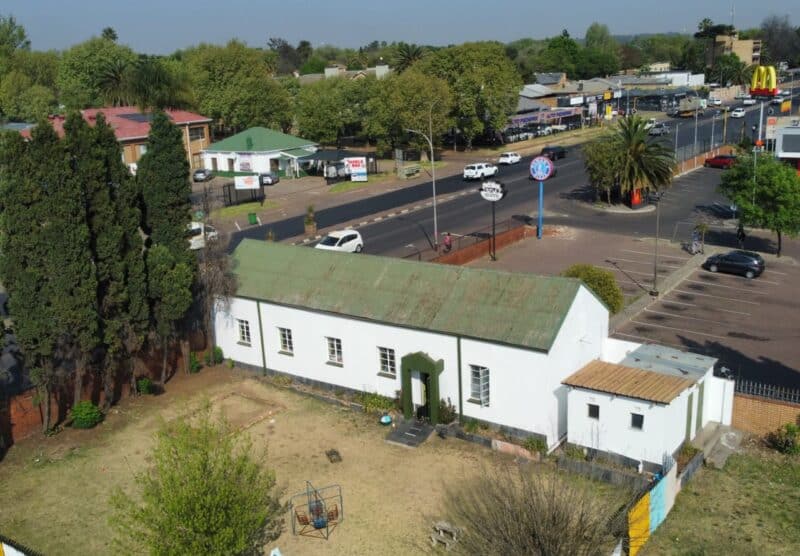
The building still exists and currently serves as a kindergarten. A hostel was constructed on the northern side of the site during this period.
Period after 1945
During the early 1940s, as the congregation gradually increased in size, the decision was made to construct a new church building specifically designed for worship, located to the east of the original rectangular structure.
Sister Ambrosia, an Austrian missionary nun of the congregation, made sketches of a church building, and these sketches were used for the design. The design closely resembled that of the Catholic Cathedral in Lourenço Marques (Maputo).
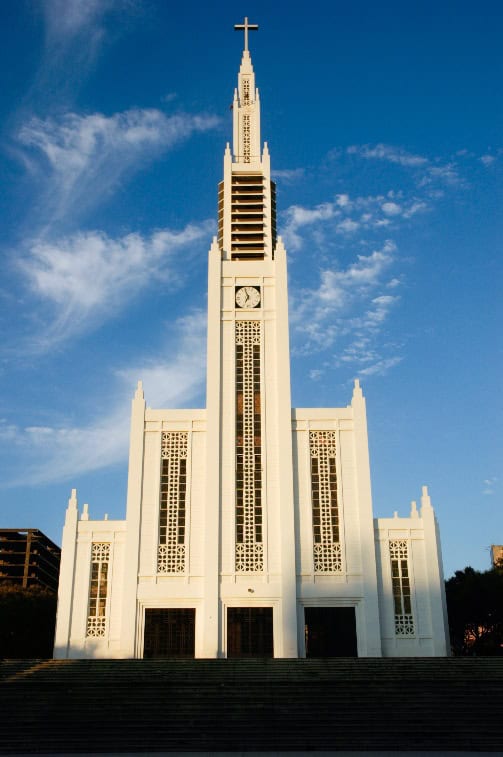
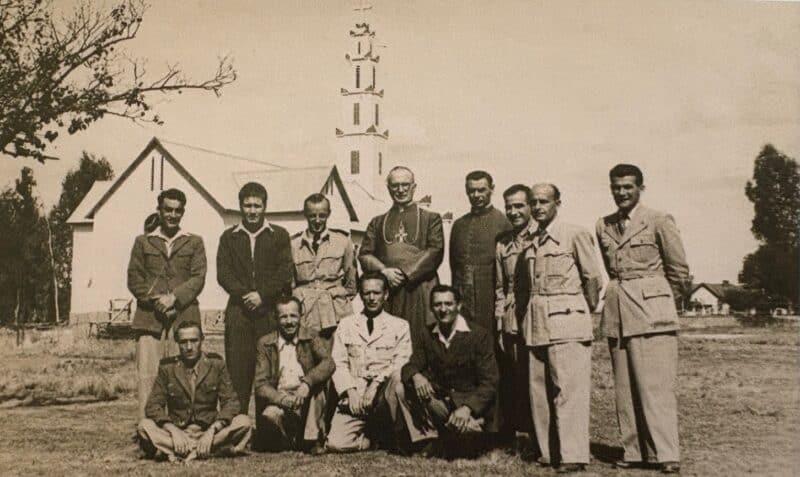
Under the leadership of Rev. Anthony Reiterer, an Austrian-Italian missionary, the church was planned. With the help of Brothers Lamprecht, Stengel and Ruper, a new church was designed and built in a typical Art Deco style, with a towering spire.
During the Second World War (1939–1945), the Union of South Africa agreed with the Allied Powers to accommodate prisoners of war from first the North African Theatre of War and later the European Theatre in South Africa. This was a very turbulent period in South African history, with a substantial proportion of the population not supporting the Smuts Government’s involvement in the war. Especially within the Afrikaans-speaking section of the population, a pro-German sentiment existed.
Due to this sentiment, the Smuts Government was very reluctant to accommodate German prisoners of war in the Union, but was willing to accept Italian prisoners. Through this action, the Union Government wanted to demonstrate its loyalty to the Allies, and specifically the British war effort, but also to help alleviate the labour shortage in the Union caused by the large number of troops deployed.
During this period, the Union accepted approximately 90 000 Italian prisoners, who arrived mainly via Durban Harbour. Although large numbers of these prisoners were illiterate and unskilled, some were craftsmen and skilled stonemasons or bricklayers.
In line with the Geneva Conventions, these prisoners could be used as labour under specific conditions. Italian prisoners were placed into work teams to build roads, bridges and mountain passes, and to work on farms as farmhands.
A team of these prisoners was assigned to the Catholic Church in Middelburg to help construct the church. The existing stable building that once occupied the site was incorporated into what is now St Joseph’s Church. The high quality of the workmanship and the skills of these prisoners are still visible today in this 80-year-old building.
On August 26, 1945, the cornerstone of the new church was laid by Reverend Monsignor J. Riegler and on May 20, 1946, the blessing of the church took place by the Apostolic Delegate Martin Lucas.
Artwork in the church
This church building houses some of the most important and unique artwork in Middelburg.
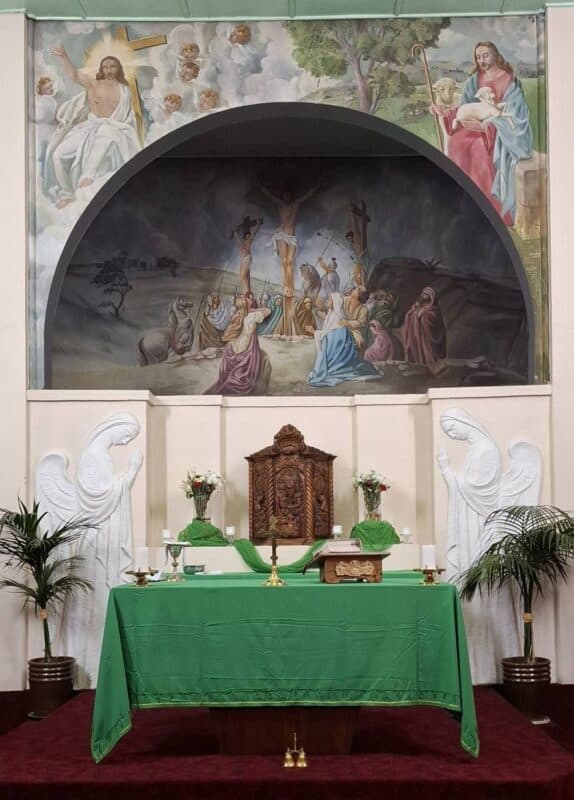
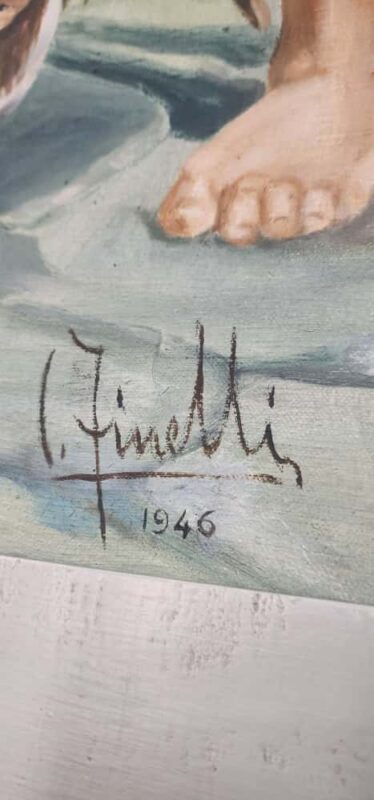
One of the Italian prisoners of war, L. Finelli, was a gifted artist and is responsible for the remarkable murals in the church. In the alcove behind the altar, he painted the Crucifixion scene, with Mother Mary and John at the foot of the cross, the two crucified criminals, and a Roman soldier on horseback, all depicted life-size. In the arch above the altar is a representation of the Second Coming and the Good Shepherd.
These murals were completed in 1946 and were restored in the 1960s.
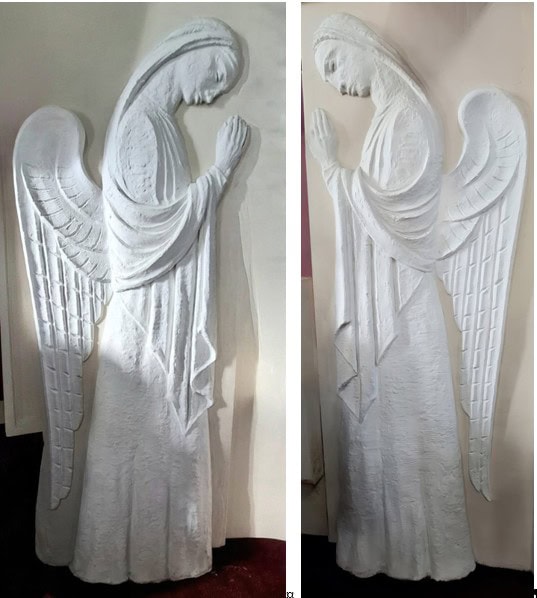
On either side of the altar are two relief sculptures of angels by the renowned sculptor Edoardo Villa. Villa (1915–2011) joined the Italian Army and, after several deployments, rose to the rank of captain during the Second World War. Captured on December 9, 1940, he was sent to the Zonderwater Prisoner of War Camp near Cullinan. After the war, he remained in South Africa and became an internationally acclaimed sculptor. These works are among the most unique and valuable artworks in Middelburg.
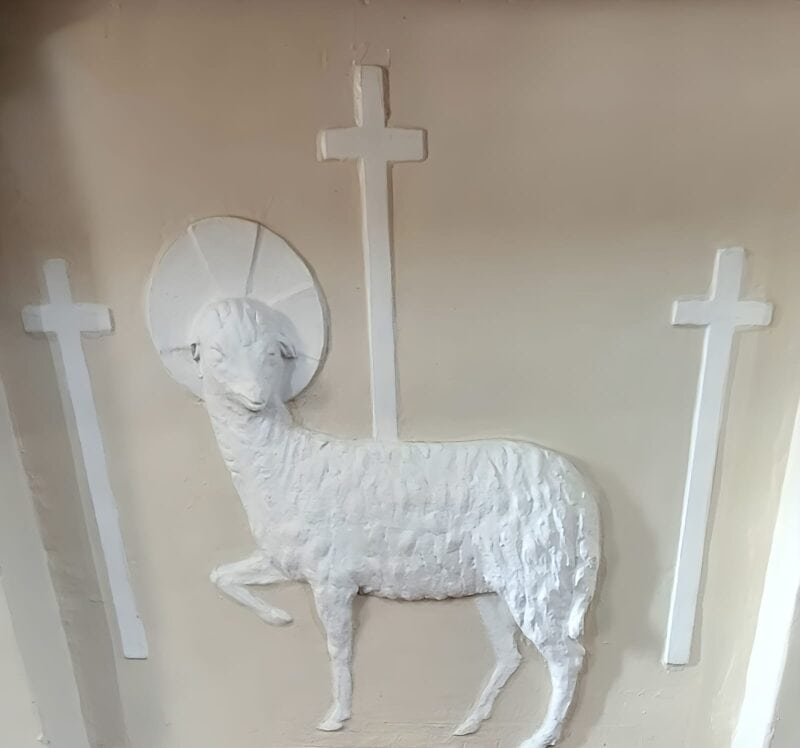
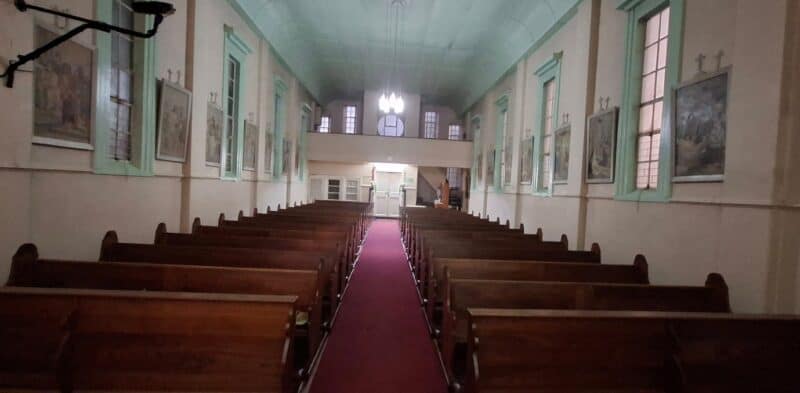
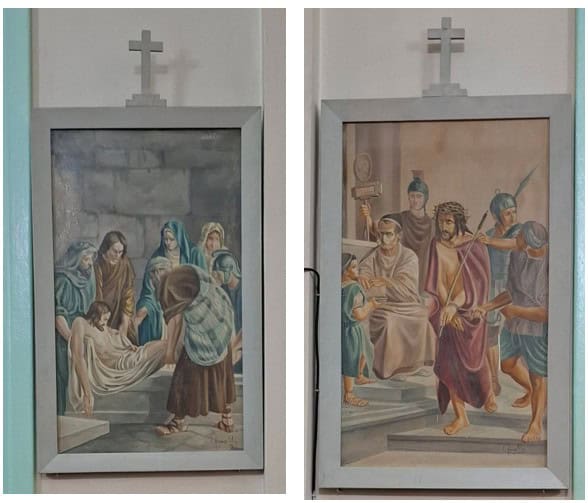
On the sides of the church are 14 framed paintings of the 14 stations of the crucifixion, according to Catholic tradition from the ancient church. These were also painted by Finelli.
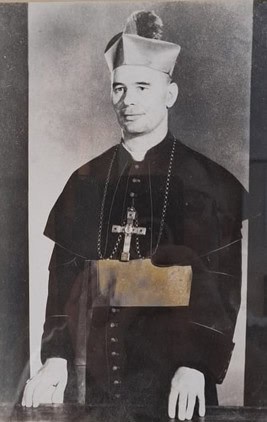
At first, Father Klassert from Witbank served the congregation, but once the church was built, Father Steidle became the parish priest for the community.
St Joseph’s Residence and Home for the Elderly
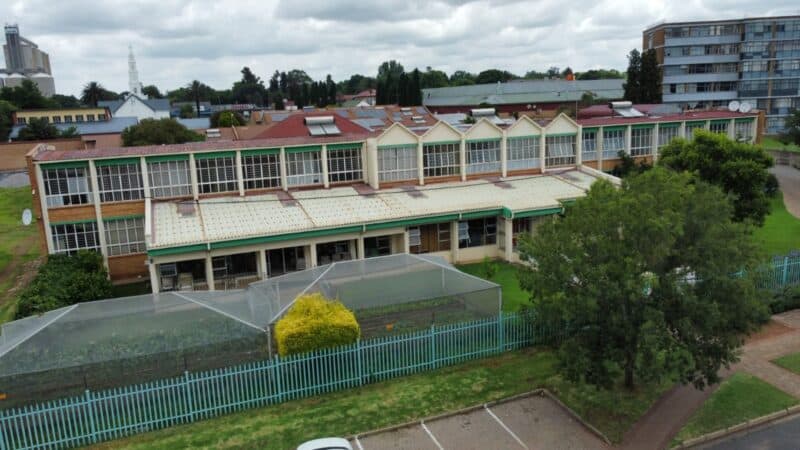
From 1935, the Catholic Church developed a hostel for boys on the northern side of the site, facing SADC Street (Long Street), under the leadership of Father Steidle. The architectural style suggests that the building may have been constructed as early as 1910. Whether the house was already on the site and was then converted into a hostel, or whether it was newly erected, is unknown.
The hostel provided accommodation for schoolboys and was managed by the Franciscan nuns.
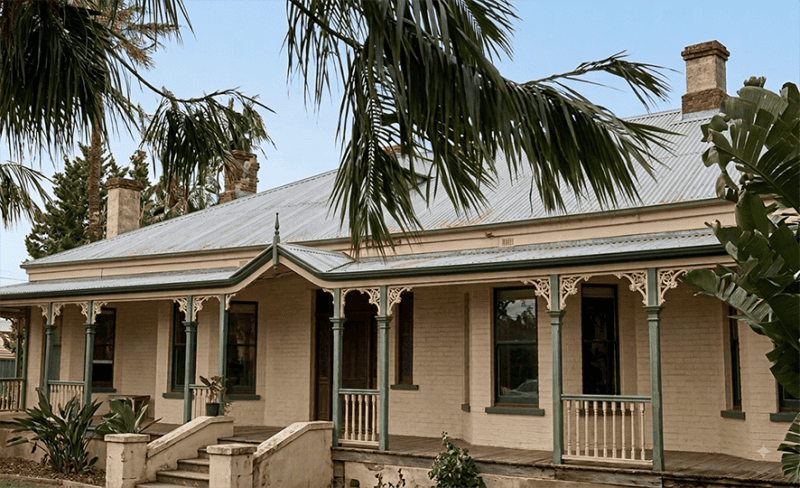
The hostel served as a boys’ hostel for pupils at both Middelburg Primary School and Middelburg High School, which at that time was a parallel-medium high school. It accommodated pupils from across the present-day Mpumalanga area, as well as from Mozambique and Eswatini.
During 1969, the education department decided that Middelburg High School would become a single-medium Afrikaans school. The English-speaking high school pupils were then transported by bus to Witbank to attend an English-medium school. As Middelburg Primary School had a hostel, Nelson House, the function of St Joseph’s hostel as accommodation for school-going boys was no longer required.
Under Reiterer’s leadership, the hostel was transformed into St Joseph’s Home for the Elderly. Sisters Michaela and Fariona were then involved in the management of the home.
Closing remarks
The congregation slowly expanded. In 1950, the first Catholic church was built in Mhluzi, followed by a church in Nazareth in 1975.