The importance of free and fair media
JOBURG – Freedom of expression is one of the most fundamental human rights. Its importance is highlighted each year on 3 May – World Press Freedom Day.
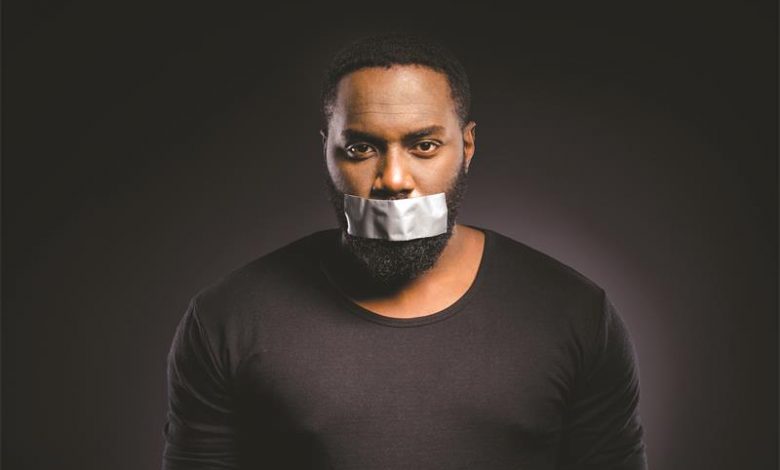
Once muzzled by an oppressive government, South African media freedom is today guaranteed by our progressive constitution. Absolute freedoms will always be something of a unicorn, however – coveted but not real.
Hopewell Radebe, the acting executive director of the South African National Editors’ Forum (Sanef); Latiefa Mobara, the executive director of the Press Council of South Africa; and Kate Skinner, an independent media researcher who, until the end of March, was SANEF’s executive director, were asked what they believe to be the biggest threats facing press freedom in South Africa in 2021.
This is what they had to say:
Financial pressure
Skinner says the precarious financial situation in the media is her number one concern. “It impacts on so many things, including journalism ethics, independence of the media, and the wellbeing of journalists.
“Newsrooms have been stripped to the core, with a skeleton staff of journalists who constantly live in fear of losing their jobs. Also, they have to shoulder huge workloads, including covering a constant array of different topics on different platforms,” she says.
Mobara agrees, saying that the digital disruption has impacted hugely on the media industry, with the closures of several magazines and newspapers and the migration of print media towards digital platforms, and often behind paywalls.
“Good, credible journalism costs money. The public needs to recognise the importance of media as a public good and contribute to its continued existence. By paying for news, the public will be contributing to the professionalisation of the media industry,” says Mobara.
Attacks on journalists
Radebe says there is an increased incidence of attacks on journalists. “We must resuscitate media freedom awareness campaigns to enlighten societies, particularly in hot spots and protest areas, to respect the right of journalists to work freely,” he says.
He is particularly concerned by the number of incidents during the strict Covid-19 lockdown, citing the case of community media journalist Paul Nthoba, who was harassed, assaulted, and detained after photographing police officers enforcing lockdown measures in the Free State.
Nthoba was charged under a Covid-19 regulation of the Disaster Management Act.
“He ended up fleeing to Lesotho and only returned home two months’ later, following Sanef’s appeal to President Cyril Ramaphosa. Nothing has happened to the officers,” says Radebe.
Skinner is particularly concerned about the harassment of female journalists, and the fact that to date, ‘we have not been able to stem the tide of abuse’.
Mobara believes that commu-nities should act to prevent violence against journalists, such as the recent robbery at gunpoint of the eNCA news crew reporting on the lack of service delivery in Khayelitsha, Cape Town.
Radebe says Sanef also finds the State Security Agency’s continual monitoring of some journalists, by spying on them or tapping their phones, deeply worrying. “Journalists continue to be harassed by our law enforcement agencies, the SAPS in particular, not as an official government position, but individual officers whose actions are too common and consistent.”
He says Sanef has approached the National Police Commissioner to request official intervention.
Social media
Radebe, Skinner and Mobara all raised social media as a threat to press freedom because of the spread of disinformation, the verbal attacks on journalists and the loss of potential income.
Skinner says the social media environment can be really toxic and dis- and misinformation are freely spread. “There are a number of problems with this situation – people are getting their information from social media and less so from the established media. This is a problem because disinformation is rife. Also, some journalists rely heavily on social media and this means that this dis- and misinformation can then be spread through the established media too.”
She says social media platforms are soaking up the lion’s share of advertising revenue ‘which is undermining the sustainability of the media’. “We need to look at ways to tax the tech giants.”
Mobara says that social media has made communication easier and faster and has the potential to build more informed societies. “In many cases, however, the opposite has happened. Communities have become more fractured; opinions on social media often reign larger than facts; cyberbullying is more pervasive and we have seen an increase in mis- and disinformation which has led to more polarisation in our society.”
Skinner says female journalists especially are harassed and abused on social media platforms and, over time, this abuse can lead to – and has led to – them leaving the media sector and also shying away from certain topics, including taking on powerful politicians and commentators. “This is a serious problem for press freedom,” she says.
Sanef, with Media Monitoring Africa, plans to resuscitate the online tool that was designed to help journalists report instances of harassment and violence ahead of this year’s local government elections.
Taking stock on World Press Freedom Day
This year’s World Press Freedom Day is being commemorated under the theme ‘Information as a Public Good’, which affirms the importance of treasuring information as a public good.
Reporters Without Borders’ (RWB) 2021 World Press Freedom Index ranks South Africa at 32 out of 180 nations surveyed The country was ranked 31st in 2020 survey.
RWB says that while press freedom is guaranteed in South Africa, it is fragile. The report reads: “South Africa’s 1996 Constitution protects press freedom. An investigative journalism culture is well established but apartheid-era legislation and terrorism laws are used to limit coverage of government institutions when ‘national interest’ is supposedly at stake.”
Mobara says the law protects the media in spite of the reluctance of some law enforcement agencies to implement media freedoms. “The courts too are fearlessly protecting journalists, as shown by the ruling in favour of journalists branded askaris and stratcom journalists by the EFF,” she says.
Radebe says press freedom will be enhanced by a review into the unintended consequences of the Promotion of Access to Information Act. “Many government authorities are now using it to delay the media from accessing information and getting their stories out.”