Elderly residents get their vaccinations at the Midrand Fire Station
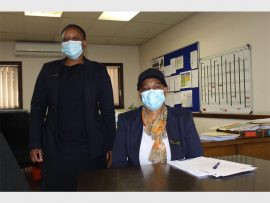
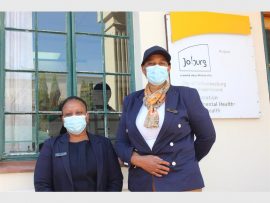
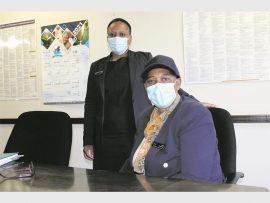
MIDRAND – The City of Johannesburg’s Region A Health Deputy Director, Nelly Shongwe shared information regarding the vaccine roll-out which might assist many residents in Region A get their jab.
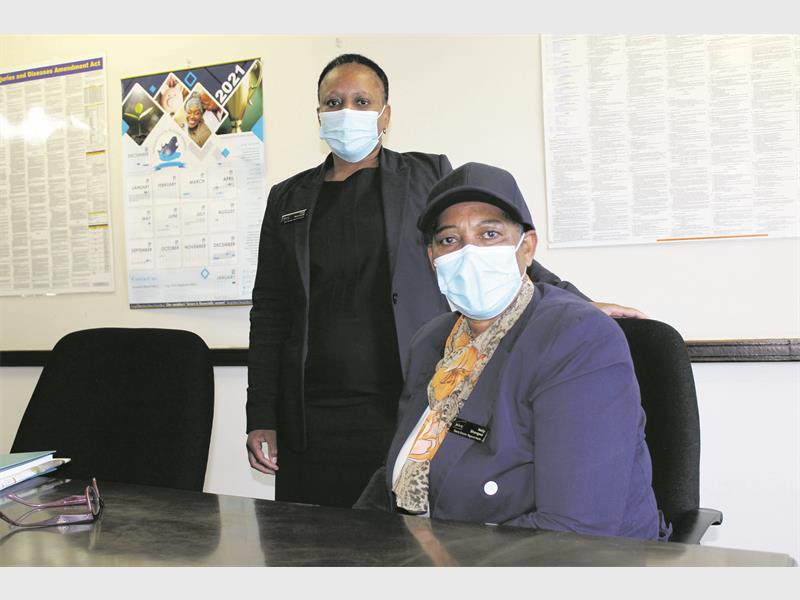
The Midrand Reporter met with officials of the Region A Health Department on 14 May to discuss the second phase of the Covid-19 vaccinations.
The City of Johannesburg’s Region A Health deputy director, Nelly Shongwe shared details about the vaccine roll-out to help inform residents in Region A.
Shongwe explained that clinics within Region A are very small and would not be able to accommodate both day-to-day patients and people coming to receive their vaccination. Therefore, they identified a number of separate vaccination sites to ensure that clinics within the region can continue to operate normally. All of the sites, aside from Witkoppen Clinic and Diepsloot Community Hall, are currently operational.
The following locations have been identified as vaccination sites:
- Midrand Fire Station
- Ivory Park North Hall
- Lord Khanyile Community Hall
- Diepsloot Community Hall
- Witkoppen Clinic.
“Midrand West Clinic is already a congested facility, and we know that in the greater Midrand area we do not have any community halls available. Hence, we have identified the Midrand Fire Station as a vaccination site,” Shongwe said.
She highlighted that residents could also obtain their vaccine from pharmacies, doctors or even private clinics through their doctors.
Shongwe explained that the Diepsloot Hall will be managed by the Gauteng Health Department, and Fourways and Dainfern areas will be serviced by the Witkoppen Clinic. “We also have the Diepsloot surrounding areas that we are also servicing using a mobile clinic.”
She said the mobile clinic is a registered vaccination site and will move to the outskirts of Diepsloot as well as Riverside, where there isn’t a clinic. “The mobile clinic will go there twice a week. So we have the ‘go to them’ and the ‘come to us’ strategy.”
She said community health workers will visit households of people who are bedridden or unable to move. The health workers will be able to vaccinate them at their house to ensure that each person who is eligible receives a vaccine.
She added that if a person has already received an SMS referring them to a vaccination site far away, they can go to their nearest vaccination site or a site of their choice, where they will be assisted.
Moving vaccines
Shongwe said there are vehicles dedicated to moving the vaccines to the sites. It will be stored and monitored at a place identified in the region and a full-time pharmacist will monitor it very closely. However, to keep the vaccines at the required temperature, they will have to use the World Health Organisation’s (WHO) recommended cooler bags when collecting them at the storage site. Temperatures will be monitored inside the cooler bags as well as when the vaccines are moved to vaccination sites.“At the vaccination site, they can be administered at room temperature once they are prepared. Once we have vaccinated everybody, if there are any other vaccines left, we will then check if their temperature has been maintained according to the WHO specifications which would determine whether we move them back to the storage site or not so we can account for what we have utilised for the day and what the balance is for the day.”
Allocation of vaccines
Shongwe highlighted that they were not allocated a specific number of vaccines, however, they determine how many vaccines are needed by identifying those registered on the Electronic Vaccination Data System (EVDS). The system will book people based on available supplies.
Plans for vaccination sites and the vaccination process
Shongwe said there will be a minimum of five nurses to provide vaccinations at each site. Through their formula, one nurse will be vaccinating at least 40 people. Therefore, if they have 10 nurses at a vaccination site, they would expect to vaccinate at least 400 people a day.
She added that when all elderly people (60 and above) come to the hall, they should arrive with their identity document, passport or asylum papers. “When you get to the registration point you will first be screened. After screening, if you are presenting any symptoms that are Covid-19-related, we are immediately going to remove you from the queue to go and be swabbed or tested for Covid-19 as you will be a red flag.
“After swabbing, you will be released to go home and wait for the results. If the results come out negative, you will be called back to continue with your process of vaccination. If you are Covid-19 positive, you will have to quarantine. The same goes for people who come to the facility not feeling well, they won’t be vaccinated because one has to be healthy to be vaccinated.”
After screening, the person will move to another desk where they will be met by a team of verifiers or admin personnel. “You are going to produce your ID, then they will [capture] your ID on the system. The system will then reveal all your information and you will get a voucher to move to the next stage. In this next stage, we want to have people in batches of say 10 or 20 people at a time, they will then sit and be reassured to say you are now going to be vaccinated.”
If residents are going to receive the Pfizer vaccine, they will be informed about the side effects and when they will need to receive their second vaccine.
Shongwe highlighted that through the process, they want to ensure that residents feel comfortable.
After counselling, the resident will move to the main section, be set up for vaccination and then be vaccinated. Thereafter, they will move to another section where they will be observed for about 10 to 15 minutes to check that they are not developing any side effects. “If they are fine after 15 minutes, they will go through the nurses who will then release them to go home.”
Residents can register to receive the vaccine in the following ways:
- Visit vaccine.enroll.health.gov.za
- Send a WhatsApp message saying ‘Register’ to 060 012 3456
- Dial *134*832 followed by your ID number and ‘#’. If you do not have an ID, dial *134*832# (this service is zero-rated and does not require data).
Details: Region A Health Department 011 375 5911.
Related: https://www.citizen.co.za/midrand-reporter/286352/a-hole-lot-of-frustration/