School violence gets addressed at Vodacom World
Locals in attendance had the chance to engage with the panelists and ask questions related to preventing their children from being bullied or becoming bullies at schools.

School-related gender-based violence (SRGBV) affects millions of children, families, and communities.
The World Health Organisation defines violence as ‘the intentional use of physical force or power, threatened or actual, against oneself, another person, or against a group or community, which either results in or has a high likelihood of resulting in injury, death, psychological harm, maldevelopment or deprivation.’
Last year, Vodacom SA partnered with the Department of Basic Education to place psycho-social professionals in several schools across the country to help fight the scourge of violence plaguing schools in this country.
Vodacom SA said school-related gender-based violence had very real consequences in learners’ lives, ranging from low self-esteem and depression to early and unintended pregnancy and sexually transmitted infections such as HIV.
ALSO READ: Midrand run pays tribute to victims of gender-based violence
Recently, Vodacom World in Midrand held a panel discussion with the theme ‘Why we should not ignore GBV in schools’ on November 25 to commemorate 16 days of activism against gender-based violence and to discuss how these SRGBV programmes have improved school environments.
Several panellists were featured including author and gender activist Professor Pumla Gqola, Dr Jackie Stewart, the executive director of the Student Health and Welfare Centre Organisation; Khazamula Chauke, the principal of WF Nkomo Secondary School; and Angela Abrahams, the executive director of the Vodacom Foundation among others.
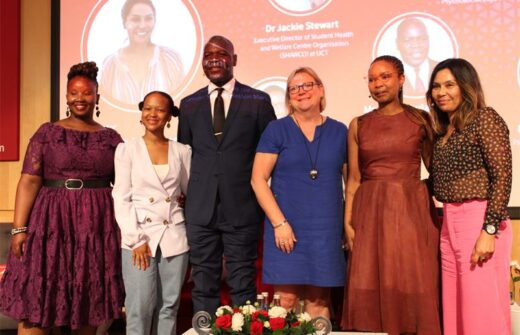
Chauke explained how school violence had a serious impact on educational outcomes, with many learners avoiding school, achieving below their potential, or dropping out completely.
Locals in attendance had the chance to engage with the panellists and ask questions related to preventing their children from being bullied or becoming bullies at schools.
As a psychosocial support coordinator who deals with violent learners in schools, Thabile Mazibuko said school violence was mostly the result of learners with psychological problems who came from dysfunctional homes.
ALSO READ: Midranders march against gender-based violence
“Experiencing poor parenting or discord among family members can lead to worry, hatred, an inferiority complex, anger, and other negative emotions that fuel violent behaviour. It is also common for children to adopt violence as a means of asserting authority in homes where the parents or guardians display violent behaviour.
“Our role as support coordinators extends beyond simply providing psychological counselling to learners, but also offering extra-curricular activities so learners can frequently interact with each other. Since most of them feel isolated, the programme teaches them social etiquette and skills necessary for forming robust networks and socialising with others,” explained Mazibuko.
ALSO READ: Midrand run pays tribute to victims of gender-based violence