New reports reveal why 57% of SA children live in poverty
Multidimensional deprivation lingers for over half of SA children.
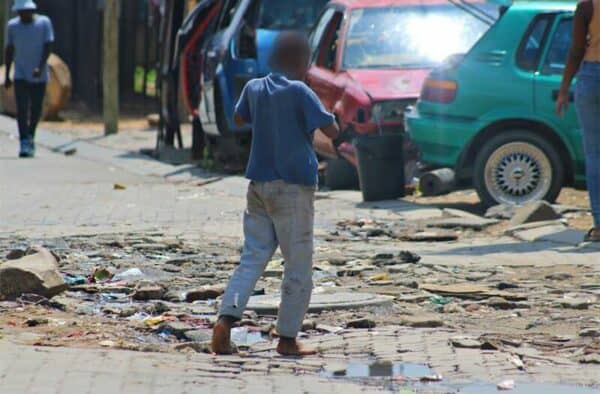
South Africa’s children are growing up amid a complex web of disadvantages that stretch well beyond family income alone.
Many face daily struggles with access to proper nutrition, healthcare, safe living conditions, quality education and basic protection.
Challenges that often pile up at the same time and shape their entire futures.
Read more: Health and Social Development MMC brings HIV/Aids treatment to shopping centres
A new Stats SA and Unicef report using the MODA approach shows multidimensional child poverty declined marginally from 60,8% in 2015 to 57,3% in 2023, leaving more than half of children aged 0–17 facing multiple overlapping deprivations in nutrition, health, protection, child development, education, housing, and water, sanitation and hygiene.
The largest improvement was among children aged 0–4, where the rate dropped from 58,1% to 51,5%. Primary school-aged children (5–12 years) saw a 3,2% point decline to 59,3%, while adolescents (13–17 years) recorded a smaller 1,4 % point fall to 59,8%.
Children in monetary-poor households remained far more affected, with 78,2% multidimensionally deprived in 2023 (down slightly from 78,9% in 2015) and facing an average of four out of seven deprivations. In non-poor households, the rate edged up from 35,2% to 37,1%.
Provincial disparities remain stark. Limpopo recorded the highest rate at 73,7% (down from 82,4%), followed by the Eastern Cape at 75,8% and KZN at 71,9%.
Gauteng and the Western Cape stayed low at 35,9% and 36,8% respectively. Non-metropolitan areas continued to show significantly higher deprivation than metropolitan areas.
Also read: Russian Easter donations bring smiles to New Jerusalem Children’s Home
Deprivation was highest among children in households headed by someone with little or no education, where no adult was employed, or with large family sizes.
Black/African children had the highest rate at 62,4% (improved from 66,9%), followed by coloured children at 38,1%. Indian/Asian and white children recorded the lowest rates.
While money-metric child poverty fell sharply from 58,6% to 49,1%, multidimensional poverty improved only slightly.
The share of poor children in both measures dropped to 38,3%, but those experiencing only multidimensional poverty rose from 14,6% to 18,9%, showing that income gains do not always improve access to essential services.
The report makes clear that tackling child poverty in South Africa demands more than financial relief; it requires targeted action to break the multiple barriers that still stand in the way of healthy development and equal opportunity for the next generation.
Follow us on our Whatsapp channel, Facebook, X, Instagram, and TikTok for the latest updates and inspiration!