
Preventing drowning at home
Most incidents of drowning occur at residential swimming pools. Too often supervision is neglected and a toddler ends up in the swimming pool.
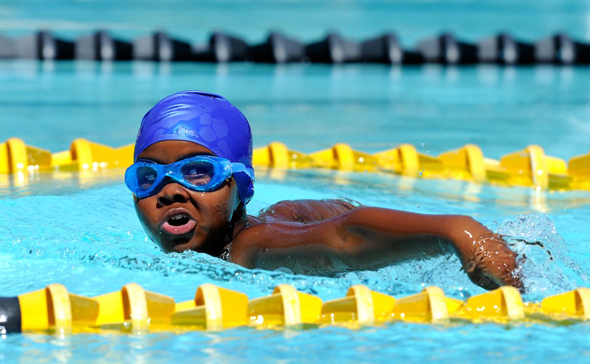
Toddlers do not require a swimming pool to be at risk. The water in common household items can be dangerous for young children. A baby can drown in just 2.5 centimetres of water. A curious toddler can fall into a toilet, bucket, fish tank or pond.
Supervision is the very best way to help prevent kids from getting injured. Even the most vigilant parent will, however, struggle to keep a child 100% safe and away from harm at all times.
It is up to the parents to do everything possible not only to exercise parental supervision and to try and child proof the home. This may be difficult but we would like to offer the following suggestions:
Keep the bathroom door closed.
Shut the doors (and install doorknob covers) to any room a child shouldn’t enter.
For sliding doors, doorknob covers and childproof locks are also great for keeping little ones from leaving your home.
Supervise bath time. Never leave a child alone in the bathtub or in the care of another child.
If you must answer the telephone or door, don’t rely on an older sibling to watch the baby; wrap your baby in a towel and bring him or her with you.
Drain water from the tub immediately after use.
Shut toilet lids. Install childproof locks on toilet lids.
Store buckets safely and empty buckets and other containers immediately after use.
Don’t leave them outside, where they may accumulate water.
If you have a hot tub, keep it drained or securely covered when not in use.
Safe swimming and the pool
Most incidents of drowning occur at residential swimming pools. Too often supervision is neglected and a toddler ends up in the swimming pool.
How it can be prevented:
Supervise as actively as possible – Whenever infants or toddlers are in or around water, an adult should be within arm’s reach to provide active supervision
Parents should avoid distractions when children are near water and give them all of their attention.
Even strong swimmers need adult supervision. Insist on life jackets for children who can’t swim.
Parents should not only supervise but also advise on safety in and around the pool.
Running on slippery surfaces is dangerous for everyone around. Someone could fall into the pool, accidentally push a smaller child towards water or hit the slick pool deck causing injury.
Stay away from drains, filters and water intakes. Loose hair or clothing can get tangled in these structures – possibly trapping a child under the water.
Teach children to swim. Most children can learn to swim at about five – but know that swimming lessons won’t necessarily prevent a kid from drowning.
Remove toys from the pool – don’t leave toys in the water. A child may fall into the water while trying to retrieve a toy.
Swimming pool design and physical protection
Four-sided fencing around the swimming pool is the best protection possible – rigid, motorised pool covers, pool alarms, and other protective devices, which may offer some protection if used appropriately and consistently, will not be as effective as the correct fencing.
A safe fence will be at least 1,2 metres tall. Make sure slatted fences have no gaps wider than 10 centimetres so kids can’t squeeze through.
Make sure the pool fence meets current safety standards – including a child-proof gate that’s always closed
Consider installing a pool alarm or cover, but realize these devices are not substitutes for fencing and adult supervision.
Block pool and hot tub access. Use a rigid, motorized safety cover to block access to the pool when it’s not in use.
Secure a cover on hot tubs as well.
Empty inflatable pools after each use.
Don’t allow water to collect on top of the pool or hot tub cover.
Remove aboveground pool steps or ladders or lock them behind a fence when the pool isn’t in use.
Keep a close eye on electricity. Keep electrical appliances -TVs, radios and disc players, for example – a safe distance from the water.
Consider the risks and prepare accordingly to have emergency equipment at hand.
This could include the first-aid kit, a flotation ring to throw to an exhausted swimmer and an extension pole to pull the swimmer to safety.
Keep emergency equipment handy. Store a safety ring with a rope beside the pool. Make sure you always have a phone in the pool area.