‘Educate yourselves that we are human’
It is neither a curse, nor is it contagious. Intercourse with them cannot cure HIV/ Aids, and it certainly will not bring you wealth.
Shunned and discriminated against, these are just a handful of deep-seated misconceptions people suffering from albinism have to face each day.
“But let’s strive for a better life. Let’s pursue our dreams and goals, big or small. Let’s show the world and the generations after us that it is possible to succeed; no matter the stumbling blocks, it is possible. Let’s love ourselves and take care of ourselves.
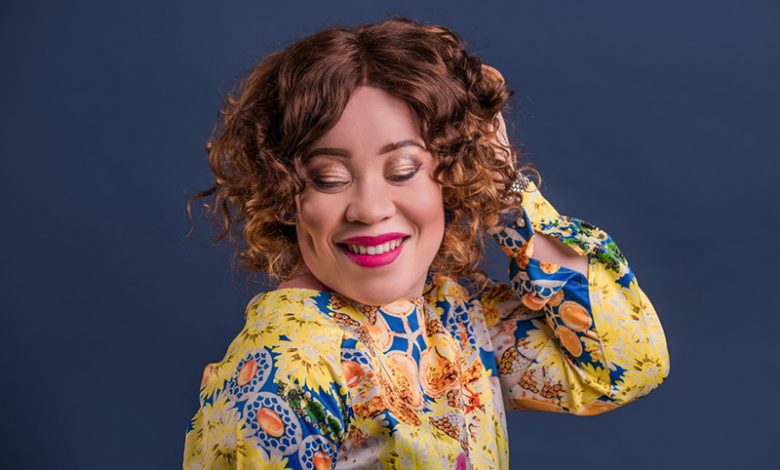
To everyone, accept us and respect us. Educate yourselves and your loved ones that we too are human. We are not lucky charms and our body parts do not cure diseases,” said Bongi Mkhabela, a 32-year-old law degree graduate of Mkhuhlu, who kindly agreed to share her story as Albinism Awareness Month draws to a close. Mkhabela, a mother of two boys and a girl, was born and raised in Mkhuhlu.
She works at the Deeds Office in Mbombela as a senior examiner.
“I was born in a family where I am the only one with albinism. Growing up, I was very talkative and confident. I attended a government school in Mkhuhlu from grade one to three, where I was the only child with albinism among hundreds of kids. I used to get teased a lot by both children and adults, being called names, and some people spitting on the ground when I walked passed them,” she said, adding that sadly some of this is still happening, including at some companies which are reluctant to hire people with the condition. It has, however, never brought her down or made her feel less of a person.
“In high school, I did a lot of public speaking, singing and beauty contests – some if not all of which I won. I remember when I went to further my studies at the University of Limpopo at the age of 17, I heard for the first time that albinism was considered a disability. I remember at some point after registration one of the matrons who was managing the student res refused to allocate a room for me because, according to her, I was supposed to stay at the disability res. I refused and insisted that I did not want to live at a special res.
“Even during exam time, people with albinism wrote their exams at the disability centre, but I didn’t want that for myself. Although being labelled as disabled may sound awful, it had its perks back then, because by having albinism, you automatically qualified to get a fully paid bursary as a result of low/poor vision. This is something I learned during my third year of varsity and I took advantage of that. I managed to complete my degree that way,” Mkhabela said.
Poor eyesight being one of the many challenges of the condition, she said on a lighter note that she walked straight into a glass door the other day, causing her and her friend to burst out in laughter.
“The challenges can be overcome by us rising up, empowering ourselves, equipping ourselves, rising above our challenges, taking advantage of the little opportunities that come our way, and starting to do things for ourselves and not waiting for government to come through for us. To show the world that we are able. People need to learn and be informed about our condition, learn that we are human and that we have families and lives of our own.
They need to unlearn all this name calling and shaming. They need to know that while we may appear to be different from them, we are the same. We have different personalities and character traits that bring out our individuality. Parents have a responsibility to teach their children kindness towards everyone who may appear to be different from them. People also need to know that even though our vision may be poor, our minds are not.
Schools also need to try to accommodate children with albinism by maybe letting them sit in front of the class for a better view of the chalkboard so that they are not left behind during lessons,” Mkhabela said.
In conclusion, she advised those who have this condition to strive for a better life and to pursue their dreams and goals, big or small. “Let’s show the world and the generations to come it is possible to succeed, no matter the stumbling blocks. Let’s love ourselves and take care of ourselves.”
What an expect has to say
Dr CK Ngobeni-Mkize, a dermatologist based in Mbombela, explained that albinism is an inherited genetic disorder, resulting in the reduction of or no melanin production, affecting hair, eyes and skin. It affects all races and ethnicities globally. It can also be seen in some animals. The majority are autosomal recessive inherited, which means both parents carry the gene, but they do not have albinism which is still an enigma to many and causes confusion and stigmatisation. The disorder is classified into ocular albinism, only affecting the eyes, but having normal skin and hair colour, and oculocutaneous albinism, in which there is lack of pigment in the hair, eyes and skin. It is characterised by poor eye vision.