
Just Energy Transition plans 10 power station shutdowns in Mpumalanga
Just Energy Transition is one of Mpumalanga government's biggest projects to transition to renewable energy for electricity production in the province.
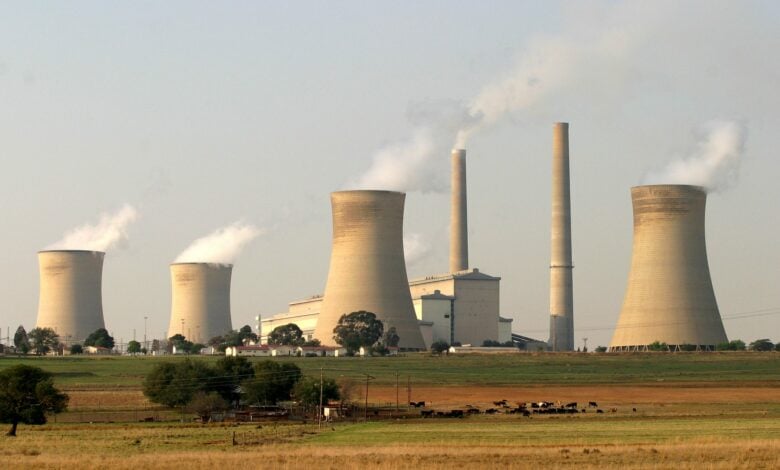
Ten coal power stations in the province will be decommissioned by 2030 and beyond.
This as the Mpumalanga Government embarks on its Just Energy Transition (JET), sourcing renewable energy to generate electricity.
These power stations are Camden, Grootvlei, Hendrina, Arnot, Kriel, Tutuka, Duvha, Matla, Kendal and Komati, which was already decommissioned in 2022. They are all located in the Gert Sibande and Nkangala district municipalities.
However, earlier this year, Eskom approved a decision to have Hendrina, Camden and Grootvlei decommissioned only after 2030.
The decommissioning forms part of the implications of the JET, and was discussed in a special sitting of the Mpumalanga Executive Council (Exco) and Eskom, led by Premier Mandla Ndlovu, in Ermelo on December 2. The minister of electricity and energy, Dr Kgosientsho Ramokgopa, and the Eskom CEO, Dan Morokane, joined the occasion.
It was said Mpumalanga remains the biggest supplier of coal, a non-renewable resource, used by Eskom to produce electricity. It houses these power stations that have created and sustained communities through economic stimulation.
ALSO READ: Public works says parliamentary village will be completed by December 15
Morokane highlighted a broad range of consequences for the many communities should these stations be decommissioned. He said these obviously include job losses, and lost opportunities of basic services and development projects that assist in the livelihood of the communities adjacent to the power stations.
While Eskom has identified opportunities that will be beneficial to the affected communities to mitigate the impact of the JET process of repowering and repurposing power stations, the Exco resolved to further engage the power utility about JET to adopt a co-ordinated and structured approach aimed at minimising the impact.
Ndlovu said: “The undesirable outcomes will be a dent to the considerable efforts of the seventh administration of job creation to aid the fight against unemployment. It will negate efforts to reduce poverty levels and hunger for households whose livelihoods are connected to the value chain of the power stations, such as transportation of coal and procurement of goods.”
In September, a wind energy generating project worth R25b was established on Ummbila Emoyeni Farm outside Bethal. This 155MW facility is the first phase of the larger 900MW renewable energy cluster of Ummbila Emoyeni. It will supply Seriti Green’s [the project implementer] coal mining operations with 75% of its power requirements via an arrangement with Eskom. The remainder of the project is expected to be fully commissioned by 2027, by which time it will provide electricity for the equivalent of 500 000 South African households.
Ndlovu also recently launched the Carbon Capture and Storage Research Site in Leandra, aimed at creating a cleaner power supply and zero-net emissions by 2050.
ALSO READ: Truth to Power … the book everyone needs to read
Ndlovu said in a journey to propel Mpumalanga onto the global stage and setting the standard for future power supply with international standards and protocols, the province will host the Group of Twenty (G20) Energy Session in 2025. The G20 ministers will convene to discuss the energy mix, lower carbon-emitting technologies and other JET aspects from September 23 to 26.
Ramokgopa said this will give the province a moment in history when it hosts these countries as they shape their position on power supply for the future.
The G20 is an international forum of both developing and developed countries, which seeks to find solutions to global economic and financial issues. South Africa took its annual presidency of the G20 on December 1 and will be in this position until November 30.