Load reduction: Are only the poorest areas in Mbombela left in the dark?
Some residents in the Nsikazi region perceive load reduction as an unfair practice towards them.
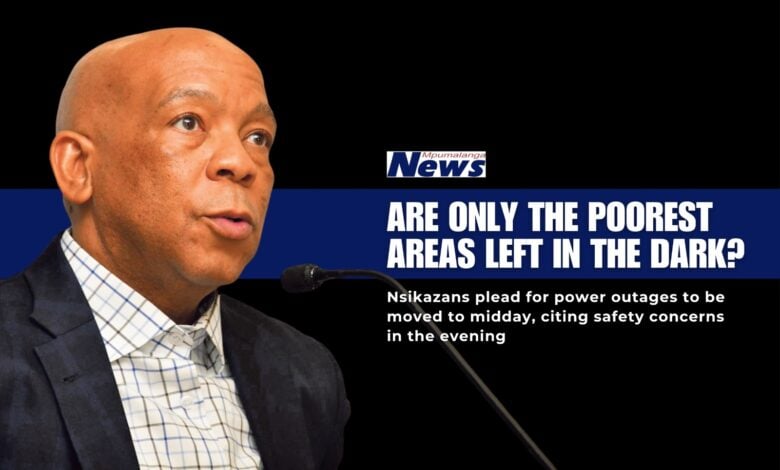
The impact of load reduction has left many communities in despair, as it affects households in the Nsikazi area during peak early morning and late evening hours, when electricity is most urgently needed.
At present, load reduction takes place for two hours daily – either from 05:00 to 07:00 or from 19:00 to 21:00. About three months ago, the start time for the evening slot was changed from 17:00 to 19:00.
While most have accepted their daily lives without power at these times, some see it as an unfair practice towards rural communities.
Thami Shabangu from Malekutu Trust has suggested that the reduction be scheduled during the day rather than in the evening when criminal activities are more likely to occur.
“We hear gunshots as soon as the lights go off at 19:00. One can imagine the compromised safety of public transport commuters coming from work and who still have to walk home in the dark. We plead for load reduction to be implemented during the day,” said Shabangu.
A resident from Backdoor, Mcaphuna Masuku, believes load reduction is a punishment for the poor. “Why does it only affect us in KaBokweni, Likazi and Pienaar, and not White River, Mbombela, and even worse, Msholozi, because it is a rural area and not even recognised by the City of Mbombela. How are they special from us? Are we used as a bargain to save costs for other places to live lavishly? It is the government’s role is to make the lives of its people easier than what they are currently doing,” said Masuku.
ALSO READ: Mpumalanga communities still affected by load reduction
The Eskom group chief executive, Dan Marokane, said load reductions are implemented by municipalities to the protect Eskom’s power systems.
“It is a non-voluntary implementation of the protection of infrastructure to prevent overloads. Load reductions also assist in avoiding long-term interruptions to the customers.
This is the trade-off as we have to protect the equipment we have, but it all done according to the Electricity Regulation Act 4 of 2006, enforced by the National Energy Regulator of South Africa,” he said.
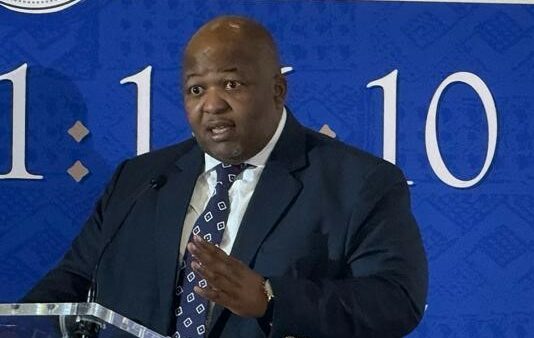
He said Eskom is experiencing significant equipment failure due to overloads.
Marokane said it has taken the power utility an average of six months to replace broken transformers that are damaged by overloads, and the waiting list is becoming longer.
He said this in response to the South African Human Rights Commission’s (SAHRC) load reduction inquiry in February, along with the minister of electricity and and energy, Kgosientsho Ramokgopa.
ALSO READ: Eskom blamed for load reduction
Ramokgopa said there are people who have not purchased electricity in 12 months.
“We ran a campaign where we discovered 2.1 million power users are bypassing the system. These are people who are consuming electricity illegally, costing Eskom R3b per month,” he said.
Ramokgopa admitted that the biggest casualties of load reduction are those who are paying, while also citing an unquantified eight million South Africans who cannot afford electricity at all, who may resort to illegal connections.
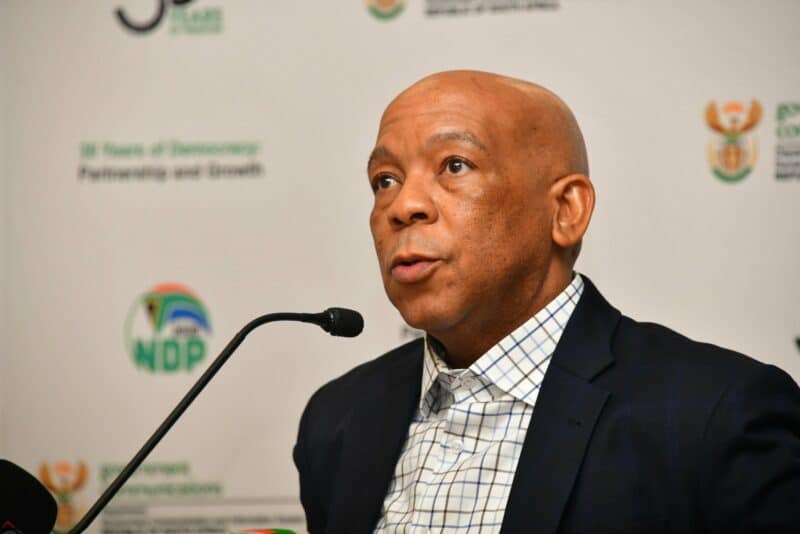
> Photo: Sources/Kgosientsho Ramokgopa’s Facebook page
The R4b allocation we get per annum is significantly insufficient because the bulk of that money will be spent to build the lines and the transformers to supply poor households. We do that in urban areas because it is more efficient, but in rural areas we do off-grid solutions.”
He also discussed alternative solutions such as behind-the-meter systems with which residents will not be connected to the Eskom or municipal grid lines, but get supply from solar panels and battery storage.
ALSO READ: Load-shedding gives Mbombela citizens sleepless nights
SAHRC’s load reduction inquiry
In response to the impact of load reduction, the SAHRC convened a three-day national investigative inquiry of its impact on human rights, in Johannesburg on February 3, 4 and 18.
The inquiry emanated from the growing concerns, inquiries and complaints received by the commission that load reduction is seemingly on the rise, particularly in poor and historically disadvantaged communities, while the country had experienced a reprieve from load-shedding.
A commissioner of the SAHRC, Prof Tshepo Mandlingozi, said there were many testimonies given by stakeholders, community leaders and members at the inquiry.
“Most testimonies revealed that there is no transparency and consultations on the the implementation of load reduction, that it truly affects the poorest communities, and that it infringes the right to life in terms of safety. While Eskom blames consumers, the blame is to be shared with those who steal electricity. We heard from several lawyers that load reduction is a violation of the rights to dignity, equality and health, and that there is no justification of its implementation,” he said.
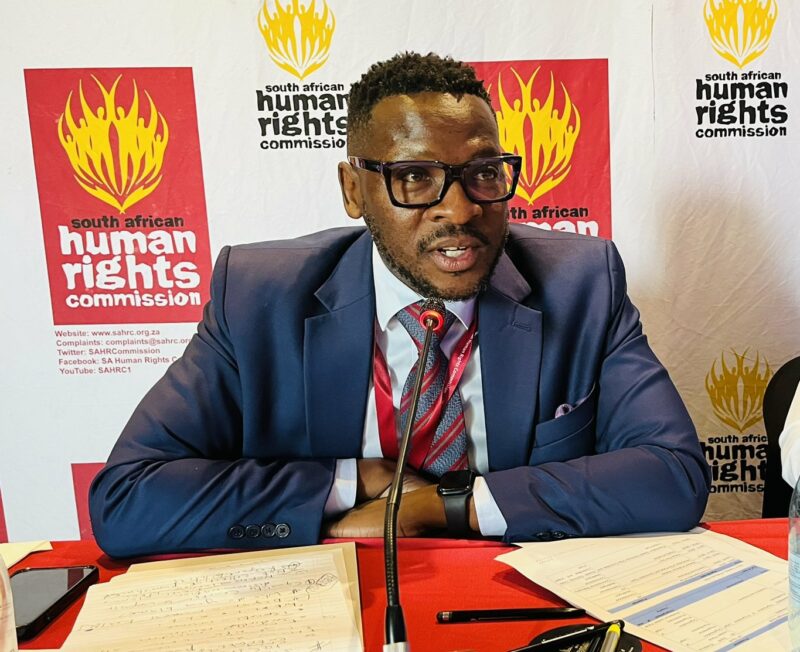
Mandlingozi said another major concern raised by community members was that load reduction is seen as a collective punishment.
“While some community members pay for their power, some do not, but the reduction affects everyone including those who pay. They raised questions such why load reduction does not affect those who don’t pay. Some communities argued that they are not connected to any electricity grid at all and have resorted to connecting illegally just to have access to electricity, while some have faulty meters. We have been made aware that there are communities who are willing to pay but they not provided with the correct power infrastructure in order to do,” Mandlingozi said.