Moeketsi champions coal communities at COP31 in Turkey
Mpumalanga insists global climate negotiators must fund workers and viable local economies before power stations close.
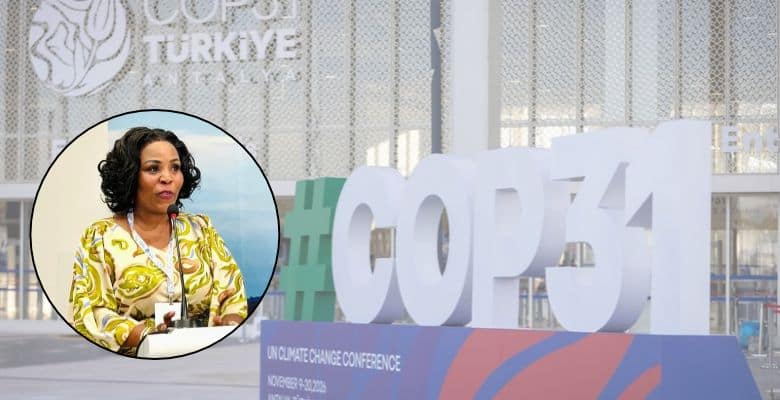
Mpumalanga MEC for Agriculture, Rural Development, Land and Environmental Affairs Khethiwe Moeketsi placed the lived realities of coal-dependent communities at the heart of global climate talks as she opened the South African Pavilion at the COP31 climate summit in Turkey.
The conference brings together nearly 200 signatory countries to the 1992 UN Framework Convention on Climate Change to negotiate global action on global warming, emissions cuts, and climate finance. The two-week summit commenced on Monday, November 9, and will run until Friday, November 20.
Speaking under the theme, “A fair and just energy transition must begin long before the decommissioning and closure of coal-fired power stations,” Moeketsi highlighted the challenges faced by local coal-dependent regions.

development, land and environmental affairs
Khethiwe Moeketsi. Photos: Supplied/
Dardlea7
“As the epicentre of South Africa’s coal economy, Mpumalanga recognises that the energy transition is not merely an environmental or energy concern; it is a fundamental socio-economic imperative affecting workers, families, businesses, and entire communities,” Moeketsi said. “Our responsibility is to ensure that climate action advances hand in hand with economic development, job creation, and livelihood protection through proactive planning, strategic investment, skills development, and economic diversification.”
ALSO READ: Mpumalanga hosts country’s first Skills Development Zone launch
Reflecting on recent transitions, Moeketsi said that lessons from the Komati Power Station experience reinforced a critical message: affected communities must be meaningfully consulted, adequately prepared, and provided with viable economic alternatives long before any power station or mine shuts down.
“The Mpumalanga Provincial Government remains resolute in its commitment to building a diversified, sustainable, and resilient economy,” Moeketsi added. “The future must not be defined by the closure of mines and power stations, but by the new opportunities, industries, and livelihoods we create for our people. Our position is clear: no worker, no family, no community, and no municipality must be left behind in the transition to a low-carbon economy.”