
Rehabilitated Kruger National Park vultures head back home
Against the odds, the successful release of 81 rehabilitated vultures back into the Kruger National Park marks a vital win for conservation.
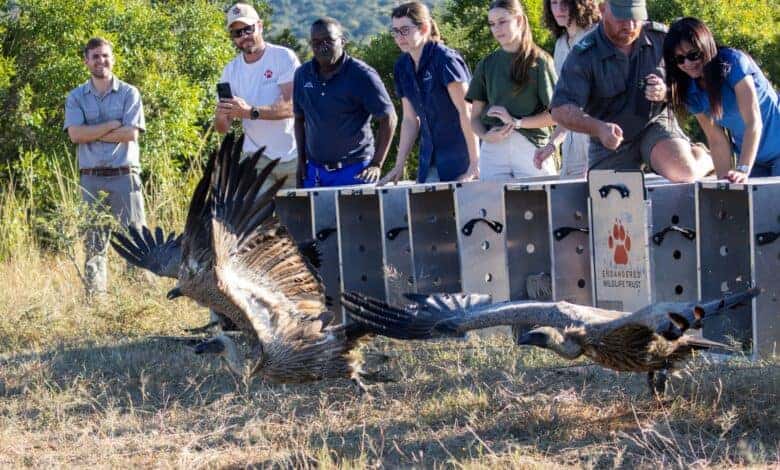
In a significant boost for conservation efforts, 81 vultures were successfully released back into the wild after intensive rehabilitation.
Lowvelder reports that these critically endangered birds were treated at the Moholoholo Wildlife and Rehabilitation Centre (MWRC) after being poisoned.
According to Martial Rappo of the MWRC, this was a welcome development in wildlife conservation.
The vultures were poisoned in the Kruger National Park (KNP) on May 6. At least 116 died at the scene and 84 were rescued. Three of these could not be saved.
“We are very happy to have released them safely and as soon as possible. It is vulture breeding season and we don’t want to disturb nature. The fitted tracking devices indicated that most flew back to their nests in the KNP. We also noticed that some have already met up with their partners, which makes us even happier,” Rappo says.
He adds that in recent years, the MWRC has treated and released more than 2 300 vultures from various poisoning scenes.
Currently, 5% to 7% of the vultures in Africa are being poisoned each year.
Over three decades, the facility has had a 98% success rate in treating poisoned vultures and releasing them back into the wild. “We believe in not keeping the rescued vultures [in captivity] because they belong in the wild,” Rappo explains.
The release of these rehabilitated vultures represents a positive step in bolstering their dwindling numbers.
Vultures ensure continued ecological balance by cleaning up carcasses and preventing the spread of diseases.
He adds that the safety of these birds lies in the hands of KNP rangers and warns that the poisoning syndicate will return. Rappo thanked the teams that work with them to save the vultures.
The spokesperson of the KNP, Isaac Phaahla, says they welcome the release of the vultures back into the wild, while warning poachers to refrain from poisoning them. He adds that no arrests have been made yet.
Breaking news at your fingertips… Follow Caxton Network News on Facebook and join our WhatsApp channel.
Nuus wat saakmaak. Volg Caxton Netwerk-nuus op Facebook en sluit aan by ons WhatsApp-kanaal.
Read original story on www.citizen.co.za

