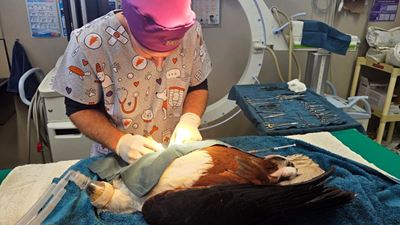
Dr Christiaan Blignaut performs surgery on an African Fish Eagle, highlighting the important role big-hearted vets play in wildlife rescue and rehabilitation. Photo: Supplied
injured African Fish Eagle isn’t the kind of patient that arrives at a veterinary practice every day. But for Dr Christiaan Blignaut from George Animal Hospital, caring for wildlife has always been part of the job, reports George Herald.
“I always loved nature and spent much of my time as a child outdoors,” he says. “When I work with wildlife, it doesn’t feel like work because it is my passion.”
That passion recently led to a unique surgery on a female African Fish Eagle that had been living at a local rehabilitation centre after a previous wing amputation failed to heal properly.
“I had to repeat the amputation, this time much closer to the body, to be able to close the wound properly,” explains Dr Blignaut. “After two weeks, the wound healed and stitches could be removed.”
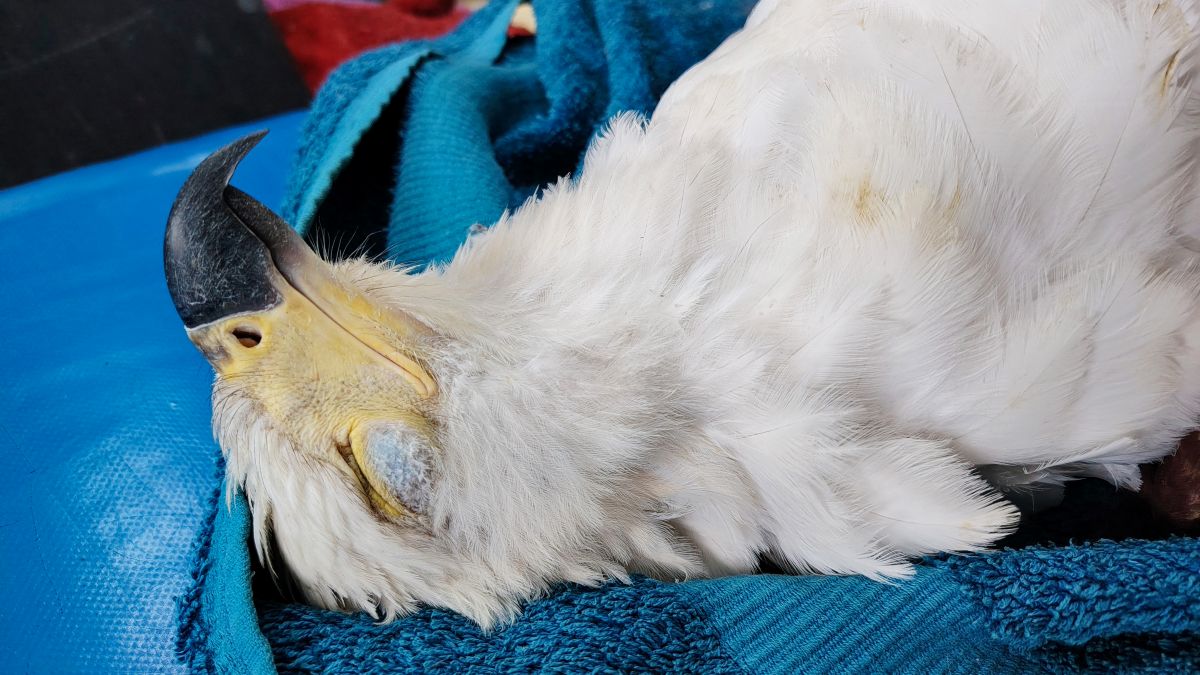
Although she’ll never return to the wild, the surgery has given her the chance to continue living comfortably alongside her mate at the rehabilitation centre.
The reality of veterinary work in South Africa
For Dr Blignaut, this eagle’s story is just one example of a role many people never see. Veterinarians play an important part in wildlife rescue and rehabilitation across South Africa.
“We are involved in nature conservation, game farming and trading, health care, education, legislation and governance,” says Dr Blignaut. “I think the general public underestimates how involved veterinarians are.”
It’s a responsibility that stretches far beyond treating injured animals. Veterinarians work alongside organisations such as CapeNature and wildlife rehabilitation centres, helping protect biodiversity and support conservation efforts across the country.
Challenges behind wildlife rescue
Like many birds of prey, African Fish Eagles face growing challenges, from habitat destruction to poaching. But for the veterinarians helping them, another challenge often determines how many animals can be treated.
“Currently, I help CapeNature, various rehab centres and the general public to treat wildlife rescue cases, and I am often restricted by available funds,” says Dr Blignaut. “A lot of the work becomes welfare work, which is a challenge in private practice.”
At the end of the day, one successful rescue depends on many people working together. Support from organisations such as Dotsure helps make interventions possible by raising awareness of the vital work our big-hearted vets perform every day.
Still, Dr Blignaut believes there’s an opportunity to do even more. “It would really be amazing if more organisations could become donors towards a ‘wildlife fund’ that would enable vets to help more wild animals.”
The successful surgery allowed the African Fish Eagle to continue living comfortably in the care of a local rehabilitation centre. Photo Supplied
What should you do if you find an injured wild animal?
The instinct to step in and help is natural, but Dr Blignaut says the best place to start is by contacting your local conservation authority.
“Best is always to contact the local conservation authorities. In our district, that would be CapeNature,” he explains. “Animals, especially juveniles/babies, are often removed from their habitat by people intending to do good, but acting without the knowledge of what is the wisest and most humane way to handle the animal.” Conservation authorities can assess the situation and work with experienced wildlife veterinarians to decide the safest and most appropriate course of action.
Helping wildlife starts by knowing who to call. And that can be the biggest difference in giving wild animals a second chance.
Breaking news at your fingertips… Follow Caxton Network News on Facebook and join our WhatsApp channel.
Nuus wat saakmaak. Volg Caxton Netwerk-nuus op Facebook en sluit aan by ons WhatsApp-kanaal.