
Video: Tatjana Smith’s Dutch switch spotlights Swimming SA funding crisis
Rising travel costs and a lack of federation backing leave South African swimmers struggling to fund their dreams on the international stage.
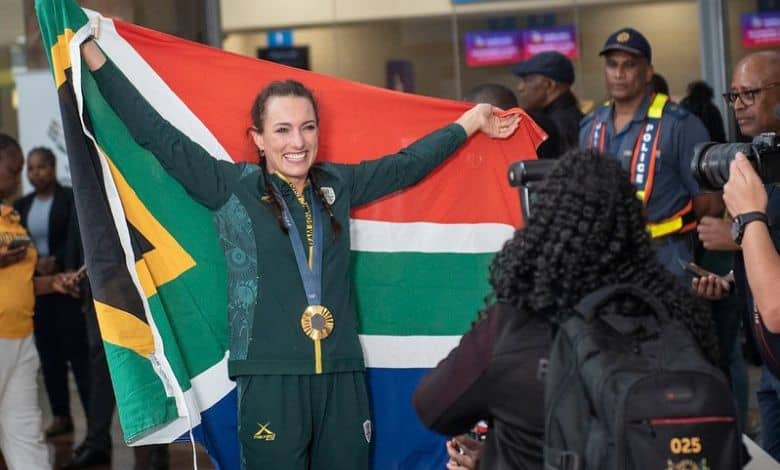
South Africa has a proud Olympic swimming legacy, built by generations of athletes who have brought home medals and made their mark on the world stage. But behind the success, questions are mounting about the future of the sport and whether the next generation is getting the support it needs.
From Penny Heyns and Chad le Clos to Roland Schoeman, Cameron van der Burgh and Tatjana Smith, South Africa has produced some of the world’s finest swimmers. Together, they have contributed to a legacy of 22 Olympic swimming medals.
However, concerns about funding, athlete support and governance are raising questions about how sustainable that success really is.
The decision by Smith, South Africa’s most decorated Olympian, to switch her international allegiance to the Netherlands has brought these concerns into sharp focus.
Smith (29), who won two gold and two silver medals at the Tokyo and Paris Olympic Games, became emotional in an Instagram video explaining that her decision was partly influenced by the opportunity for better high-performance support and a more sustainable swimming career.
Watch the video:
A post shared by -TATJANA SMITH (SCHOENMAKER)- (@tatjanaschoen)
Although Smith has strong Dutch family connections and will continue living and training in South Africa, her decision is an uncomfortable moment for Swimming South Africa.
It also comes as other swimmers struggle to finance their international careers.
One of them is Guy Brooks (23) who recently qualified for the 2026 World Aquatics Swimming Championships in Beijing after becoming a double South African champion at the national championships.
Brooks, who completed his degree at the University of Louisville in the United States, has spent nine years pursuing competitive swimming. He secured his qualifying time of 1:43.41 in the 200m freestyle on the World Cup circuit.
But while he has earned his place in the team, he still needs R55 000 to make the trip.
For Brooks, the biggest obstacle is no longer competing in the pool but finding the money to get to the starting blocks.
His situation is not an isolated one.
An announcement sent to provincial swimming affiliates on October 28 by the Swimming South Africa management committee confirmed the selected team for the December championships in China.
The communication stated that swimmers would be responsible for their own visa applications and costs, as well as travel insurance. They could also arrange their own flights but would have to contribute towards accommodation and team management expenses.
The reported contribution required from selected swimmers could reach R55 000, with additional expenses still to be covered.
The arrangement raises a difficult question: What does it mean to qualify to represent your country if you cannot afford to go?
Cost of representing South Africa
The financial pressure extends beyond the senior swimming team.
Three junior artistic swimmers selected for an international championship in Hungary reportedly faced costs of R120 000 each after other athletes withdrew from the tour, increasing the financial burden on those who remained.
Meanwhile, Swimming South Africa’s published annual reports show that the organisation spent R58.28m on its high-performance programme between 2022 and 2025, averaging almost R14.6m annually.
The figures raise questions about how funding is distributed and how much reaches athletes who need financial assistance to compete internationally.
Smith’s experience offers another perspective.
In an interview with Carte Blanche, she described her relationship with Swimming SA as ‘absent’ and said her swimming career had largely been made possible by her family, coaches and personal support network.
Watch a snippet from the interview:
She estimated that about R10m had been invested in her career over 16 years, initially by her parents and support network and later with assistance from sponsors.
There was also a dispute over her World Aquatics Championships prize money.
After winning gold and silver at the 2023 championships in Fukuoka, Japan, Smith was awarded US$35 000 (about R578 900). Swimming SA withheld the money for more than a year after a dispute over her wearing specialised Speedo equipment rather than the federation’s prescribed Arena kit.
Despite her move to the Netherlands, Smith has said she will continue training in South Africa and supporting local athletes through the Lighthouse Sport Foundation.
Her departure does not mean she is turning her back on the country. However, her reasons for seeking a more sustainable career raise questions about the environment in which South African athletes are expected to succeed.
Funding and governance under scrutiny
The funding concerns are unfolding alongside questions about the federation’s governance.
In August, the Aquatics Integrity Unit provisionally suspended Swimming SA president Alan Fritz and chief executive Shaun Adriaanse over potential violations of the World Aquatics Integrity Code.
The allegations include abuse of power and providing false information and fake documents. Investigations emain ongoing.
The federation’s planned high-performance centre in Franschhoek has also attracted scrutiny, with the Special Investigating Unit investigating the project, which reportedly involved tens of millions of rand.
The questions about athlete funding have also drawn attention to the Department of Sport, Arts and Culture’s spending priorities.
Sport Minister Gayton McKenzie faced criticism over the reported R31m cost of his department’s delegation to the 2026 Fifa World Cup. The expenditure included international travel, accommodation, hospitality, match tickets and other nation-branding initiatives.
McKenzie defended taking 20 fans and 20 artists to the tournament, arguing that sport and music should go hand in hand and that South African artists deserved international exposure.
McKenzie responds
In a media statement issued this morning (November 11), McKenzie wished Smith well following her decision to represent the Netherlands, saying her personal choice should not be used as a political weapon.
The department said Smith had informed McKenzie of her decision before making it public. The minister thanked her for the courtesy and noted that she had been honoured twice at the South African Sport Awards, including with prize money.
McKenzie emphasised that national sporting federations operate independently of government and are responsible for managing their finances, attracting sponsors and covering the costs of international competitions. He said the department could not be expected to carry all their expenses.
However, the department acknowledged concerns raised by athletes about Swimming South Africa, saying these were being addressed through an ongoing reform process with oversight from World Aquatics.
“Nothing can erase what Tatjana has achieved for South Africa,” McKenzie said, wishing her success in the next chapter of her career.
Neither the department nor Swimming SA had responded to questions by the time of publication. Their comment will be added once received.
For Smith, the Netherlands offers an opportunity to continue her career with the support she believes she needs. For Brooks and many other aspiring swimmers, the immediate challenge is more basic: Finding the money to represent their country.
Breaking news at your fingertips… Follow Caxton Network News on Facebook and join our WhatsApp channel.
Nuus wat saakmaak. Volg Caxton Netwerk-nuus op Facebook en sluit aan by ons WhatsApp-kanaal.