
Expert highlights awareness after vervet monkey attack north of Pretoria
A man was bitten by a vervet monkey while feeding his pet marmosets, sparking renewed calls for better human-wildlife awareness and management.
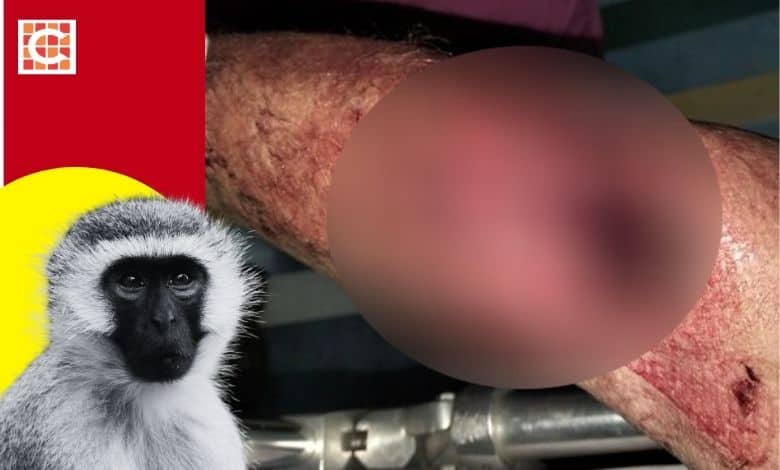
- Warning: Graphic photo could upsent sensitive readers.
Wolmer, Tshwane, resident Johan Grobler was left hospitalised after a terrifying encounter with a vervet monkey north of Pretoria.
Pretoria Rekord reports that the situation, according to an expert, highlights the urgent need for awareness and understanding of human-wildlife coexistence.
Grobler, who keeps two marmoset monkeys as pets, says the incident unfolded when he went outside to feed them.
“Once I gave them food, a vervet monkey jumped out of the tree and started shaking and pulling the cage.
“I immediately tried to intervene and chase him away; that’s when he turned to me, grabbed my arm with his hands, and bit me,” he explains.
He described the vervet’s behaviour as defensive, rather than aggressive.
“He acted in defence, probably because he was startled. The bite left me with severe injuries. My whole arm had two big holes, with one chunk of flesh missing.
“My father-in-law, Stephen Nell, rushed me to the hospital, and I almost bled out.
“I started to see white in front of me and couldn’t hear anything anymore. I passed out just before reaching the hospital and only started reacting again to noise once close to the hospital,” Grobler recalled.
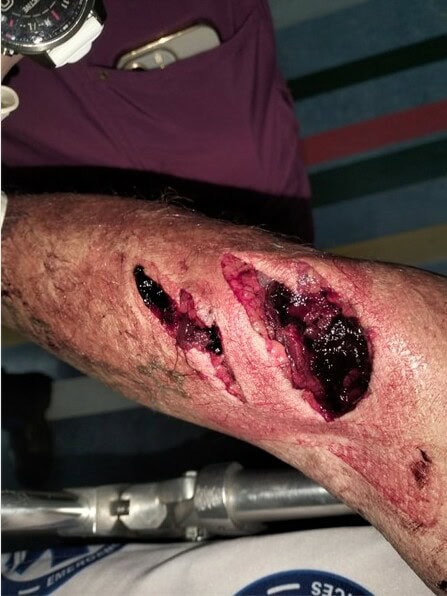
He said doctors immediately put him on a drip, administered medication, and gave him tetanus and rabies shots.
“They treated me right away, and I’m grateful for their quick response,” he said.
Grobler noted that vervet monkeys have been sighted around Wolmer for some time.
“We’ve noticed a few of them in the area from time to time, also near Huis Judea and Bakenkloof. People have spotted them there, too. I think this one was hungry and frightened,” he said.
He appealed to animal welfare organisations to step in.
“The experience was an accident, but I would like animal welfare to look out for them and take them to a safe place so that no one else gets injured, and so that the monkeys don’t get killed.
“People should also not leave food outside because it looks like they come looking for food,” he advised.
Grobler praised his neighbours, who rushed to assist while first responders were called.
“By the time they arrived, I was already at the hospital. They later saw my marmoset monkeys in the tree, which are now gone,” he said.
According to Silke von Eynern of Bambelela Wildlife Care NPC and Monkey Rehab, understanding vervet behaviour is key to preventing such incidents.
“Understanding what vervet monkeys are, why they are here, and how to behave around them is essential to peaceful coexistence,” said Von Eynern.
She said vervet monkeys live in close-knit troops of 20 to 55, led by a dominant male and governed by a strict hierarchy among females.
“Males are nomadic and move between troops throughout their lives, which helps prevent inbreeding.
“Most adult females weigh between 3.5kg and 5kg, and males between 5kg and 7.5kg.
They are protected by conservation and animal protection laws, meaning it is illegal to catch, harm, or kill them without a permit.
“Contrary to popular belief, vervet monkeys are not vermin, nor are they breeding out of control.”
Von Eynern emphasised that vervets rarely attack unprovoked.
“They will only bite in self-defence if they are attacked or seriously provoked. Concerns that they may randomly bite children or pets are unfounded.
“Thousands of people encounter vervets daily without harm. When there is an incident, there are usually aggravating factors,” she said.
She recommended securing food waste, avoiding feeding monkeys, and closing access points to fruit trees or open bins.
Von Eynern added that human-monkey conflicts increase during the dry winter months, when food becomes scarce and vervets are drawn to gardens and green lawns.
Breaking news at your fingertips… Follow Caxton Network News on Facebook and join our WhatsApp channel.
Nuus wat saakmaak. Volg Caxton Netwerk-nuus op Facebook en sluit aan by ons WhatsApp-kanaal.
Read original story on www.citizen.co.za

