
Lockdown measures in the agricultural sector
Dr John Purchase, CEO of Agbiz says the agricultural and agribusiness sectors must take heed of the lockdown restrictions relating to hygiene, sanitation and loading capacity or risk more stringent and onerous measures.
The majority of the more than 40 000 commercial farms and farming enterprises in the agricultural value chain qualify as ‘essential services’ under the regulations of the national lockdown, and as published in the Government Gazette on 25 March by the Minister of Cooperative Governance and Traditional Affairs, Dr Nkosasana Dlamini-Zuma.
Food security essential
Dr John Purchase, CEO of Agbiz stated that farmworkers are the bedrock of the agricultural sector.
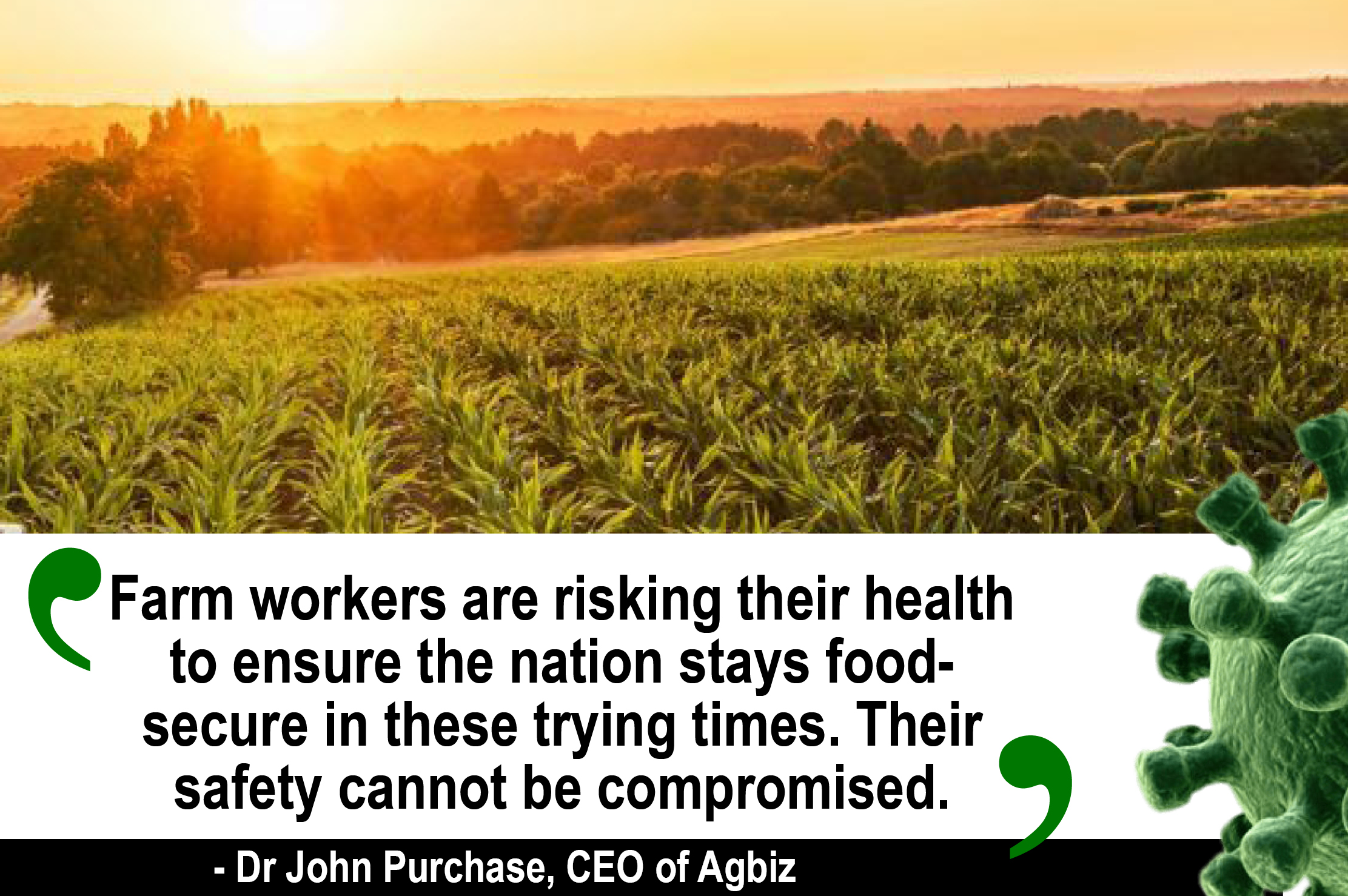
“These men and women are currently risking their safety and health to ensure the nation stays food secure during these trying times. Their safety cannot be compromised as there would be no food security without them.”
He added that the agricultural and agribusiness sectors must hold each other accountable to comply with the law, urging the sector to heed the critical lockdown restrictions relating to hygiene, sanitation and loading capacity or risk more stringent and onerous measures.
Organised agriculture on the lockdown
Agri-leaders have welcomed the lockdown, which will be enforced by the army and the police. Agri SA Executive Director Omri van Zyl said it is necessary to flatten the curve to stop a large-scale catastrophe in South Africa. “It remains imperative that essential services remain intact. Agriculture is one of these and the production of food and food supplies must ensure that we keep our food security status intact and that we nourish our people.”
Agri SA president Pierre Vercueil shared these sentiments, saying, “The farmers of South Africa will support our people and our country in these times of need and turbulence”.
Farmers are advised to keep their workers informed of the latest developments around the Covid-19 pandemic and how to curb the spread of the disease, urged Louis Meintjies, the President of TLU SA, who said it was, however, important to include the entire agricultural value chain, as farmers cannot deliver products to distribution points if spare parts and fuel are not available.
What to do
In terms of the lockdown regulations, farmers, as the head of the institution/enterprise are required to identify and designate which of their employees are essential to the functioning of the farming operation. Farmers are required to supply, for each of these employees, a permit to travel freely between the farm and their places of residence as set out in the regulations.
Agri SA supplied a manual intended to empower members to successfully comply with the lockdown regulations as amended, as well as the Basic Conditions of Employment Act.
The availability of fresh fruit and vegetables will remain unaffected during the nationwide lockdown, assured the RSA Group CEO Jaco Oosthuizen, one of the largest fresh produce sales organisations in the country. He said the food security network is filled with world class producers, big and small, who produce fresh produce of the highest quality and pack and transport it.
In Limpopo some of the bigger farming enterprises, including the Zebediela Citrus Estate, are on top of the lockdown regulations. The General Manager of the estate, Kobus Swanepoel said permits and workers transport to Marble Hall, where oranges were transported too, were in place.
One problem that has arisen, according to Johan Rebel from Hans Merensky Holdings, is that big supermarket groups in Europe have started cancelling orders due to their own lockdown measures and lower sales.
Zandile Fuzeni, a farmer from Letsitele, however, reported having been sent from pillar to post between the Department of Agriculture in Vuwani and the police station to ensure the correct permits were issued. Agri SA assisted him in the end to follow the correct procedures.
*Notice: Coronavirus reporting at Caxton Local Media aims to combat fake news
Dear reader,
As your local news provider, we have the duty of keeping you factually informed on Covid-19 developments. As you may have noticed, mis- and disinformation (also known as “fake news”) is circulating online. Caxton Local Media is determined to filter through the masses of information doing the rounds and to separate truth from untruth in order to keep you adequately informed. Local newsrooms follow a strict pre-publication fact-checking protocol. A national task team has been established to assist in bringing you credible news reports on Covid-19.
Readers with any comments or queries may contact National Group Editor Irma Green (irma@caxton.co.za) or Legal Adviser Helene Eloff (helene@caxton.co.za).
Read original story on reviewonline.co.za

