

“I do not know if, by next week Monday, the district will have enough water. It is bad news, but it is fact.”
Ilembe district mayor Welcome Mdabe painted a bleak picture of Ilembe’s current water situation at a press conference on Monday.
Mdabe and other municipal officials called the conference to outline the district’s intervention plans amid the drought hitting KwaZulu-Natal.
In his opening remarks Mdabe touched briefly on the recent service delivery protests in Madundube, condemning the violence but empathising with the community’s frustrations at the lack of water.
“We are trying our best to get this scarce commodity to everyone. But we need our community to work with, not against, us.”
Referring to the drought Mdabe said alarm bells started ringing soon after Ilembe’s annual climate change summit, which took place in May.
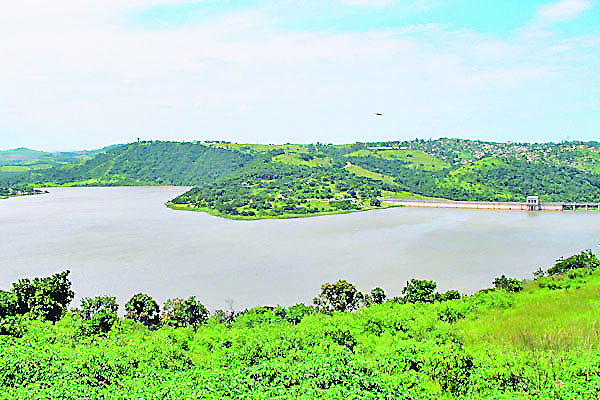
The situation reached crisis proportions around August, when the district’s rivers and streams started drying up – particularly the Imvutshane Dam, just north of Stanger.
This prompted the executive committee to declare a disaster, submitting a request to the provincial cabinet for financial assistance.
Parts of Maphumulo and Ndwedwe have been the worst hit so far, with a confirmed level three drought.
Mdabe said the situation looks grim, with Hazelmere Dam levels dropping from 51% to 49% by Monday afternoon. The dam was at 100% in March.
If Hazelmere dam levels drop to below 30% Melville, Ntshawini, Gledhow, Thembeni and Groutville Mission will be affected and may need one truck per ward.
“Ilembe has a fleet of 15 water tankers but was recently forced to hire 20 additional tankers, at a cost of R4000 per tanker, per day. Filling stations have been placed at Etete and Sundumbili to minimise petrol costs on the tankers. The tankers are primarily for taking water to non-reticulated areas.”
He said 350 Jojo water tanks have been procured and will be placed in reticulated areas as a back-up.
Mdabe stressed the gravity of the situation, indicating Ilembe has two plans: communication and water service delivery, which should run for three months.
“We are presently planning for what might happen beyond December. We have a disaster management strategy in place but this drought came much sooner than we anticipated. Ilembe needs to have a 100-year sustainable water supply.”
The municipality has implemented part of its strategy, scheduling public meetings until December to keep their consumers updated.
The district budget has been re-adjusted to plug all available financial resources into the water crisis – the immediate plans are expected to cost R24 339 000.
An additonal R63 644 000 will have to be budgeted for if there is no rain for the next three months.
“We have suspended all non-important activities. As of now, we are not spending money on anything that is not water-related.”
All areas under Sembcorp Siza Water, including Ballito, Shakaskraal, Etete and Salt Rock have been placed under water restrictions. This might extend to other areas in Ilembe following an Exco sitting on Thursday morning.
Possible solutions Mdabe discussed included damming of rivers within the district to alleviate pressure on Hazelmere Dam.
“The department of water and sanitation is already investigating the possibility of damming the Tugela River, which would open up supply for Ilembe, Uthungulu and Umzinyathi districts.”
When asked how big a role desalination could play in solving the district’s water woes Mdabe was not optimistic.
“Desalination has been on our agenda for some time but it requires money, which we do not have readily available.”
Ilembe will continue to review the situation weekly and pleaded with the public to save water.
Acting municipal manager Geoffrey Khumalo reiterated the call, saying residents must be open to engagement.
“Blocking roads and burning tyres will not help the situation,” he warned.
Sidebar:
Ilembe district is currently at level two drought. If it degenerates to level three, the following mandatory restrictions will be enforced:
1. All customers are requested to reduce normal consumption of essential use and domestic use by 20-50%, and all non-essential use by 80-100%.
2. Commercial nurseries and vegetable gardens will be restricted to absolute minimum usage to keep plants alive
3. Watering gardens, lawns, parks and public open spaces is restricted to up to one hour, only on Mondays and Thursdays between 12:01am and 10am. The use of irrigations systems and sprinklers is prohibited. Only buckets or watering cans may be used. Hoses shall be disconnected.
4. Watering of golf course tees and greens may only be watered on Monday, Wednesday, and Fridays from 12:01am to 5am and sport fields may only be watered on Tuesday, Thursday, or Saturday from 12:01am to 5am
5. Water served for drinking purposes at restaurants or other public or non-public eating establishments is restricted to be served only as requested by the patron or customer.
6. Industries will be restricted to 75% of their normal daily usage based on their average daily usage for the past 12 months.
Strictly Prohibited:
1. Residential watering of trees, shrubs, lawns, vegetable and flower gardens; and
2. Watering of golf course fairways.
Stay in the loop with The North Coast Courier on Facebook, X, Instagram & YouTube for the latest news.
Mobile users can join our WhatsApp Broadcast Service here, or if you’re on desktop, scan the QR code below.