

“I could not imagine my life without horses.”
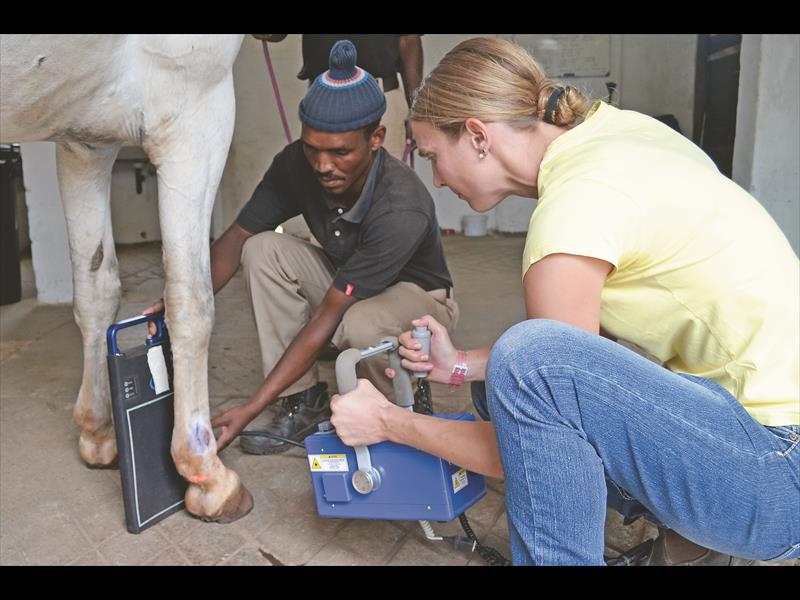
When the Courier met with Dr Karen Behrens for some tips on horse care at her practice in Umdloti, her passion for her patients was undeniable. Dr Behrens, who grew up on horse back, was born in Germany and graduated from Giessen University. She practiced in Canada and Sweden, before taking on a six month contract position at Summerveld Equine Hospital and six years later, she runs her own practice at the Bellamont Stables. “I believe in an all round approach,” said the qualified chiropractor and acupuncture veterinarian.
Dr Behren’s seven tips for a healthy horse:
1.Vetting for purchase: Whether you are new to the horse world or a seasoned horse enthusiast, the best way to avoid ending up with a sickly or bad tempered horse is to go through a process called vetting for purchase.
“I want my clients to buy a healthy and well bred horse. I do a full health check on the horse and enquire about their breeding history, to avoid typical health problems related to bad breeding.”
However, even the best bred, healthiest horse can have health issues, which is why Behrens recommends getting medical aid for your horse. As little as R250 per month gets you decent medical cover and minimizes the risk of being faced with sky high veterinary bills.
2. Check the eyes: “There are certain symptoms which cannot be neglected”, said Behrens. If your horse’s eyes look slightly swollen or the horse keeps an eye closed, phone your vet and have it checked. The later the problem is picked up, the more difficult it is to cure.
3. Colic: Horses have sensitive stomachs, so it is crucial to make sure that their dietary requirements are fulfilled and they eat high quality hay. Common colic symptoms are rolling on their backs, kicking and abnormal sweating. Do not ignore the signs, as your horse is probably in terrible pain and may even require surgery, in the more severe cases.
4. Wounds: If your horse cuts its leg during an out-ride or you spot an open wound, call your vet. Even a relatively small wound that you think will heal on its own, might become a serious problem as the humid climate is not good for gaping wounds and it will soon attract flies, which can lead to infection.
5. Vaccinations: Regular vaccinations are a must to keep a horse healthy, especially this time of year, as the horse sickness season is usually between February and May. Make sure your horse’s vaccinations are up to date.
6. Fences: Behrens stressed the importance of good fences, as horses are often injured by barbed wire. Rather use wooden poles. Also, in order to make the fence boundaries more visible for your horse, stick some plastic tape on the fence, to avoid accidental crashes.
7. Paddocks: Ensure you choose the right paddock neighbors for your horse. Avoid putting horses next to each other if they are not friends, as this may lead to fighting.
Stay in the loop with The North Coast Courier on Facebook, X, Instagram & YouTube for the latest news.
Mobile users can join our WhatsApp Broadcast Service here, or if you’re on desktop, scan the QR code below.