

Help! There’s a monkey on my stoep
Monkey Helpline organisation believes people should be more tolerant towards monkeys.
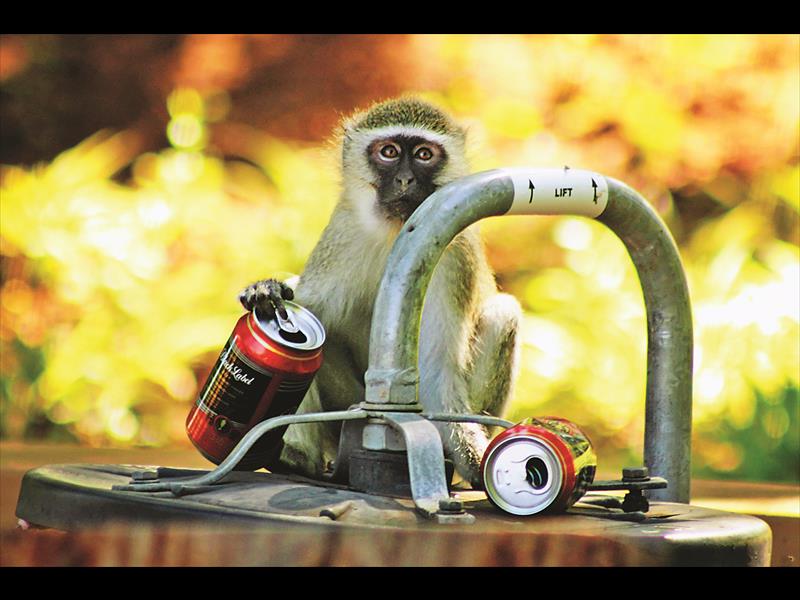
Vervet monkeys are not aggressive and society needs to be more tolerant of these highly intelligent but sensitive primates, according to an organisation devoted to helping these embattled creatures.
“Monkeys are not predators and they only attack in defense,” said Monkey Helpline’s Steve Smit.
“There is no malice in monkeys and they are just like little people trying to survive from day to day.”
Smit believes the key to getting along with our local monkeys is to understand them and accept that they cannot be controlled by humans.
He explained that there are four basic rules that if applied will make a big difference in how people’s interactions with monkeys play out.
Firstly, “never tease, copy or provoke a monkey because it will elicit a response that you may misinterpret and react to in a way that could result in confrontation if the monkey feels threatened.”
People often misinterpret monkey’s chattering as teeth baring, preceding imminent attack.
The only time a monkey becomes overly aggressive, he says, is when it is protecting one of its own like an injured baby or a female giving birth.
Secondly you should never feed a monkey by hand or throw food at it.
“The monkeys will scramble to grab the food from you and bring the food straight to their mouths as they grab it, and may accidentally bite you. Throwing the food causes monkeys to associate people with food, resulting in them running towards people for food.”
Smit suggested leaving food outside on a wall where monkeys can find it as they would in nature.
Thirdly never scream or run away from a monkey when it gives you attitude because this will entice the monkey to run after you. Screaming frightens monkeys and elicits defensive aggression.
“A monkey that enters your house has two objectives in mind: it wants to stay where it is and it does not want to get hurt by you.”
In standing your ground without threatening the monkey and perhaps flicking a napkin or towel at it, will communicate that you are not threatened by its bluff and the monkey needs to leave. Squirting water at them with a spray bottle is a very effective way of teaching them where they are not allowed to go.
“You can keep a whole troop at bay by spraying water at them,” said Smit.
The fourth monkey no-no is to try and touch a monkey.
“Monkeys do not want to be touched and are likely to bite in self-defense,” said Smit.
One of the biggest myths fueling people’s fear of monkeys that needs to be debunked, is that monkeys carry rabies.
“Monkeys do not carry rabies and you will not get any virus from a monkey bite. Being bitten by a monkey is no more dangerous than being bitten by a child.”
The Monkey Helpline can be contacted at 082 659 4711 or 082 411 5444.
For more information and to view monkey rescues visit www.monkeyhelpline.co.za.
Stay in the loop with The North Coast Courier on Facebook, X, Instagram & YouTube for the latest news.
Mobile users can join our WhatsApp Broadcast Service here, or if you’re on desktop, scan the QR code below.