

Bees make the world go round
Salt Rock beekeeper wants to educate community about hard working creatures.
Einstein once calculated that if all bees disappeared off the earth, four years later all humans would also have disappeared.
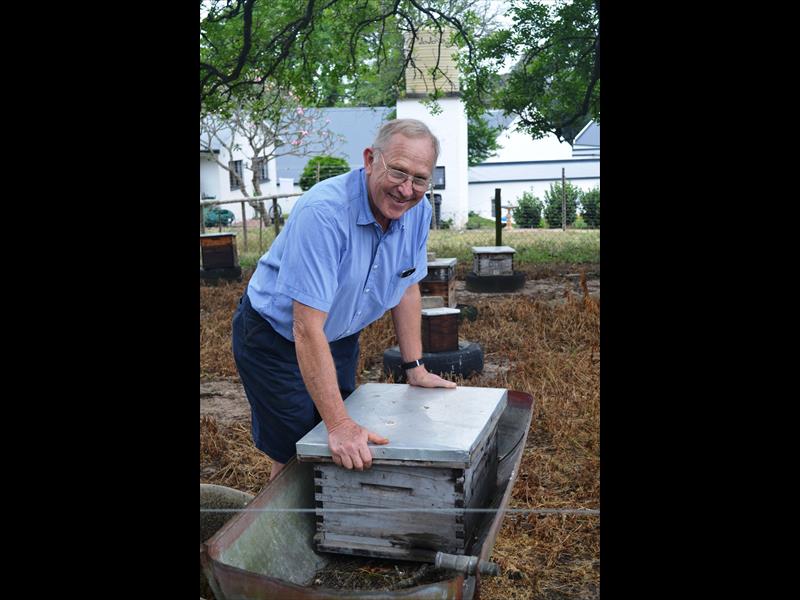
Salt Rock beekeeper, Trevor Thompson, is doing his bit to educate people not only about the importance of these hard workers, but also about the dangers they are facing.
The Driefontein garden club in Salt Rock invited Thompson to give one of his famous talks about the blessing of bees last month.
“African bees are said to be the most productive in the world, but also the most dangerous, which is why being a beekeeper is not for sissies,” he said.
It is essential for beekeepers to learn the language of bees in order to understand their behaviour, especially when doing something like climbing a rotten tree trunk that has a swarm living inside.
“The tones vary from content ‘business as usual’ to fear, and worst of all, raw aggression.”
Bees have a well organised social structure.
The most important bee is the queen of course, then there are the hard working female bees and finally the lazy males, called drones, which hang around the hive, eat honey and sleep… sound familiar?
“Bees are extremely orderly and clean and fulfill their assigned duties without fail,” he said.
Inside the hive, you also find the builders, cooks, cleaners, nurses and ventilator bees.
According to Thompson, the builders are butch females, which build the honeycombs and repair the hive, while the cook bees go about processing the honey and making bee bread.
The cleaner bees keep the hive spotless and hygienic at all times, carrying all debris up to 10 metres away from the hive.
Ventilator bees maintain the hive at 35 degrees and the guard bees keep intruders such as rhino horn beetles and cockroaches away.
The scout and field bees spend most of their day outside.
Scout bees discover the pollen and nectar and then point the field bees in the correct direction for collection.
Once understanding their intricate structure, it is important to see how Einstein came about his conclusion.
The buzzing busybodies play a vital role by pollinating flowers, making them essential to the existence of many food types and play a crucial role in the food chain.
Much loved foods such as almonds, apples and berries would no longer be available to us naturally, if bees were to stop pollinating agricultural grounds.
According to the South African Bee Industry Organisation, the added value of pollination by honey bees is between R400 – 1600 million per annum in South Africa.
Honey, pollen, royal jelly and beeswax are widely used in the cosmetic and medical industries and it would be nearly impossible to find a natural substitute.
Honey bees in the northern hemisphere have been dying at an alarming rate, mainly due to a killer mite called Varroa.
While our bees remain unaffected by the mite they are still in need of protection from pesticides, the loss of habitat and drought impacting the flowering plants they rely on.
By looking after them we will hopefully be able to enjoy the unique benefits the little buzzers bring with them for a long time to come.
Stay in the loop with The North Coast Courier on Facebook, X, Instagram & YouTube for the latest news.
Mobile users can join our WhatsApp Broadcast Service here, or if you’re on desktop, scan the QR code below.