

‘We never planned for drought’
No rain biggest factor in water problems on the Dolphin Coast.
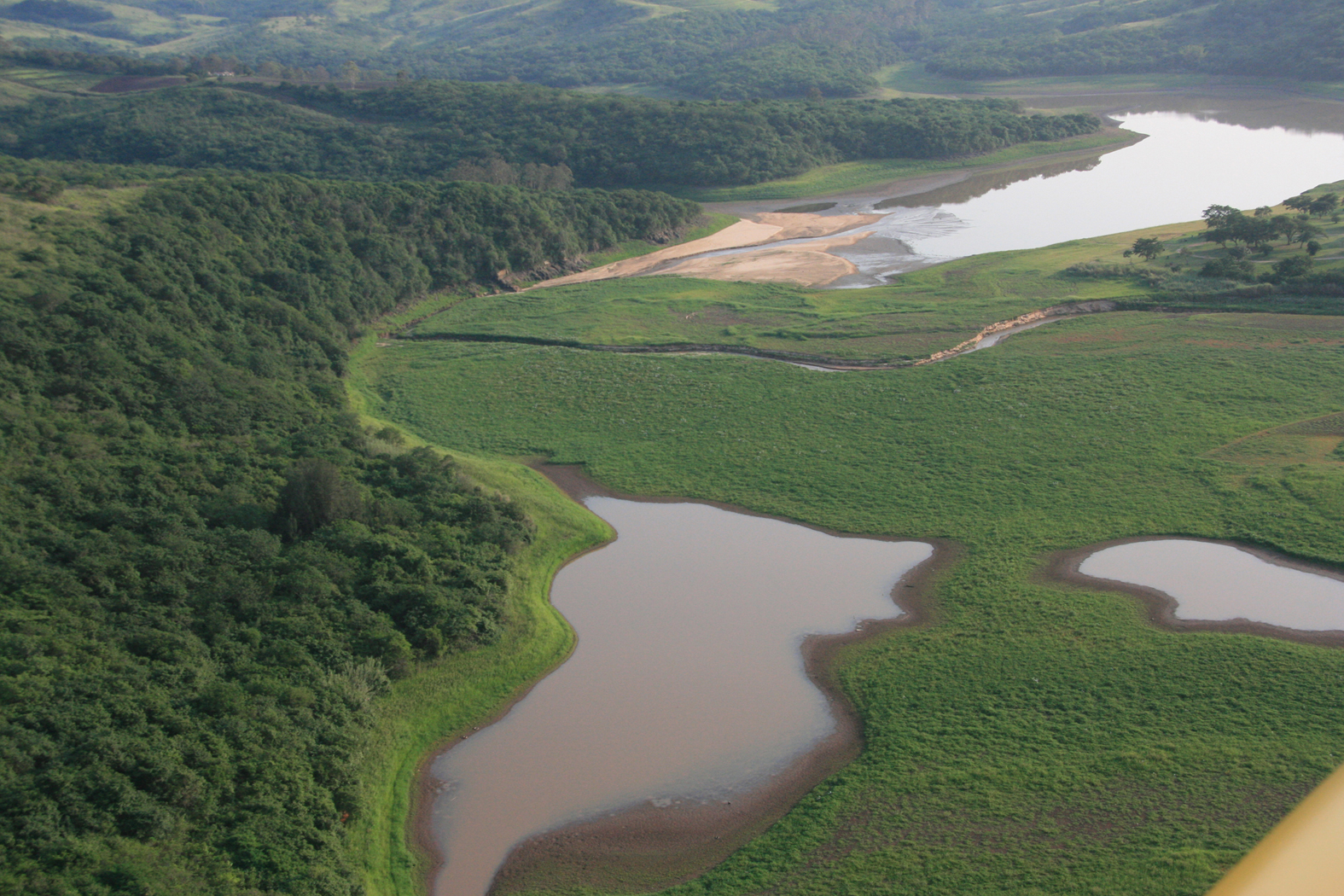
With Hazelmere Dam down to 35.26 percent as of Tuesday and still no guarantee of good rain on the horizon, experts say the North Coast water supply is on the verge of disaster.
Heavy siltation in the dam makes 15 percent of Hazelmere Dam’s total capacity useless, leaving the dam in effect at a 20 percent usable water level.
There is still no structure in place for supplementing Hazelmere Dam’s water supply with water from another system when the dam runs dry, but Umgeni Water corporate stakeholder manager Shami Harichunder said they were investigating the feasibility of pumping water from the uTongathi River to the dam.
Not willing to commit to a timeline, he said there is no need for panic as there is still enough time to set up the pipeline from the uTongathi River if it becomes necessary and is approved.
Experts interviewed by the Courier this week believe pro-active solutions are needed to break a cycle of bad water management and drought.
Dr Gordon O’Brien of the Institute of Natural Resources in Pietermaritzburg said bad water management took us to the edge but the drought pushed us over.
“We are not in crisis because of bad management but because of drought,” said Dr O’Brien.
He said this week that South Africa (including KZN) is a water scarce country and the fact that more water has been allocated than what was available has been made worse by the current drought along the North Coast.
To ensure better future water management, studies are being done to establish how to establish eco reserves (to protect water), to establish the management classes of rivers (how much management each river needs) and water resource quality objectives (drinking versus irrigation water).
“Upstream management (from Hazelmere Dam) needs to be done better,” said O’Brien.
He explained that the catchment area is in a bad state due to overgrazing.
“Rural farmers do not farm their cattle properly and so the grass is depleted, freeing up soil to end up in the rivers,” he said.
Environmentalist Paul Dutton of Salt Rock flew over the Hazelmere Dam and its feeder Mdhloti River earlier this month to assess the situation. He found that much of the water coming from the catchment area never reaches the dam, because of improper land use practices along the Mdhloti River.
“Farmers wasting water through uneconomical irrigation methods and sand mining are reducing the sand’s water holding capacity, allowing all the water to flow downstream at once, rather than releasing as needed.
“In addition, forestry getting too close to the river, depleting ground water, are all to blame for the large amount of water from the catchment area that never reaches the dam,” said Dutton.
He believes there is no point raising the level of the Hazelmere Dam wall if the water cannot get to the dam.
The primary focus should be on fixing the state of land use between the dam and the upper catchment area first.
O’Brien had a different opinion: “There is no point in placing blame; we should rather all get involved in finding solutions.”
For this purpose the KwaZulu-Natal Rivers Forum (KZNRF) was established on November 6, 2014.
The KZNRF is a voluntary stakeholder participation initiative that aims to improve understanding, sustainable use and conservation of river and estuarine systems and is open to any interested community members, conservationists, regulators, scientists and users.
“Greed is to blame for a large part of our water shortages. We took more than we needed.
“It is too late to rely on normal rain and we actually need a flood to fill up our dams and rivers,” said O’Brien.
Stay in the loop with The North Coast Courier on Facebook, X, Instagram & YouTube for the latest news.
Mobile users can join our WhatsApp Broadcast Service here, or if you’re on desktop, scan the QR code below.