

A couple to take note of
KZN Philharmonic Orchestra couple shares their love for music.
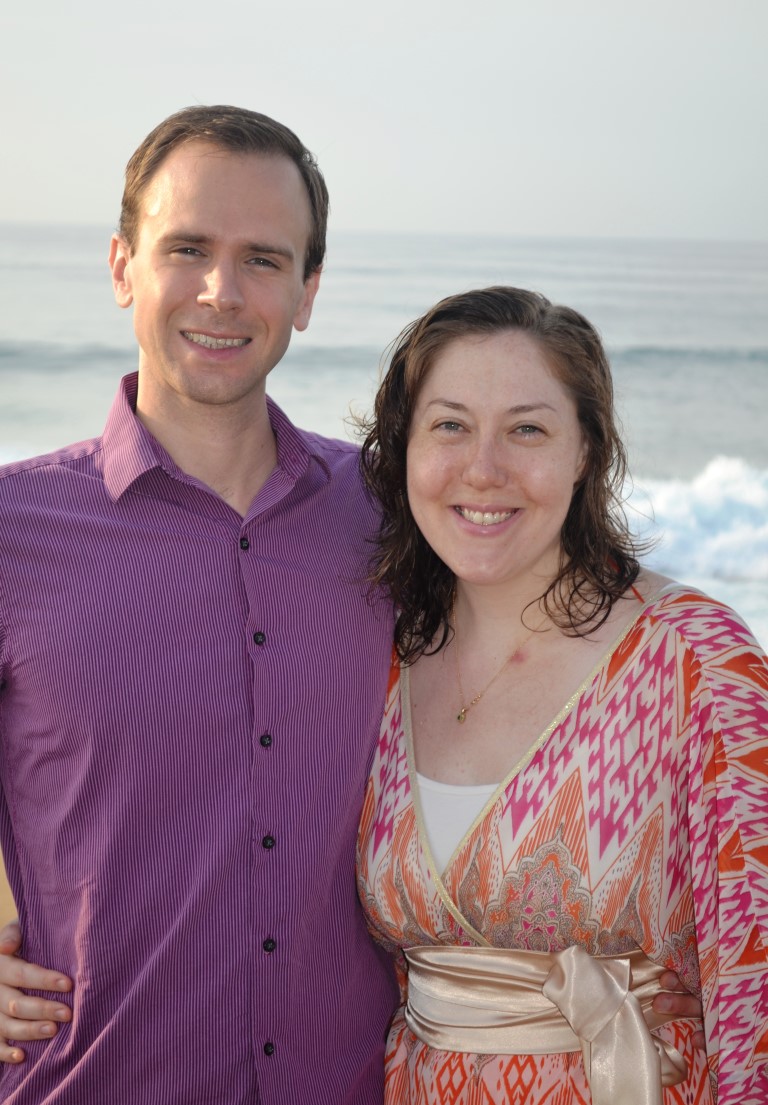
When you see a lady with a ballerina posture and a violin in hand alongside a tall man with a kind face and elegant hands you have encountered the musical couple of Umdloti.
While Joanna Frankel is at home on stage whether it is as a soloist or concertmaster of the KZN Philharmonic Orchestra, her husband, Daniel Walshaw, stays behind the scenes as the arts administrator of the orchestra, although he joins her on stage occasionally as he is also a conductor and composer.
“It has been a fascinating experience living in South Africa. I never imagined I would,” said the Julliard graduate and internationally acclaimed violinist, who moved to Umdloti in 2013 to take up the position of concertmaster.
For Frankel, this is her first time as part of a professional orchestra. She has been a soloist and chamber musician for the most part of her career.
“Most of the orchestra here is part of the old fashioned, eastern symphonic tradition, which is fine, as I trained in Russia, so I understand it, but it is quite something to bring together musicians from about 20 different countries, who have different musical and cultural backgrounds, and to fit them into Bongani Tembe’s (Chief Executive Officer and Artistic Director of the orchestra) idea of an orchestra in South Africa.”
His idea is that the orchestra plays many roles, from Thursday evening classical concerts in traditional black and white attire to traveling far and wide to perform for rural schools, dressed in jeans.
“This is quite unusual for us. In the states, each orchestra is specialised in a certain field, be it education, chamber music or a string quartet for example, but this orchestra has no boundaries,” said Frankel
“What we do with this orchestra is based on our funding, as we are heavily supported by the government, whereas in the states government support is minimal, as there is no ministry of arts and culture. Orchestras are privately funded, by individuals or companies who are encouraged to fund philanthropic organisations, as they get tax incentives if they do,” said Walshaw.
He added that depending on the state, orchestras will generally be funded by the dominant industries, like the Detroit symphony for example which is a proudly community funded orchestra, and is supported by General Motors and Ford.
“It makes orchestra survival difficult in SA, because there is not a similar system and there is no encouragement to support it, which is why Tembe’s work is admirable,” she said.
“I do not know of any orchestra in the world that offers this kind of stability to the musicians and that has been able to do so for 20 years now,” he said.
Frankel however said that although government funding is fantastic, it does create a certain comfort zone and consistency which does not encourage change and creative thinking.
“A large part of American music training is about thinking out of the box and being a 21st century musician,” she said.
Having said that, they are trying new creative ideas to grow audiences, such as the current “pop up symphony” project, where the orchestra performs in different venues and the audience is encouraged to take out their phones, take photos or videos and share the experience on social media.
“The real challenge for me is finding the formula to get people out of their homes in Durban,” said Walshaw.
“Overseas, people will drag themselves through a blizzard to go to a concert, but here, the slightest drizzle is a reason to stay at home,” said Frankel.
“We would like to expand our audience and reach out to people who are not normally orchestra followers to show them that we are not unapproachable and elitist.”
Stay in the loop with The North Coast Courier on Facebook, X, Instagram & YouTube for the latest news.
Mobile users can join our WhatsApp Broadcast Service here, or if you’re on desktop, scan the QR code below.