

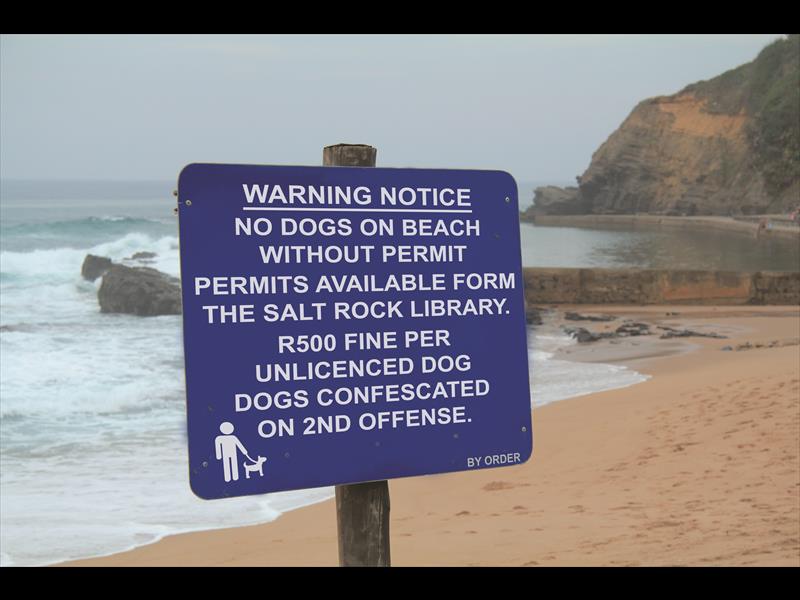
Anyone who wants to walk their dogs on the beach will, from April 1 – just in time for the busy Easter holidays – have to carry a beach permit. Carrying doggie doo bags and cleaning up after your animal is also now compulsory.
“We want to achieve blue flag beach status in Ballito, so we cannot allow our beautiful beaches to be crowded by and defecated on by every Tom, Dick and Harry’s dog,” said municipal spokesperson, Honest Nikimali.
Salt Rock ward councillor, Malcolm Huggies, said the bylaw was passed at an emergency Exco meeting last week and welcomes the project that he said will create more jobs.
“Job creation is a priority and this project will create 45 new unskilled and semi-skilled jobs,” said Huggies.
He said most of the new jobs will be for undercover bylaw enforcers who will check for permits and issue fines.
“Employing undercover officers saves us money on uniform costs,” said Nikimali.
He said it also makes it more difficult for people to take chances as anybody on the beach could be an enforcement officer. It is believed that vagrants and beggars will be first in line for the majority of these new jobs.
“After the public outcry over Ballito’s ‘beggar problem’ and seemingly rising crime levels, we got to work and decided to create jobs for them.”
Permits are issued on a monthly basis and the size and breed of the dog are key factors in determining the cost of the licence.
“Large breeds like Alsatians and Great Danes are known to have more active bowels than small breeds like Maltese poodles and owners will have to pay for the extra impact on the beaches,” said Ngikimali.
Dogs will be weighed once a month at the Ballito and Salt Rock libraries and permits will be charged at R10 per kilogram. A permit for a dog that weighs 30 kilograms will, for example, cost R300 per month.
Although there will be no discount for multiple dogs, it is not all doom and gloom because the municipality has invented a clever incentive programme to put cash back in your wallet.
Dog owners can hand in their full ‘doggie doo’ bags at the libraries to have their loyalty cards stamped. If you collect 12 stamps during a calendar month, 50 percent of your permit fee will be paid back into your account by the middle of the following month.
Librarian Holdmynose Mhlongo said the doggie doo will be sent to SAPPI, which has agreed to manufacture paper for schools in Nkobongo, Etete and Shakashead.
“We have done our research and found that doggie doo paper was cheap to manufacture and had a smoother texture than elephant dung paper, making it easier to write on,” said Mhlongo.
But locals are not happy with the turn of events.
“This is crazy. Where are we supposed to get the money for this? My rottweilers will have to start hunting for food because I will not be able to feed my dogs anymore,” said Ballito resident, Ipee Younat.
Local animal shelters are preparing for an influx of abandoned dogs and said they will do their level best to find new homes for as many dogs as they can to avoid unnecessary euthanasing. They have requested that owners who decide to give up their dogs bring with them a month’s supply of food in case re-homing takes a little longer.
Undercover enforcement officers will check permits every day and issue fines to non-compliant dog walkers. The penalty for walking a dog without a permit on the beach is R1000 per dog and repeat offenders’ dogs will be confiscated and kept at a local kennel until all outstanding fines have been paid in full.
Holidaymakers have to apply for dog beach permits for the duration of their stay and will also be issued a fine if found to be non-compliant. “They are rich so will be charged a non-resident’s fee of R20 per kilogram,” said Nikimali.
So remember, if it’s April 1, you need a licence!

Stay in the loop with The North Coast Courier on Facebook, X, Instagram & YouTube for the latest news.
Mobile users can join our WhatsApp Broadcast Service here, or if you’re on desktop, scan the QR code below.