

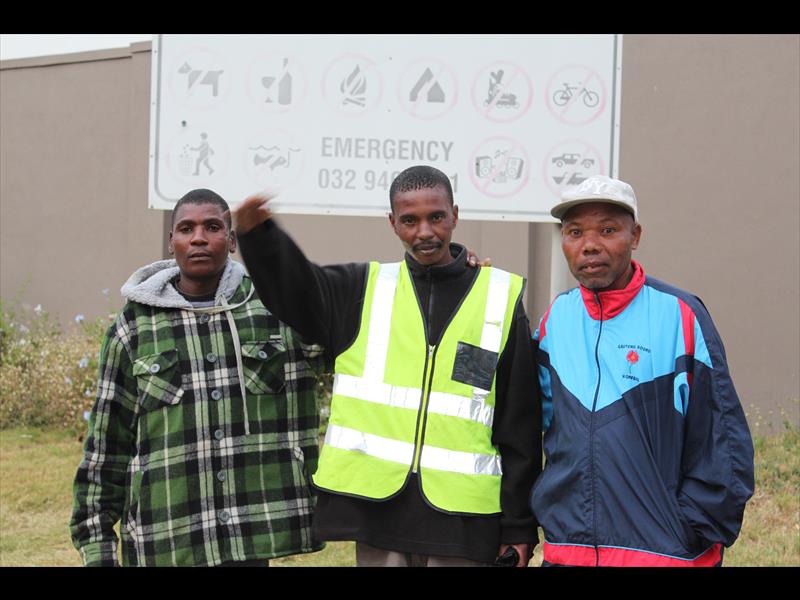
Floating on the fringes of shopping centres and beachfronts and standing in the shadows of parked vehicles, car guards walk the fine line between work and unemployment.
Many are foreign nationals from other parts of Africa who have arrived in the country steadily over the last 20 years seeking work and refuge from civil unrest in their home countries.
With refugee status, these individuals are not eligible to hold work permits granting them access to formal employment, which is why for the majority, car-guarding is the only option open to them.
At the Ballito Junction shopping centre, car guards under the employment of Park-Smart work an average of eight hours per day without earning a salary. Instead, the men have to pay their employer a daily rate of R30 simply to stand in the car-park and begin work and that is only after they buy their own uniforms.
“Without them, I do not have a business,” said owner of Park-Smart, Dave Pusey, who explained that his business extends into a number of areas including Ballito, Umlazi and Hillcrest and that it generates revenue solely by charging car guards these daily fees.
“This is not exploitative – they are here, out of their own free will and this is how the industry works,” said Pusey.
Car guards typically earn an average out of R100 per day entirely in the form of R2-R5 tips from people returning to their vehicles.
A car guard at Shaka’s Rock, Giles Kabele, highlighted another daily difficulty in the form of travel costs as his return trip from Durban sets him back R50 – half of his average day to day earnings.
Car guards at the Ballito Bay Mall face identical working conditions. Donning uniforms bearing the Vimbela logo they themselves had paid for and working the same hours, the parking attendants are also reliant on tips as they are listed as an ‘extended service’ by Enforce Security, which owns Vimbela.
“We are giving these guys an opportunity to better themselves and we are teaching them important things like how to help and how to interact with the public,” said Madima Jean, Vimbela area manager at Enforce, who supervises the team of car guards on duty at the shopping centre.
Despite this, car guards are subject to the laws defined by the Private Security Industry Regulatory Act (PSIRA) 56 of 2001, which states that all car guards working in public areas have to have the necessary training and accreditation to do so.
Salt Rock Neighbourhood Watch offers to pay the R180 training fee for each independent car guard in the area who submits an application to be officially registered. This initiative caters for the men’s desire to work while fulfilling an unavoidable legal requirement.
Stay in the loop with The North Coast Courier on Facebook, X, Instagram & YouTube for the latest news.
Mobile users can join our WhatsApp Broadcast Service here, or if you’re on desktop, scan the QR code below.