

Are e-bikes the future of the North Coast?
You may have already seen one of these zipping through your streets. The question is, is it worth all the hype?
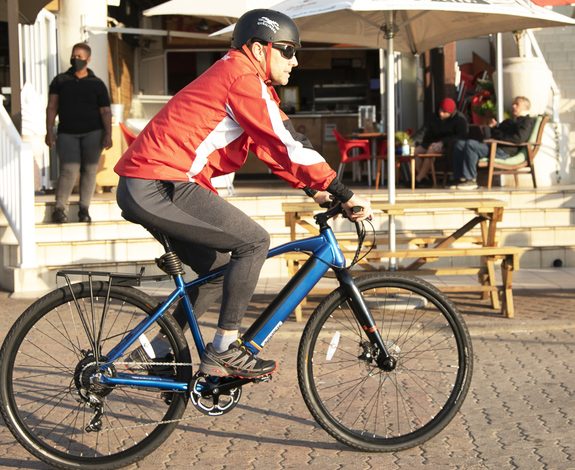
Cycling has witnessed a sudden renaissance in the past few months – driven by the current pandemic – but there is also a new kid in town: the electrically powered ‘e-bike’.
While this perfect storm of circumstances is driving up sales for all kinds of bikes, independent cycling shop owners are reporting a surge in demand for electric bikes over lockdown.
Nicknamed the ‘e-bike’ (also called power bike or booster bike), it might be the biggest adoption of green transportation of the decade.
Cycling is already green, you may say, but it’s more than that. Think of them in place of small petrol scooters rather than normal bicycles.
Generally speaking, e-bikes are bicycles with a battery-powered “assist” that comes via peddling and, in some cases, a throttle.
When you push the pedals on a pedal-assist e-bike, a small motor engages and gives you a boost, so you can zip up hills and cruise over tough terrain without gassing yourself.
You may have already seen one of these zipping through your streets. The question is, is it worth all the hype?
E-bike enthusiast Pierre Tostee, who has been riding e-bikes for years, said people are looking for healthier and easier ways to get around and believes there are many legitimate reasons for using an electric bike.
“You can control how big of an assist you get. Most e-bikes come with a power switch that lets you adjust the boost setting from “eco” (low) to “turbo” (high), for when you want a little more oomph to help up a steep hill.
“E-bikes use rechargeable batteries that can travel up to 30 km/h, much faster than most people would cycle, getting you to your destination quicker and in better shape. In a nutshell they offer low cost, energy efficient, and emission-free transportation which also has physical and health benefits.”
While detractors riding the traditional pedal-only powered bikes will cry ‘cheat’, it does not mean you do not exercise on an electric bike. You still have to pedal.
To compare them with a regular bike is to miss the point says Tostee, who is a long-time cyclist.
“It is another form of cycling and feels like someone is giving you a push through the difficult bits.
For those who are not frequent riders, e-bikes open up a whole new world.
While you may not be conditioned to ride 15-35 kilometres at a time, you can cover those distances easily with an electric assist, which is a great way to build endurance and confidence.”
The choice of power levels allows cyclists to choose how much “assist” they want from the motor when pedaling. On a flat road or path, choosing level one will require a reasonable output from your legs, while level five will mean you are flying along with no resistance at all.
Independent cycling shop owner Ian Wilson, based at Sugar Rush Park, reported a “bicycle boom” during lockdown with an increased interest in their e-bike products.
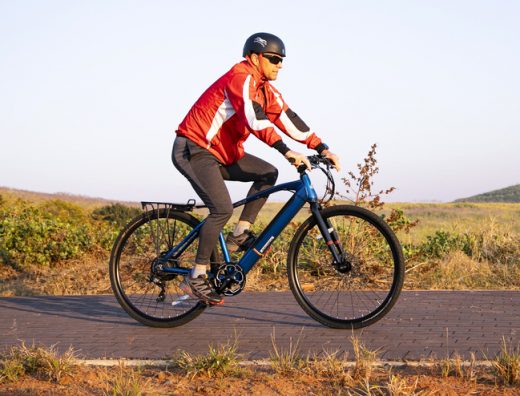
Wilson says his initial worry was the Covid-19 restrictions would see them out of work. But instead bike sales have more than doubled.
Customers have told Wilson they long wanted to take up bike riding, but did not have the time or motivation before now. But for many the coronavirus restrictions have finally given them the incentive to take up a new hobby.
“They talk as though they have been thinking about it, and now the ideal scenario has come up: gyms are shut, contact sport is not allowed, so why not get a bike?”
While e-bikes sales are growing across demographics, the recent boom in electrical bicycling technology is creating more opportunity for older people.
“E-bikes are capturing the senior market, many of whom have found that electric bikes enable them to ride much later in life than they previously imagined.
People with mobility issues or recovering from injuries can ride longer and more regularly too.
“As modes of transport go, it’s fast, cheap, green and enormous fun,” said Wilson.
When it comes to recharging, the battery is removed from its bracket and plugged into a charger, rather like a large mobile phone charger, which is plugged into a normal socket.
It takes about three hours to fully charge and yields about 40km (cycling on full power) depending on how you use it. The battery can be charged up to 1,000 times before it will need replacing.
Electric bicycles do not require a license or insurance, and if you choose the right e-bike model, it can last you a very long time.
To test drive an e-bike you can visit STM Bike shop at Sugar Rush Park. Contact STM at 083 7069291 or speak directly to Ian at 073 153 0986 or email ian@singletrackminded.co.za.
Do you want to receive news alerts from The North Coast Courier via WhatsApp? Send us a WhatsApp message (not an sms) with your name and surname to 061 718 4438.

Stay in the loop with The North Coast Courier on Facebook, X, Instagram & YouTube for the latest news.
Mobile users can join our WhatsApp Broadcast Service here, or if you’re on desktop, scan the QR code below.