

Incy wincy spiders come in all shapes and sizes on the North Coast
Planet Earth is home to some 45 000 different kinds of spiders and while only 540 of those spiders could kill you, fear of spiders (arachnophobia) is the leading phobia of mankind.

Spiders, the stuff of nightmares for many, are often all imagined to be deadly, their bites capable of instantly causing death.
The truth, however, is that you have more chance of being run over by a bus.
Planet Earth is home to some 45 000 different kinds of spiders and while only 540 of those spiders could kill you, fear of spiders (arachnophobia) is the leading phobia of mankind.
Spider bite-related deaths are so rare in fact, that even the World Health Organisation is unable to provide statistics for these.
Adding to the lack of figures is that in order to be considered a spider bite related death, accurate identification and verification of the spider is required.
South Africa is home to 4 of the world’s 9 deadliest spiders, and KwaZulu-Natal is home to a number of the country’s deadliest genera of spiders, including 3 of the 6 species of Button Spider.
These spiders belong to the genus Latrodectus, with the geometricus (Brown Button – not deadly), cinctus and renivulvatus (both Black Button spiders) occurring locally.
Photo: Luke Verburgt.
The third, Phinda Black Button spider, is not found on the North Coast but instead in the northern parts of KZN.
It is a recently discovered species, first observed at the Phinda Reserve.
Black (potentially lethal) and brown (mildly venomous) Button Spiders:
Simbithi entomologist, Graeme Leslie says these spiders possess a neurotoxic venom which attacks the central nervous system.
“The group can be divided into the Black and Brown Button Spiders, Black containing the more toxic venom,” he said.
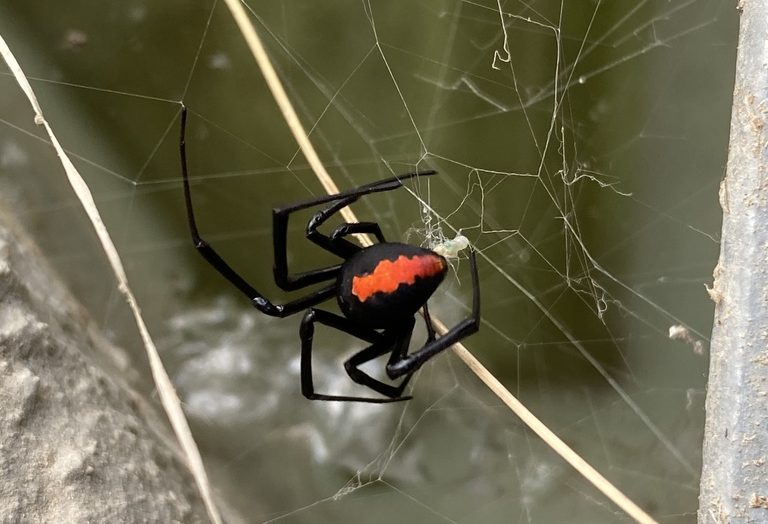
Only 2 of the 4 Black Button Spider species in this group call the North Coast home – but 2 are more than enough.
Commonly mistaken to have a red hourglass marking like that of the equally venomous American Black Widow, the local Black Widow turns completely black when it reaches adulthood.
The various species of Black Widow on the African continent either have red marking on their underside or upperside, never both.
Undoubtedly the most infamous spider in the country, its venom is capable of inflicting excruciating pain with symptoms appearing shortly after being bitten.
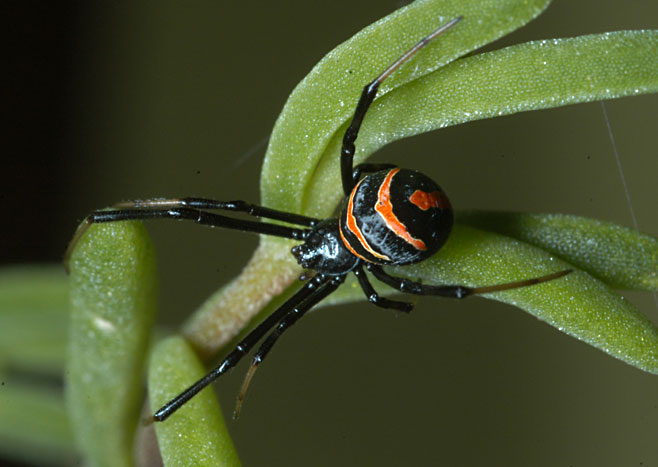
Symptoms may include pain and weakness in limbs, facial contortion, swollen lips, sweating, raised blood pressure, muscle pain and cramps.
If administered in time, anti-venom prevents death and patients are generally released from hospital within 24 to 48 hours.
Only the Black Button Spider’s venom is considered potentially lethal.
The Black Widow nests in the darker, quieter corners of your home and only the female possesses fangs capable of piercing skin.

Photo: Ashley Kemp, African Snakebite Institute.
As for the bite of a Brown Button Spider, Leslie said: “These bites tend to be less serious with damage restricted to the site of the bite.”
The bite is characterised by a burning sensation which may spread to surrounding tissue and lymph nodes. Both the Black and Brown Button Spiders build messy webs and have large white, spiky egg sacs.
There are no recorded deaths from either species in South Africa.
There are 2 species of spider found here which have a cycotoxic venom, which attacks living cells.
The Violin Spider (mildly venomous):
Of the species Loxosceles (violin spider) 4 are present in South Africa, one of which appears on the North Coast.
A bite may cause tissue damage and the wound may turn septic or necrotic. You should seek urgent treatment if bitten, however no anti-venom exists.

Photo: Charles Haddad, Department of Zoology & Entomology, University of the Free State.
Open wound treatment is the most likely course of action.
Plastic surgery is normally enough to repair damage but in severe cases amputation of limbs has been necessary.
Similar in appearance to the harmless Daddy-Long-Legs, Violin Spiders are brown or grey and have spots on the abdomen.
They can be found in houses and garages but are frightened of people and tend to steer clear.
They are more commonly found in caves.
Yellow Sac Spider (mildly venomous):
“Symptoms of a bite from these spiders show as tissue lesions which can be quite large (up to 10cm) and require due care. As with all venoms, the state of a person’s health, sensitivity and age are important factors in determining the seriousness of any spider bite,” said Leslie.

Photo: Ashley Kemp, African Snakebite Institute.
Sac Spiders are fairly common on the North Coast, colloquially sometimes called ‘curtain spiders’ because of their habit of hiding in curtains and on soft furniture.
People have been known to have been bitten when rolling over in bed.
The Yellow Sac Spider is often found under leaves where they build sacs to hide or lay eggs.
Species range from creamy white to pale yellow and a reddish-brown while possessing distinct black or dark mouth pieces.
If a person is bitten, they should seek treatment as delaying to do so could lead to tissue damage, with wounds capable of going septic or even turning necrotic.
Rain Spider (non-venomous):
A spider known to draw out the worst reaction from humans is the commonly found Rain Spider, which reaches about 10cm in size.
Although they don’t bite often and tend to scurry away as soon as disturbed, the spider is capable of inflicting a painful bite similar to the sting of a bee.
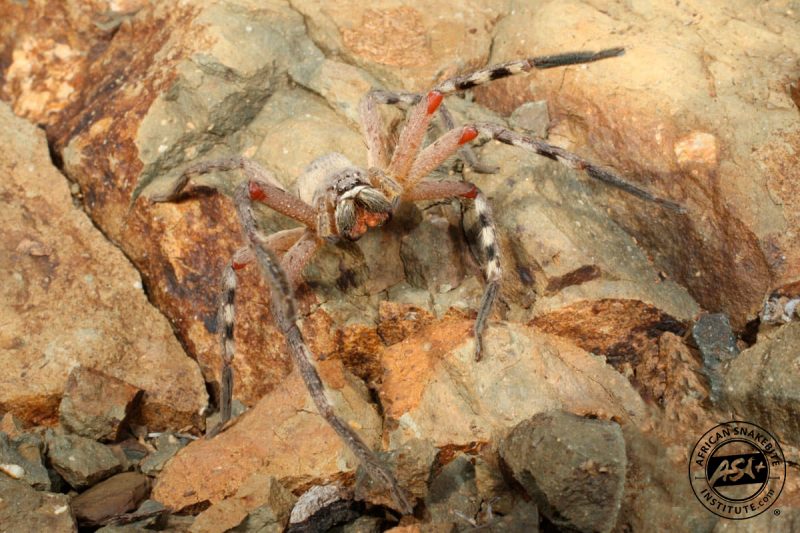
Photo: Johan Marais, African Snakebite Institute.
While this sees them considered near-harmless, females will aggressively defend their eggs.
They enjoy areas which are damp and dark.
Whiptail Spider (harmless):
Another fine example of a spider commonly mistaken to be venomous is the Whiptail Scorpion Spider of which 70 species have been recorded.
These fearsome-looking spiders are quite harmless and possess no venom at all.
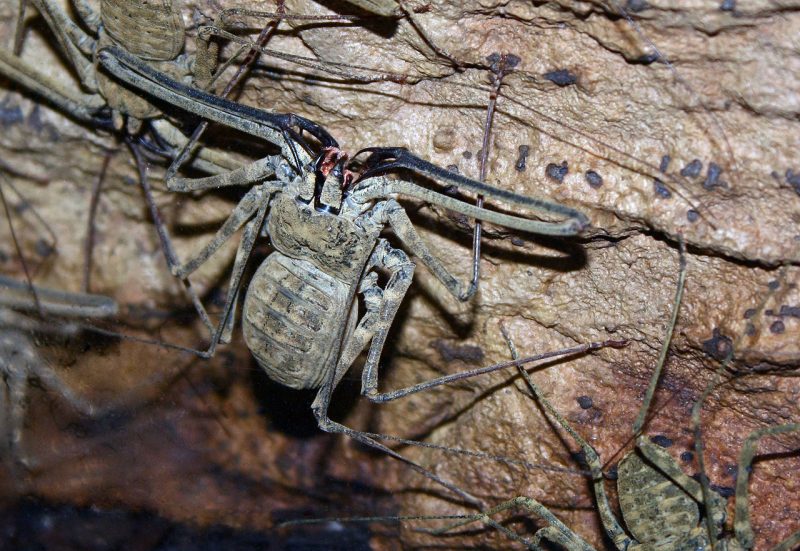
Photo: Greg Hume, Wikipedia.
They commonly feast on cockroaches, other spiders and household pests.
During the day they can often be found hiding beneath bark or stones.
Bark Spiders (harmless):
Also called hairy field spiders, these have a frightening demeanour which often leaves people running in the opposite direction – again, for no reason as the spider happens to have more bark than bite (although they do not bark).
These messy-web spiders only spin their webs at night and have been seen taking down their web during early mornings.
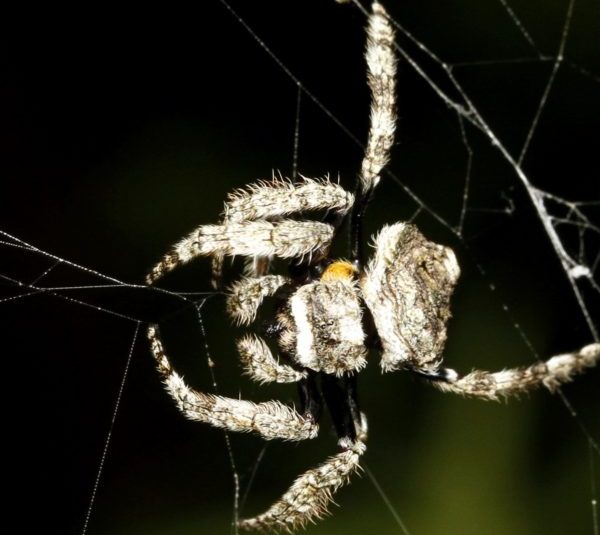
Photo: Ashley Kemp, African Snakebite Institute.
While small, some of the species can become quite large but no bigger than 25mm.
They are commonly found in nature reserves and similar environments with large amounts of lush vegetation.
However they have been found to nest over pools of water even in residential areas.
They have been compared in appearance to crabs.
Garden Orb Spider (harmless):
This spider is quite possibly the most common arachnid throughout the country, appearing in just about every residential garden.
While it’s odd-shaped, visually spiky sac may make it appear to be a threat, you don’t have to worry about it.

Photo: Johan Marais, African Snakebite Institute.
These spiders range in sizes from 20-60mm and the female tends to be larger than the male.
Their abdomen is rounded and in some cases presents with small protrusions.
The spider poses no threat to people or pets.
Six-eyed Sand Spider:
South Africa’s deadliest spider, the Six-eyed Sand Spider is so rare, that there are only 2 suspected cases in which it had bit humans.
This spider may have been the cause behind a man losing an arm owing to massive necrosis while in another case, a man died owing to massive hemorrhaging.
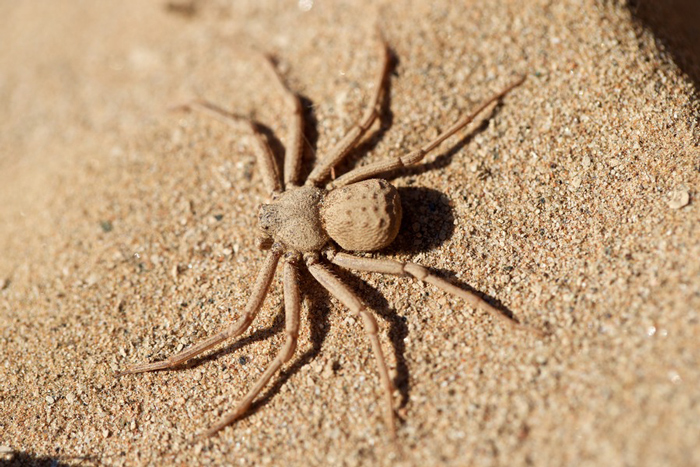
Studies have proven that the venom produced by the spider is particularly potent, enough so that it could lead to the death of the victim – no anti-venom for a bite from this spider exists as yet.
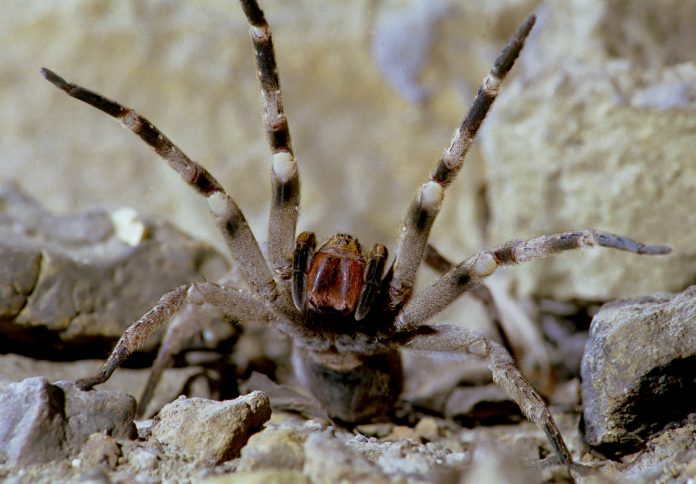
It’s venom, in fact, is so potent that it is considered a near equal to that of the world’s deadliest spider, the Brazilian Wandering Spider.
Interesting facts about spiders in nature and medicine:
In spite of their fearsome appearance, spiders play an incredibly important role in nature and medicine.
Unbelievable it may sound, a species of Jumping Spider (Evarcha culicivora) found only at Lake Victoria in East Africa has adapted to hunt specifically for malaria-transmitting female Anopheles mosquitoes.
That’s pretty useful, as malaria is the world’s biggest killer. On average, 725 000 people die from malaria every year.
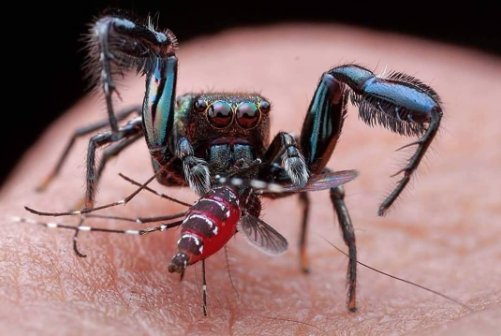
Spiders, especially those commonly found around your home, kill and eat a variety of insects.
Their prey often includes flies, cockroaches and other common household pests.
Spiders have also been introduced successfully to a number of apple orchards in Israel, as well as rice fields in China, where they control insect populations.
In the medical field certain venoms produced by spiders have aided in the treatment of diseases like strokes and cancer.
Arachnologists have gone so far as to say that if spiders disappeared off the face of the Earth, humanity would be faced with famine.

Stay in the loop with The North Coast Courier on Facebook, X, Instagram & YouTube for the latest news.
Mobile users can join our WhatsApp Broadcast Service here, or if you’re on desktop, scan the QR code below.