

A few things you might like to know about Arbor Day
It doesn’t even matter if you don’t plant the tree of the year as it might not do well in your environment, as long as you plant a tree or plant you’ll be helping to green our country.
Have you decided what tree to plant this Arbor Day and greening week?
If not, there’s still time!
It doesn’t even matter if you don’t plant the tree of the year as it might not do well in your environment, as long as you plant a tree or plant you’ll be helping to green our country.
Just keep it indigenous though!

Rare tree of the year – The Spekboom
The spekboom might ring a bell somewhere as it’s been in the news a bit of late.
It’s been lauded as an environmental miracle worker that tackles carbon emissions better than most other plants on Earth.
The evergreen spekboom (Portulacaria Afra) is indigenous to South Africa and is also known as pork bush or Elephant’s Food.
It is ideally found in the semi-arid karoo of the Eastern Cape where it flourishes on north facing slopes in maximum sun.
But it also does well on the North Coast.
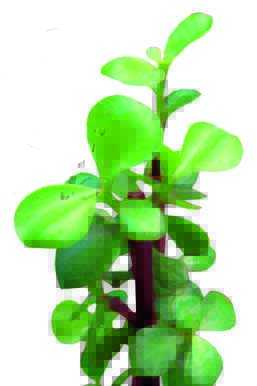
The soil can be poor and it copes well with frost and drought.
The spekboom can grow to five metres and live to 200 years.
It propagates easily which means you can take a piece, pop it into the ground and it will probably grow.
It’s definitely water-wise and needs very little attention. It can survive on as little as 250 millimeters water a year.
Hectare for hectare a spekboom thicket is ten times more effective than the Amazon rainforest when it come to removing carbon monoxide from the air.
One hectare of this amazing tree can use between four and ten tonnes of carbon per annum.
This is probably the best tool we have against climate change.
Spekboom adapts easily.
When it’s wet and cool it acts like a normal plant but when it’s dry and hotter it photosynthesises at night (which other plants don’t do) so that it’s stomata stay closed during the day to avoid water loss.
It can be turned into a dense hedge, a ground cover or a tall screen. You name it, the spekboom can fulfil any role.
Animals like spekboom and it’s a favourite of elephants and herbivores.
It is high in nutritional value and completely safe and extremely healthy for people to eat as well.
The leaves are juicy, taste a bit lemony and are often eaten by hikers as a pick me up.
Why not speak to your nursery and plant your own spekboom?
Water wise gardening
Water-wise gardens focus on plants that thrive with little water and have certain characteristics that make them water efficient.
By knowing these characteristics you’ll be able to decide what you should and shouldn’t plant.
Look for:
• Small or needle-like leaves. This minimises the surface area for water to evaporate.
• Few leaves. Some plants reduce water loss by dispensing with leaves altogether, or shedding during drought.
• Grey foliage reflects the sun’s rays, keeping the plant cooler which in turn reduces water loss. Examples are lavender, artemisia, arctotis and giant honey flower.
• Hairs slow down air movement past the stomata, which reduces water loss.
• Succulents store water in thick fleshy leaves.
• The leaves of some plants close when they are water stressed. This reduces the amount of leaf exposed to sunlight and reduces water loss.
• Waxy leaves prevent moisture loss. Examples are euonymus, kalanchoe and Indian hawthorn.
• When ‘stressed’, plants with lighter leaves on one side, turn the lighter side upwards to reflect the sun away.
• Plants with a strong internal skeleton support the leaf and prevents wilting during dry spells.
• Volatile oils in the stomata forms an extra protection against water loss. This is common in Mediterranean plants, an area which has hot dry summers.
Attracting bees and butterflies
Don’t use pesticides, plant indigenous plants and do some research before buying.
When it’s dry and hot put out some bird and bee water bowls.
For bees the dish should be shallow and have stones inside for the bee to sit on.
If you see bees that are obviously exhausted, give them a bit of sugar water.
Water wise lawns
The trend in South Africa is to move away from the excessive use of lawn.
Faux grass is gaining popularity.
If you do, however, have a lawn, cut grass at a higher level than usual to encourage deep roots and drought tolerance.
Set mowers to cut at these heights:
• Kikuyu: 4-6cm
• Fine grasses (cynodons): 3-4cm
• Cool season evergreen grasses: 5-7cm
Did you know?
Sweet Thorn has been dubbed one of South Africa’s most beautiful trees, and it comes with benefits.
Known as the Vachellia karroo, this tree with a rounded crown easily attracts birds and butterflies.
It has several medical benefits and is drought resistant making it a logical choice for your garden. One can easily find seed to buy at your local nursery.
For breaking news follow The North Coast Courier on Facebook, Twitter, Instagram and YouTube.

Stay in the loop with The North Coast Courier on Facebook, X, Instagram & YouTube for the latest news.
Mobile users can join our WhatsApp Broadcast Service here, or if you’re on desktop, scan the QR code below.