

Your guide to chameleons of the North Coast
Chameleons are a distinctive and highly specialized clade of Old World lizards with 202 species described as of June 2015. Here's everything you might like to know and more about eight of KwaZulu-Natal's own chameleons.
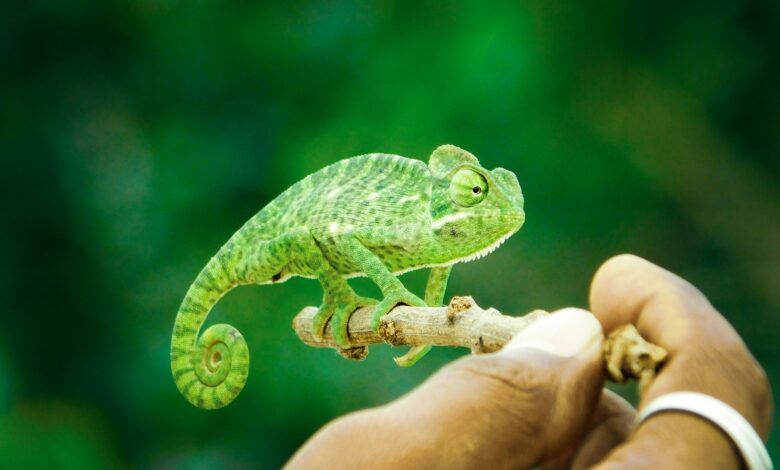
Chameleons used to be regular visitors to our gardens, seen minding their own business.
But sightings are becoming increasingly rare.
According to the LiveScience website, chameleons are reptiles that are part of the iguana suborder.
There are 171 species of chameleons with different colours and sizes.
Unlike other animals, chameleons continue to grow throughout their lives. As their old skin becomes too small, they will shed it in bits and pieces, unlike snakes that shed their skin all at once.
They are known as one of few animals that can change skin colour, but it is a misconception that chameleons change colour to match their surroundings.
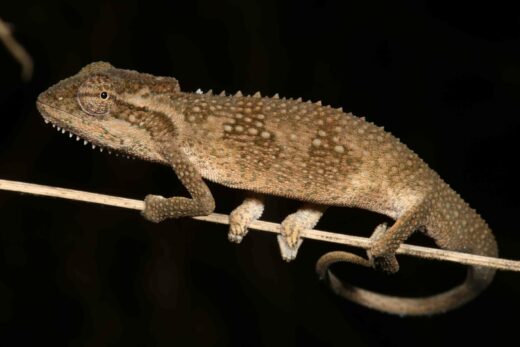
Skin of many colours
Changing skin colour is an important part of communication among chameleons.
It is reported that a chameleon’s skin changes colour in response to its emotions, such as anger or fear, or changes in light, temperature or humidity.
The brighter the colour, the more dominant the male is and the more attractive he is to females.
A submissive male is usually brown or grey. Females use their colours to accept or reject a suitor, and their colour can also indicate that she is pregnant.
A new study has found that chameleons can rapidly change colour by adjusting special cells, called iridophore cells, in each layer.
Chameleons can change the structural arrangement of the upper cell layer by relaxing or exciting the skin, which leads to a change in colour, researchers found.
Chameleons live in Madagascar, Africa, Spain, Portugal and Asia in rain forests, savannas, semi-deserts and steppes.
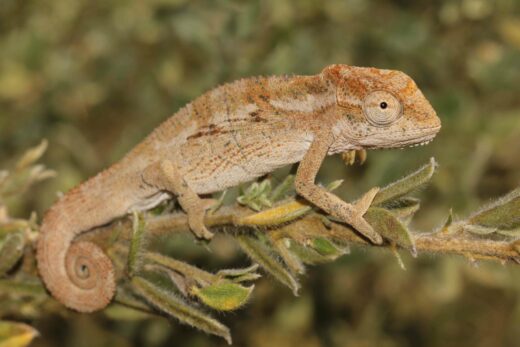
They typically stay in trees or bushes, though some species do live on the ground. For example, the horned leaf chameleon lives among dead leaves on forest floors, according to the National Wildlife Federation.
Besides changing skin colour, chameleons have another feature that no other animals have.
Their eyes can move independently of each other, enabling them to look in two different directions at once.
Chameleons have a full 360-degree view and can focus their eyes quickly and enlarge what they are looking at, like a camera lens.
These reptiles are loners. In fact, most of the time females don’t want males to come near them.
During the rare moments when the female is willing to be touched, the male will approach for mating.
A brighter coloured male chameleon is more likely to convince a female to mate.
Diet
Chameleons eat insects and birds. To catch their prey, they creep along very slowly. Once the prey is in reach, their suction cup tongue shoots out and sticks to the insect.
Their tongues can be twice as long as their bodies when stretched out to catch prey, according to Encyclopedia Britannica.
The insect is drawn back into the lizard’s mouth to be digested by strong stomach acids.
Water is very important to chameleon growth and health. They either slurp water up using their tongues or inhale it.
Eight chameleons to look for in KZN
The Courier spoke to Nick Evans of KwaZulu-Natal Amphibian and Reptile Conservation to tell us more about chameleons found in KwaZulu-Natal.
He said eight species are endemic to KwaZulu-Natal, meaning that they do not occur anywhere else in South Africa, or the world!
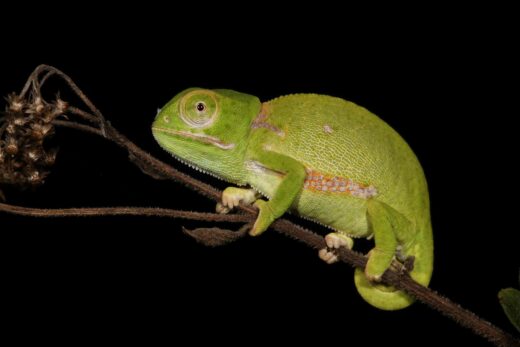
Widespread in the province, except in the coldest parts. They are a large species.
Conservation status: Not threatened.
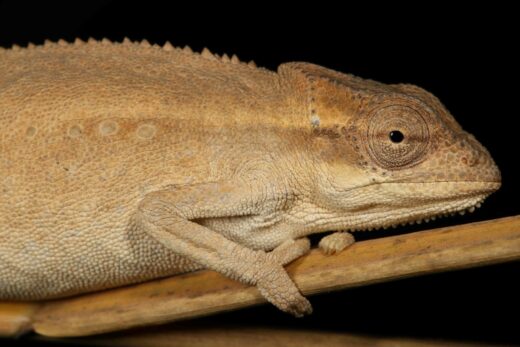
Found from the South Coast, are common around Durban and as far north as Stanger.
Conservation Status: Vulnerable
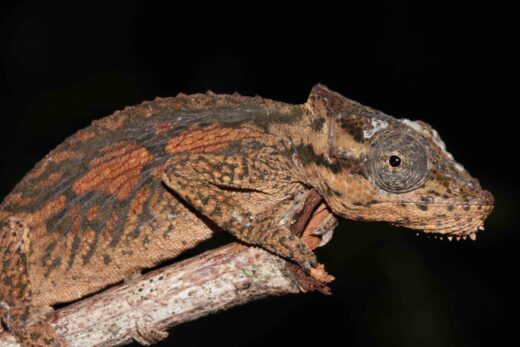
Found throughout the iSimangaliso Wetland Park in northern KZN and surrounding areas.
Conservation status: Least concern.
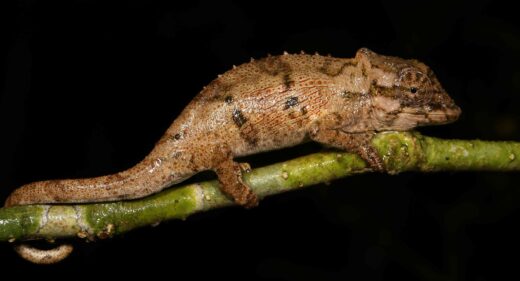
Found in two forests near Nkandla.
Conservation status: Near threatened.
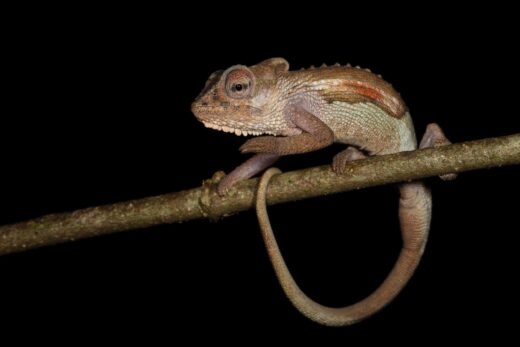
Restricted to a single forest in north-western KZN.
Conservation status: Near threatened.
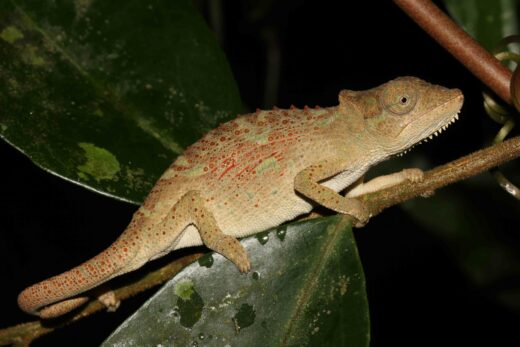
Found in forests near Eshowe.
Conservation status: Endangered.
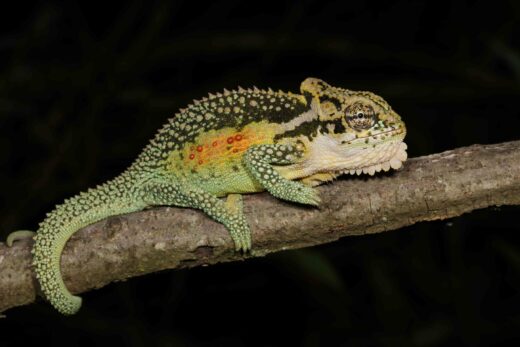
Found in the KZN Midlands.
Conservation status: Vulnerable.
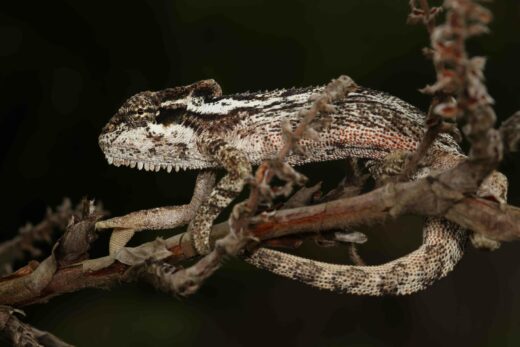
Found in the Drakensberg mountains.
Conservation status: Near threatened.
Evans said Dwarf chameleons give birth to live chameleons, while the Flap-necked species lays eggs.
“If you come across a chameleon in a natural area, please leave it alone. Do not bring it back home to your garden. It is most definitely best for these animals to not be moved,” says Evans.
“Don’t keep them as pets. They do not do well in captivity and usually die. Many of the species have in the past been exported overseas for the pet trade, both legally and illegally. We need to protect what we have left.”
He said if one wants to attract chameleons to one’s garden, the best option is to plant indigenous trees and shrubs.
If you have the space, creating a small grassland would be fantastic and favoured by species such as the KwaZulu Dwarf and Flap-necked chameleons.
“Do not use pesticides in the garden. While these are not guaranteed methods of attracting chameleons, you’ll stand a better chance.”
To learn more about KZN reptiles, you can follow Evans’ Facebook page: Nick Evans – Snake Rescuer, or Instagram: nick_evans_snake_rescuer.
Stay in the loop with The North Coast Courier on Facebook, X, Instagram & YouTube for the latest news.
Mobile users can join our WhatsApp Broadcast Service here, or if you’re on desktop, scan the QR code below.