

Loadshedding punishes local economy
iLembe Chamber of Commerce, Industry and Tourism CEO, Cobus Oelofse, has indicated that businesses within the North Coast's main economic nodes face electricity outages for up to 50% of any working day.
As ever-deeper levels of loadshedding ravage South Africa, businesses across the country have been left to face the consequences alone.
Although emergency meetings have recently taken place between president Cyril Ramaphosa and the National Energy Crisis Committee, most proposed solutions are at minimum months away.
An 18.65% electricity tariff increase will also potentially become effective on April 1.
Combined, it paints a dire picture for businesses owners this year, many of whom will be forced to cut into their bottom line just to stay operational.
“We feel as if we are being hit from every direction,” says co-owner of Concha Café, Diogo Barendse.
“If it’s not the cost of electricity itself, it’s being forced to buy or hire generators just to keep our doors open. We have also lost fridges, coffee machines and blenders that were fried during power surges. We can only pass our costs on to the consumer so much until we lose business, so it just ends up cutting deeper into our margins,” he said.
Going forward, businesses need to decide whether it is feasible to invest in alternative energy.
iLembe Chamber of Commerce CEO, Cobus Oelofse, said the impact had been enormous.
“The reality is that businesses in our main economic nodes are lately without mains electricity for up to 50% of any normal working day, and in some cases even more than 60%.
“The impact on cellular communication has also become a major disruption, especially for businesses that are dependant on cellular operators for web connectivity,” said Oelofse.
For major retailers such as Pick n Pay Ballito, the effects are multifaceted.
“Loadshedding affects every step of the retail process, from farmers, to cold chain management, to the shelves of the retailer itself. For every hour the cold chain process is broken, fresh goods lose a day of shelf life. This increases wastage and shrinkage for the retailer,” said owner of Pick n Pay Ballito, Michael Lafferty.
“Between 45 and 50% of our business is perishable goods that require refrigeration of some sort. This includes in-store air-conditioning, without which the fridges do not function as effectively. This means constant power generation is necessary which includes a high cost of diesel, among the higher costs at every other step in the process, including from Eskom itself,” he said.
Lafferty said Pick n Pay had so far absorbed the added costs, but that at some point it would have to be passed on to the consumer.
Most of the impact is felt by smaller or standalone businesses, given that major players are better equipped to deal with losses or have separate agreements.
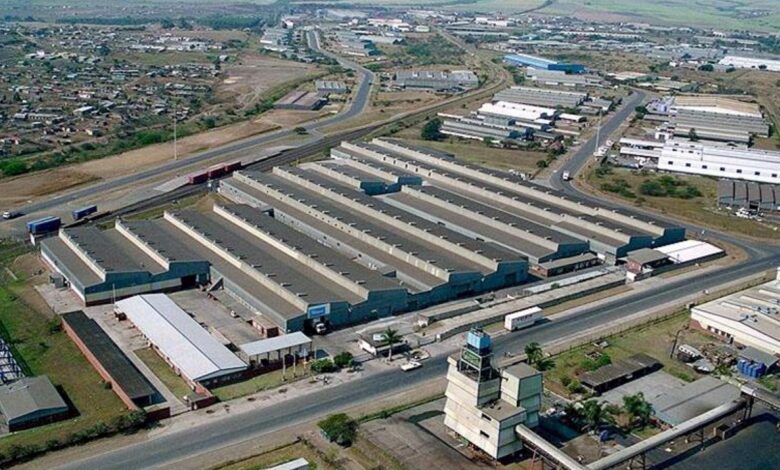
In Isithebe Industrial Estate, which is the manufacturing hub of the North Coast, a plan called load curtailment is used rather than typical grid loadshedding.
“Many of the businesses here cannot simply be turned off, as they run major machinery and equipment. What is done instead, is that businesses are on a roster that is used whenever a load reduction is needed. We get longer hours once or twice a month, which allows us to plan better and catch up on extra days as needed,” said
Trevor Graham, manufacturing executive at KIC South Africa.
Loadshedding remains an uncertain future, but should nothing significantly change, businesses will face some difficult upcoming decisions.
Rolling blackouts punish businesses
Many businesses have had to call it ‘lights out’ permanently over the past few years because of a lack of stable electricity supply by state-owned utility provider Eskom.
Last year the country was subjected to 205 days of loadshedding.
So far this year loadshedding was implemented every single day and local businesses are in despair about what the future holds.
We asked local business owners via our Facebook page what the affect has been.



Follow The North Coast Courier on Facebook, Twitter, Instagram & YouTube for breaking news
Telegram Broadcast Service: https://t.me/joinchat/yJULuN8NaCs5OGM0
WhatsApp Broadcast Service: Add The Courier to WhatsApp at 082 792 9405 and WhatsApp your name and surname to be added.

Stay in the loop with The North Coast Courier on Facebook, X, Instagram & YouTube for the latest news.
Mobile users can join our WhatsApp Broadcast Service here, or if you’re on desktop, scan the QR code below.