
Sibaya takes on global City Nature Challenge
The four-day urban bioblitz sees cities collaborate in a friendly competition to see which city can gather the most observations.
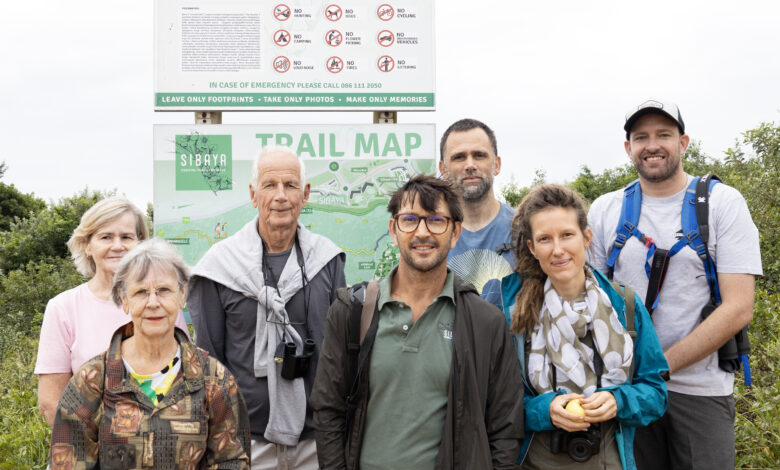
Last weekend the Sibaya Coastal Forest Reserve participated in the City Nature Challenge, a global event that showcases biodiversity in nearly 500 cities.
What started in 2016 as a competition between San Francisco and Los Angeles has grown into an international event that sees people around the world find and document wildlife in and around their cities.
Using wildlife documenting apps such as iNaturalist, the four-day global urban bioblitz sees cities collaborate in a friendly competition to see not only which city can gather the most observations but also what can be accomplished when people work towards a common goal.
This year’s event ran from April 26 to 29. The Sibaya Coastal Forest Reserve participated under the City Nature Challenge Southern Africa 2024 umbrella project, contributing to the City of eThekwini’s biodiversity tally.
The project is also supported by the South African Biodiversity Institute (SANBI) and the Botanical Society of South Africa.
Last year Cape Town topped the southern African contingent and participants eagerly await the May 6 results to see if eThekwini was able to dethrone the Mother City this year.
The 2023 event saw 482 cities participate with 66 000 people recording 1.9 million observations in the four challenge days. But the observations do not stop there.
Ecologist Dr Allister Starke, who led the Sibaya cohort, said the mapping will continue throughout the year. By taking their phones with them on daily walks, iNaturalist and other nature application users finding wildlife,
photograph them and share it on the apps. This contributes to building an exceptional visual learning library that improves month on month.
The library includes plants, insects, animals, fungi, birds and even marine life. Starke said the iNaturalist data was dropped into a bigger database called the SANBI-Global Biodiversity Information Facility (SANBI-GBIF) that all the other bird and nature observation applications feed into.
The collected biodiversity data was not only useful to the public, but also assisted scientists, environmental managers and conservationists, thus ploughing back into global conservation efforts.
“There is too much information out there for the brain, so it becomes cloud-based, tapping into the hive that builds over time, getting better and better,” said Starke.
He advised users to take good quality pictures, for example of plants in bloom or in seed as those pictures were more useful than pictures of just a leaf. Starke said the Sibaya forest had about 700 observations so far – not too many but it was a process and a very useful one at that.
Stay in the loop with The North Coast Courier on Facebook, X, Instagram & YouTube for the latest news.
Mobile users can join our WhatsApp Broadcast Service here or if you’re on desktop, scan the QR code below.

Stay in the loop with The North Coast Courier on Facebook, X, Instagram & YouTube for the latest news.
Mobile users can join our WhatsApp Broadcast Service here, or if you’re on desktop, scan the QR code below.